Windmills
Lviv, Ukraine
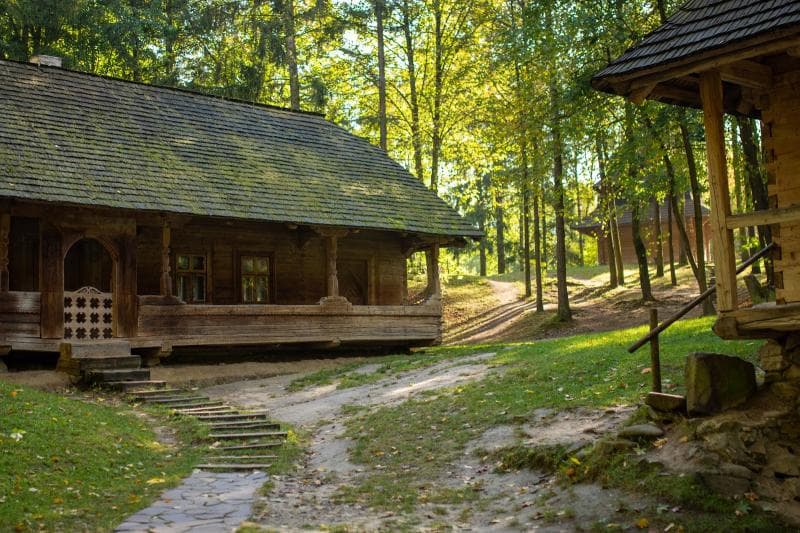
Explore the historic windmills at Shevchenkivskyi Hai Open-Air Museum in Lviv, Ukraine. Discover their history, cultural significance, and unique role in traditional Ukrainian rural life.
Overview
Nestled within the picturesque Shevchenkivskyi Hai Open-Air Museum in Lviv, Ukraine, stand several historic windmills, silent sentinels of a bygone era. These magnificent wooden structures are not merely static displays; they are vital components of the museum's mission to preserve and showcase the rich folk architecture and rural life of Western Ukraine. Visitors stepping into this vast ethnographic complex are transported back in time, encountering a vibrant tableau of traditional villages, complete with their essential mills. The windmills offer a tangible link to the ingenuity and resourcefulness of Ukrainian ancestors, whose daily lives revolved around the rhythmic turning of these colossal machines. They represent the agricultural heart of historical Ukrainian communities, where grain was transformed into flour, sustaining families and shaping local economies.
The Shevchenkivskyi Hai museum, also known as the Klymentiy Sheptytsky Museum of Folk Architecture and Rural Life, is one of Europe's largest open-air museums, encompassing over 120 architectural objects from the 18th to the 20th centuries. Among these carefully relocated and restored buildings, the windmills stand out as powerful symbols of human adaptation to nature and technological advancement in a rural context.
History & Cultural Background
Windmills have a long and storied history in Ukraine, dating back centuries as crucial tools for agricultural communities. Their primary function was to harness wind power to grind grain, a laborious process that was central to daily sustenance. Before the advent of modern machinery, a windmill was often the technological heart of a village, a place where local farmers would bring their harvests to be milled into flour. This historical necessity gave rise to distinctive architectural styles, often reflecting the specific region from which they originated.
The windmills at Shevchenkivskyi Hai were brought from various ethnographic regions of Western Ukraine, such as Boykivshchyna, Lemkivshchyna, Hutsulshchyna, Bukovyna, and Podillia. Each structure was meticulously dismantled from its original location and painstakingly reassembled within the museum grounds. This conservation effort ensures that future generations can witness the robust wooden craftsmanship and functional design that characterized these essential rural edifices. The museum was officially founded in 1971, building upon earlier initiatives to preserve folk architecture, with its main aim being the conservation of wooden folk architecture and artifacts.
What Makes It Special
What makes the windmills of Shevchenkivskyi Hai truly special is their authenticity and their integration into a living historical landscape. They are not replicas, but original structures, some dating back to the 18th and 19th centuries, carefully preserved and restored. Standing beside these towering wooden constructions, one can almost hear the creak of their sails and the rumble of grinding stones. This immersive experience is further enhanced by their placement within 'micro-villages' that represent different ethnographic regions of Ukraine, each complete with traditional houses, churches, and other outbuildings.
The architectural variety of the windmills themselves is also noteworthy. Historically, Ukrainian windmills included types like post mills, where the entire body rotated to face the wind, and tower mills, where only the cap and sails would turn. Observing these structures offers insight into the engineering prowess of past generations. Beyond their functional design, the wooden construction showcases traditional carpentry and the use of natural materials, highlighting the sustainable building practices of rural communities. The sheer scale and intricate joinery of these ancient machines are a testament to the skill of their builders.
Stories, Fun Facts & Local Details
In traditional Ukrainian villages, the miller who operated the windmill held a unique and respected position within the community. Often living somewhat apart from the main village, near the interface of human-reclaimed land and wild nature, millers were sometimes associated with mystical qualities. People believed that a miller could discern a sorcerer or witch simply by examining the grain brought for grinding. Their payment was not in coin but typically a portion of the grain they milled, known as 'moltury,' often ranging from a tenth to a third of each sack. This practice often meant that millers were among the wealthier individuals in a village, holding a relatively high social status.
These human stories breathe life into the silent structures of the windmills. They remind us that these were not just machines, but central hubs of village activity, economic exchange, and social interaction. While specific anecdotes about the windmills within Shevchenkivskyi Hai are not widely documented, the presence of these preserved mills allows visitors to imagine the countless interactions that took place around them—the chatter of farmers, the gossip exchanged, and the flour sacks exchanged for a portion of the harvest. The museum, by preserving these structures, offers a tangible narrative of these communal traditions.
Visitor Perspective
Visiting the windmills at Shevchenkivskyi Hai is an incredibly immersive journey. As you wander through the expansive, forested grounds of the museum, you encounter these towering wooden structures seemingly rising from the landscape, much as they would have centuries ago. The experience is akin to stepping into a living history book, where the sounds of modern life fade, replaced by the rustle of leaves and the sense of timelessness. You can explore the exterior of these architectural marvels, appreciating their scale and the craftsmanship involved in their construction. The surrounding 'villages' with their traditional homes, churches, and farmsteads provide a holistic understanding of the context in which these windmills operated, showcasing the interconnectedness of rural life.
The museum encourages a leisurely exploration, offering well-maintained paths that wind through the hilly terrain. It is a place for reflection, for understanding the foundations of Ukrainian culture, and for appreciating the ingenuity of past generations. These windmills, while no longer grinding grain, continue to turn in the minds of visitors, sparking imagination and fostering a deep connection to the enduring heritage of Ukraine. The sheer scope of the museum, with its diverse collection of buildings, ensures that a visit is not just educational but also a visually captivating and emotionally resonant experience.
Coordinates: 24.0661, 49.84461
View on Google Maps💬 How Travelers Describe This Place
Based on community votes
Unique
585Must See
550Interesting
546Photogenic
92Beautiful
56
Traveler Stories
Discover memorable experiences shared by travelers who have visited this place.
No traveler stories yet.
Be the first traveler to share what made this place memorable.

Tour
By
Spot
Discover amazing places around the world. Your journey starts here.
Explore
© 2026 TourBySpot. All rights reserved.