Windmills
Riga, Latvia
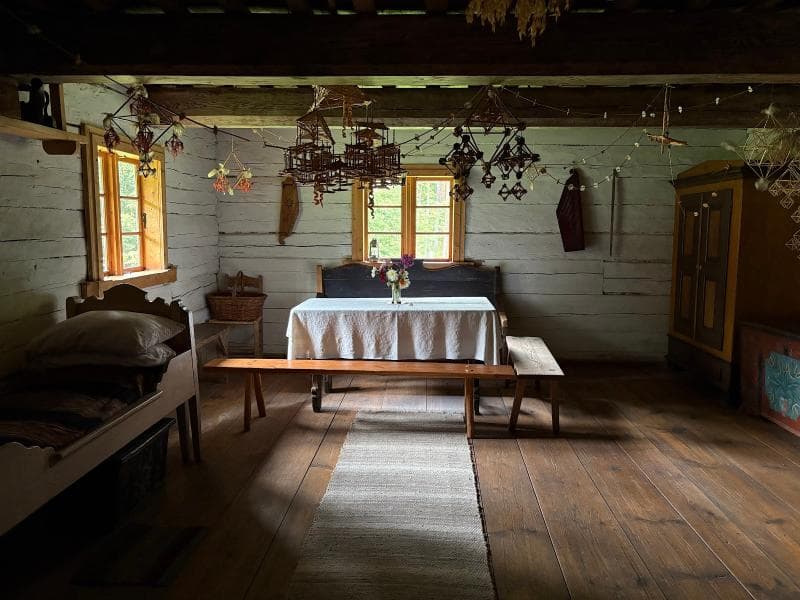
Discover the historic windmills at the Latvian Ethnographic Open-Air Museum in Riga, Latvia, offering a unique glimpse into rural life.
Overview
Nestled within the serene pine forests and along the picturesque shores of Lake Jugla, just outside Riga, the Latvian Ethnographic Open-Air Museum offers a captivating journey back in time to Latvia's rural past. Among its over 100 meticulously preserved historical buildings, the iconic windmills stand as towering symbols of ingenuity and an essential part of Latvian agricultural heritage. These structures are not mere replicas; they are authentic buildings, carefully dismantled from various regions across Latvia and painstakingly reassembled on site, each with a unique story to tell about the lives and livelihoods of generations past.
History & Cultural Background
The concept for the Latvian Ethnographic Open-Air Museum, established in 1924, was inspired by similar open-air museums in Scandinavia, particularly Skansen in Stockholm. Its mission was, and remains, to document, preserve, and interpret the traditional rural life of Latvia. From the late 17th century to the mid-20th century, buildings representing the four historical regions of Latvia — Kurzeme, Zemgale, Vidzeme, and Latgale — have been brought here.
Windmills played a vital role in the daily lives of Latvian farmers for centuries. Before the advent of industrialization and steam power, these majestic structures were indispensable for grinding grain into flour, a staple of the Latvian diet. Historically, hundreds of windmills dotted the Latvian landscape, each a testament to the community's reliance on wind power for sustenance. The museum proudly showcases several examples, highlighting the architectural diversity and technological evolution of these crucial machines.
What Makes It Special
What sets the windmills at the Latvian Ethnographic Open-Air Museum apart is their authenticity and the vivid narrative they provide of pre-industrial rural life. Visitors can observe different types of traditional Latvian windmills, each illustrating distinct construction methods and operational mechanisms. One prominent type is the 'pole mill' (or post mill), characterized by its entire body turning to face the wind. An example of this type is the mill from Skibe parish, built in 1814 and relocated to the museum in 1935. Its structure features the mill body set upon a 6.7-meter-tall oak pole, requiring a special tail-windlass for adjustment, and houses a pair of millstones on its second floor.
Another fascinating type is the 'Dutch mill', where only the cap or top part rotates, allowing for more precise orientation to the wind. The museum's Dutch mill from Pakalni parish, constructed around 1890 and moved in 1974, exemplifies this design. It boasted an elaborate transference system capable of operating two grindstones simultaneously, and its sails, made of rough cloth, could be adjusted according to wind strength. This particular mill remained operational until 1950, a testament to its robust design and long-standing utility. The collection also includes a smaller Dutch mill from Dervinieki, built in the early 20th century, whose tiny equipment could even be worked by hand in calm weather, showcasing adaptations to local needs.
Stories, Fun Facts & Local Details
Imagine the rhythmic creak of wooden gears and the whisper of wind through canvas sails – these are the sounds that once permeated the Latvian countryside. The windmills at the museum transport you to a time when community life revolved around these impressive structures. The Skibe mill, with its substantial oak pole, offers a glimpse into the earlier forms of windmill technology, requiring a collective effort to manually adjust its position against the wind.
The Pakalni Dutch mill, in contrast, represents a more advanced stage, with its rotating cap allowing for easier wind orientation and its capacity for dual grindstones signifying greater efficiency. It's a reminder of how crucial flour production was, not just for individual households but for entire communities. The fact that it continued to operate until the mid-20th century underscores the enduring importance of traditional milling practices even as modern technologies began to emerge.
Further demonstrating the variety, the museum also houses a pole mill from the Pabazi district, moved in 1975, and the petite Dutch mill from Dervinieki, which illustrates how even smaller farmsteads utilized wind power, sometimes with ingenious solutions like manual operation during gentle breezes. The ongoing efforts to preserve these structures, such as the restoration work carried out on the Skibe windmill's wings and stairs in 2021, ensure that these silent giants continue to tell their stories for future generations.
Visitor Perspective
Visiting the windmills within the Latvian Ethnographic Open-Air Museum is more than just observing historical artifacts; it is an immersive cultural experience. As you wander through the museum's expansive, natural setting, these imposing structures invite you to pause and reflect on a bygone era. Standing at their base, it's easy to visualize their mighty blades turning, tirelessly grinding grain and shaping the rural economy.
The peaceful forest surroundings, combined with the authenticity of the relocated buildings, create an atmosphere that feels truly evocative. It allows for a profound connection to Latvia's agricultural roots and the ingenuity of its people. These windmills are not just architectural marvels; they are tangible links to a past way of life, offering a unique opportunity to understand the rhythms of rural existence and the communal effort required to sustain it. They stand as enduring monuments to human adaptation, resourcefulness, and the timeless relationship between people and their environment.
Coordinates: 24.26157444, 56.99490778
View on Google Maps💬 How Travelers Describe This Place
Based on community votes
Interesting
950Must See
929Unique
858Photogenic
287Beautiful
275
Traveler Stories
Discover memorable experiences shared by travelers who have visited this place.
No traveler stories yet.
Be the first traveler to share what made this place memorable.

Tour
By
Spot
Discover amazing places around the world. Your journey starts here.
Explore
© 2026 TourBySpot. All rights reserved.