Windmill
Copenhagen, Denmark
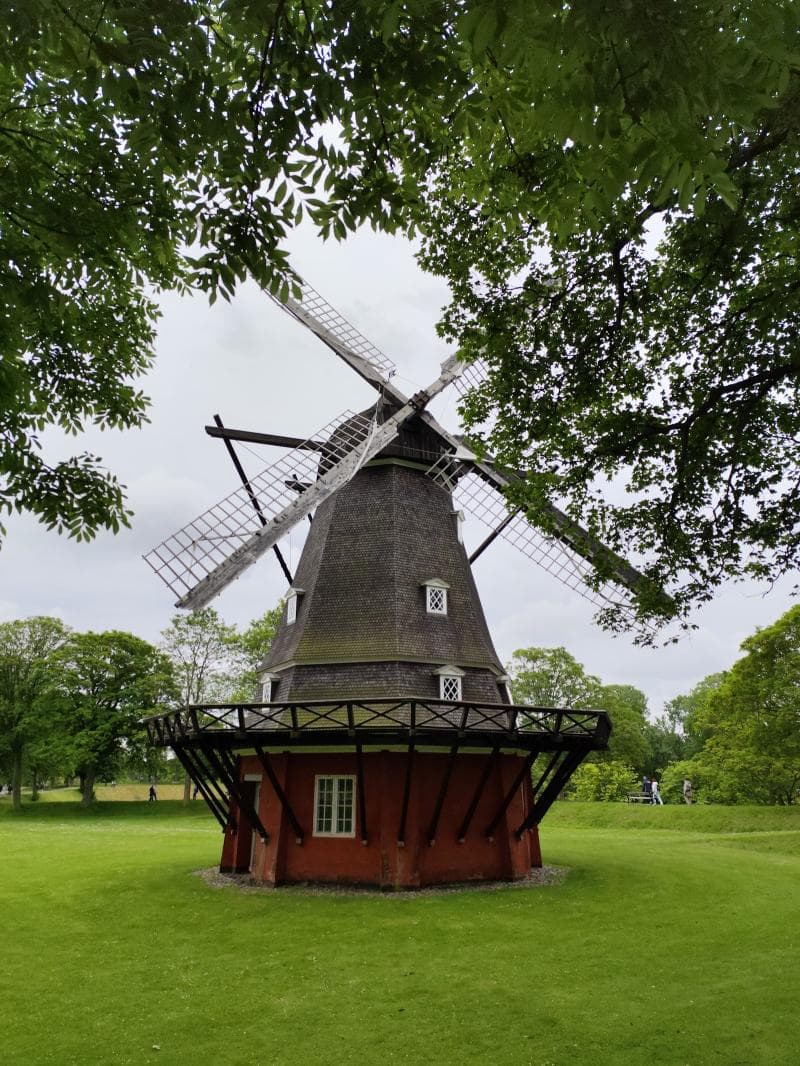
Explore the historic Kastellet Windmill in Copenhagen, Denmark, a preserved Dutch-style mill vital for the fortress's self-sufficiency.
Overview
Nestled within the historic star-shaped fortress of Kastellet in Copenhagen, Denmark, stands a picturesque and historically significant windmill, known as Kastelsmøllen. This iconic landmark is not merely a scenic addition to the military grounds but a profound reminder of the city's self-sufficiency and strategic past. Positioned atop the King's Bastion, it offers a striking silhouette against the Copenhagen sky, inviting visitors to step back in time and appreciate its enduring legacy. The windmill is an integral part of Kastellet, which serves as both an active military area and a beloved public park, freely accessible to all who wish to explore its ramparts and historical buildings.
The Kastellet Windmill, with its classic Dutch-style architecture, is a unique blend of military heritage, traditional craftsmanship, and natural energy. It is a focal point for those walking the peaceful ramparts of Kastellet, providing a visual connection to a bygone era when such structures were vital for survival. While no longer operating daily, its presence sparks curiosity about its original purpose and the lives of those it served.
History & Cultural Background
The story of the Kastellet Windmill begins long before the current structure was erected. The first mill on this site, a post mill, was built in 1718. However, fate intervened in 1846 when a powerful storm tragically destroyed it. The resilient Danes swiftly responded, and the present, more robust Dutch-style windmill was constructed in 1847. This replacement was a significant upgrade, featuring a fixed body and a rotating cap, a design choice that proved more efficient and durable for its exposed location on the bastion.
Historically, windmills played a critical role in fortified cities like Copenhagen. During the 18th and 19th centuries, ensuring a stable food supply was paramount, especially in times of siege. The Kastelsmøllen was purpose-built to grind grain into flour for the soldiers garrisoned at Kastellet, making the fortress self-sufficient and capable of enduring prolonged periods of isolation. At its peak around 1800, Copenhagen's defensive ramparts boasted as many as 16 windmills, all contributing to the city's sustenance. Today, the Kastellet Windmill stands as the sole surviving and still-working example of these vital structures, a testament to its careful preservation and historical importance.
What Makes It Special
What truly sets the Kastellet Windmill apart is its unique combination of architectural beauty, functional design, and historical resilience. Architecturally, it is a classic Dutch-style mill, characterized by its octagonal wooden superstructure mounted on a sturdy brick base. The most distinctive feature is its rotating cap, which allowed the sails to be turned precisely towards the wind, maximizing its grinding efficiency. This design was particularly advantageous on the exposed King's Bastion, where it could effectively harness the steady coastal winds from the Øresund.
Its survival is also remarkable. While many windmills once dotted Copenhagen's fortifications, the Kastelsmøllen is the last operational one, offering a tangible link to a past where wind power was central to daily life and military strategy. It is not an idle relic but a carefully preserved working monument, with its machinery restored, and its sails occasionally set in motion for special events, providing a rare glimpse into traditional milling technology.
Stories, Fun Facts & Local Details
The Kastellet Windmill holds more than just historical facts; it carries fascinating stories. One intriguing detail reveals its connection to Danish royalty and beyond: Russian Empress Consort Maria Feodorovna, daughter of Christian IX of Denmark, famously received rye flour from this very mill. This flour, ground at Kastellet, was sent to the Imperial Court in Saint Petersburg, where it was used to prepare her morning øllebrød, a traditional Danish rye bread porridge. This personal connection underscores the mill's significance and the quality of its produce.
Beyond its royal links, the windmill is a symbol of Kastellet's complete self-sufficiency. Its presence highlights the meticulous planning that went into fortifying Copenhagen, where every detail, including the provision of food, was considered for defense. For visitors, seeing the windmill within the active military barracks and peaceful park grounds offers a serene yet powerful reminder of how a city once prepared for any eventuality, relying on the steady power of the wind.
Visitor Perspective
For the curious traveler, a visit to the Kastellet Windmill is an experience that blends history with tranquility. Located within the scenic Kastellet, which is open daily from 6 AM to 10 PM with free admission, the windmill is easily accessible. You can stroll along the star-shaped ramparts, enjoy panoramic views, and encounter this historic structure on the King's Bastion. Walking around Kastellet and approaching the windmill, one can appreciate its commanding position, designed to catch the wind.
While the interior is not always open as a conventional museum, the exterior alone tells a compelling story of ingenuity and resilience. The grounds themselves are perfect for a leisurely walk, a jog, or simply finding a quiet spot to reflect. The windmill stands proudly among other historical sites within Kastellet, including the Citadel Church and the old prison complex. Its proximity to other Copenhagen landmarks, such as the Little Mermaid statue and the Gefion Fountain, makes it an ideal stop on a broader exploration of the city's charming Østerbro district. It is a place where history feels alive, offering a unique glimpse into Denmark's past without commercial distraction.
Coordinates: 12.591389, 55.691389
View on Google Maps💬 How Travelers Describe This Place
Based on community votes
Photogenic
963Unique
897Beautiful
481Interesting
463Must See
196
Traveler Stories
Discover memorable experiences shared by travelers who have visited this place.
No traveler stories yet.
Be the first traveler to share what made this place memorable.

Tour
By
Spot
Discover amazing places around the world. Your journey starts here.
Explore
© 2026 TourBySpot. All rights reserved.