Wide Boulevards
Minsk, Belarus
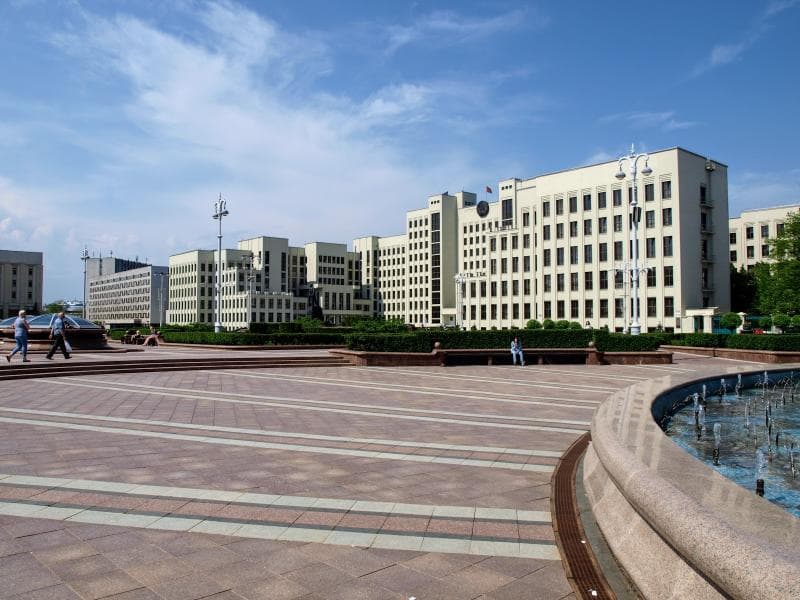
Explore the Wide Boulevards of Independence Square in Minsk, Belarus, a monumental hub showcasing grand Stalinist architecture and rich post-war history.
Overview
Stepping into Independence Square in Minsk, Belarus, one immediately grasps the monumental scale and grandeur that defines this central hub. As one of the largest squares in Europe, it serves not only as the political and administrative heart of the city but also as the starting point for Minsk's renowned wide boulevards, particularly Independence Avenue. These boulevards are a defining characteristic of Minsk's urban landscape, embodying a distinctive architectural style born from a pivotal period in the city's history. The square itself is a vast open space, designed to accommodate significant public gatherings and ceremonies, and is surrounded by an impressive ensemble of buildings that reflect a unique blend of historical periods and architectural philosophies.
The concept of 'Wide Boulevards' here refers to the expansive avenues that emanate from and connect with Independence Square, planned with broad carriageways, generous sidewalks, and often adorned with green spaces and monumental structures. This design principle, visible throughout central Minsk, contributes significantly to the city's spacious and imposing aesthetic. Independence Square acts as a grand foyer to this network of wide thoroughfares, inviting visitors to explore the extensive urban fabric that lies beyond its immediate confines.
History & Cultural Background
Independence Square, originally known as Lenin Square, has a rich and complex history deeply intertwined with the fortunes of Minsk. The area began to take its modern shape in the 1930s with the construction of key administrative buildings, notably the House of Government, designed by architect Iosif Langbard. However, the most profound influence on the square and the surrounding 'wide boulevards' came after the devastation of World War II. Minsk was one of the most heavily damaged cities during the war, with an estimated 80-90% of its buildings destroyed.
Rather than restoring the old city layout, Minsk was rebuilt largely from scratch according to a new master plan, heavily influenced by the Soviet 'Stalinist Empire style' or 'Stalinist Baroque'. This ambitious reconstruction aimed to create a model Soviet city, characterized by wide avenues, grand squares, and monumental public buildings. Independence Square, as the primary civic space, was central to this vision, setting the tone for the expansive and symmetrically planned boulevards that stretch across the city. This post-war rebuilding not only transformed the physical appearance of Minsk but also embedded a strong sense of national identity and resilience into its urban fabric.
What Makes It Special
The true distinction of Independence Square and its adjacent wide boulevards lies in their unparalleled architectural harmony and functional integration. The square is framed by iconic structures like the imposing House of Government, a prime example of Constructivist design, fronted by a bronze statue of Vladimir Lenin. Nearby stands the main building of the Belarusian State University, harmonizing in style with the governmental edifice.
A striking contrast is offered by the vibrant red-brick Church of Saints Simon and Helen, affectionately known as the Red Church. This Neo-Romanesque structure, built in the early 20th century, stands out against the Soviet-era monumentalism, representing a layer of pre-Soviet history that survived the war's destruction. Beneath the vast expanse of the square lies 'Stolitsa', a multi-level underground shopping center, an unexpected and modern addition that cleverly integrates commercial activity and public transport without disrupting the historical surface. This fusion of grand historical architecture, a surviving pre-Soviet landmark, and a bustling subterranean commercial hub creates a dynamic and truly unique urban experience.
Stories, Fun Facts & Local Details
One fascinating detail about Independence Square is the enduring presence of the Lenin statue. Despite the collapse of the Soviet Union, the monument, originally installed in 1934, was destroyed during WWII but meticulously re-cast and re-installed in 1945, standing proudly to this day in front of the House of Government. This resilience mirrors the city's own spirit in overcoming wartime destruction. The square was historically designed as a venue for large-scale Soviet military parades and mass rallies, embodying its role as a key ceremonial space.
The creation of the 'Wide Boulevards' concept itself is a testament to the comprehensive post-war reconstruction effort. With Minsk severely damaged, planners had the unique opportunity to reimagine the city's core, resulting in these expansive, symmetrical avenues that often lead to other significant squares like Victory Square. The underground shopping complex 'Stolitsa', opened in the early 2000s, is another modern marvel, offering not just shops and cafes but also direct access to the metro, making the vast square highly accessible and functional in a contemporary context. Walking above, you might not even realize the vibrant activity happening beneath your feet.
Visitor Perspective
For the curious traveler, experiencing the 'Wide Boulevards' around Independence Square is an immersive journey into Minsk's distinct identity. The sheer scale can be awe-inspiring, offering a sense of vastness and order. Walking along the wide sidewalks of Independence Avenue, which begins at the square, one feels part of a living museum of 20th-century urban planning. The impressive perspectives created by the rows of stately buildings along these boulevards evoke a powerful sense of history and national pride. The juxtaposition of the grand Soviet architecture with the neo-Romanesque Red Church provides intriguing visual contrasts and photo opportunities.
Visitors often note the cleanliness and safety of the area, making it a pleasant place for leisurely strolls, day or night. Whether observing the daily life of Minsk residents, exploring the shops and cafes within the underground complex, or simply admiring the architectural details, the 'Wide Boulevards' around Independence Square offer a profound insight into a city that rose from the ashes of war to become a unique European capital with a compelling story to tell.
Coordinates: 27.547778, 53.895556
View on Google Maps💬 How Travelers Describe This Place
Based on community votes
Unique
712Interesting
628Photogenic
609Beautiful
542Must See
516
Traveler Stories
Discover memorable experiences shared by travelers who have visited this place.
No traveler stories yet.
Be the first traveler to share what made this place memorable.

Tour
By
Spot
Discover amazing places around the world. Your journey starts here.
Explore
© 2026 TourBySpot. All rights reserved.