White Tower
London, United Kingdom
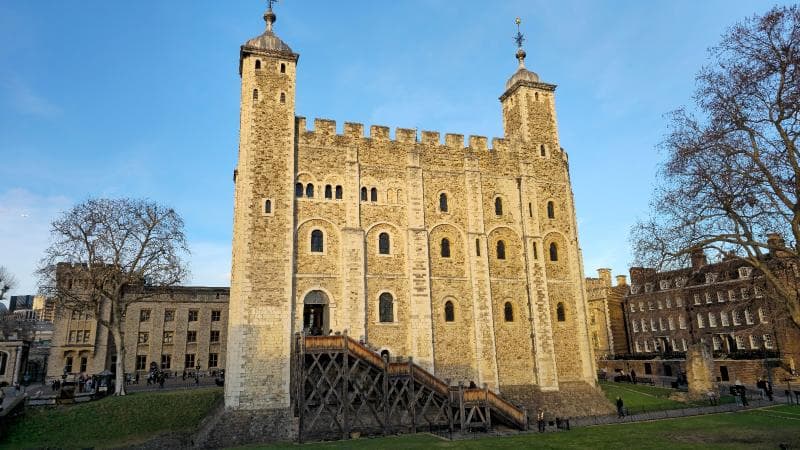

Explore the historic White Tower at the Tower of London, United Kingdom. Discover Norman architecture, royal armories, and centuries of captivating history.
Overview
Dominating the London skyline for centuries, the White Tower stands as the formidable heart of the Tower of London, a UNESCO World Heritage Site in London, United Kingdom. This iconic stone keep, instantly recognizable, is one of the most famous castles in the world and serves as a powerful symbol of Norman authority and British history. Within its ancient walls, visitors can explore floors packed with extraordinary exhibits, showcasing its varied uses throughout the ages. Today, it proudly houses a significant portion of the world-renowned Royal Armouries collection, inviting travelers to step back in time and uncover a thousand years of stories.
History & Cultural Background
The story of the White Tower begins shortly after the Norman Conquest of 1066. To assert his new power and deter potential resistance, William the Conqueror ordered its construction, which commenced around 1078 and was largely completed by 1100. The primary purpose of this massive stone fortress was to awe, subdue, and even terrify the Londoners, acting as both a military stronghold and a grand royal residence for the new ruling elite. Initially, it functioned as a palace, a treasury, and an armory, embodying the administrative and defensive core of the Norman monarchy. The tower gained its distinctive name, the 'White Tower', when King Henry III ordered its exterior whitewashed in 1240, making it even more prominent. While most famously associated with imprisonment, particularly during its earlier centuries, it was not its sole or primary function. The first recorded prisoner, Ranulf Flambard, Bishop of Durham, was incarcerated here in 1101, marking the beginning of its long, complex history with captives. Over time, the White Tower continued to evolve, housing institutions like the Royal Mint and even a Royal Menagerie before its eventual transformation into a museum and exhibition space.
What Makes It Special
What truly sets the White Tower apart is its unparalleled historical significance and architectural preservation. It is celebrated as the oldest stone keep in England and a remarkable example of early Norman architecture. At its heart lies the stunning Chapel of St John the Evangelist, one of the finest and most complete surviving examples of Anglo-Norman royal ecclesiastical architecture, almost unchanged since the 1080s. Its cool, still interior with imposing columns and carved capitals offers a profound sense of history and spiritual grandeur. Beyond its structure, the White Tower is home to the world-class Royal Armouries collections. Here, visitors can marvel at an extraordinary array of arms and armors, including the magnificent royal armors of King Henry VIII, King Charles I, and King James II. The 'Line of Kings' exhibition, one of the world's oldest visitor attractions, presents impressive displays of royal figures on horseback, showcasing centuries of royal power and military might.
Stories, Fun Facts & Local Details
The White Tower is brimming with compelling stories and intriguing details. One famous tale recounts how Ranulf Flambard, the first prisoner, managed to escape in 1101 by distracting his guards with a lavish banquet and using a rope smuggled in a barrel of wine. While the White Tower's role as a prison declined over time, the basement was historically used for torture and interrogation, with instruments of torment displayed on the second floor. An original 18th-century executioner's block and a Tudor-era axe are also housed here, though their precise use is subject to historical debate. Visitors might spot prisoners' graffiti carved into the walls on the upper floors, offering a poignant glimpse into the lives of those held captive. Interestingly, the White Tower's turrets, originally conical, were replaced with their current onion-shaped domes in the 1500s. As part of the wider Tower of London complex, the White Tower shares its ground with the legendary ravens, whose presence is believed to protect the Crown, and the iconic Yeoman Warders, or 'Beefeaters', who offer engaging tours filled with dark tales and insider stories.
Visitor Perspective
Exploring the White Tower offers a truly immersive historical experience, though it requires a bit of preparation. Be aware that there is no lift access to the upper floors; visitors navigate the original medieval spiral staircases. Comfortable shoes are highly recommended to make the most of the climb. The effort is well rewarded, however, with captivating views from the top windows across the Tower of London complex, the moat, and the iconic Tower Bridge. A self-guided visit typically takes between 45 to 60 minutes, focusing on highlights such as the Line of Kings exhibition, the Royal Armouries galleries, and the serene Chapel of St John the Evangelist. As part of the Tower of London, entry to the White Tower is included in the general admission ticket. Remember that security checks are conducted upon arrival, and large bags or backpacks are not permitted inside, so it's best to travel light for a seamless experience.
Coordinates: -0.0723, 51.5048
View on Google Maps💬 How Travelers Describe This Place
Based on community votes
Beautiful
722Must See
698Photogenic
595Interesting
358Unique
19
Traveler Stories
Discover memorable experiences shared by travelers who have visited this place.
No traveler stories yet.
Be the first traveler to share what made this place memorable.

Tour
By
Spot
Discover amazing places around the world. Your journey starts here.
Explore
© 2026 TourBySpot. All rights reserved.