Westerkerk
Amsterdam, Netherlands
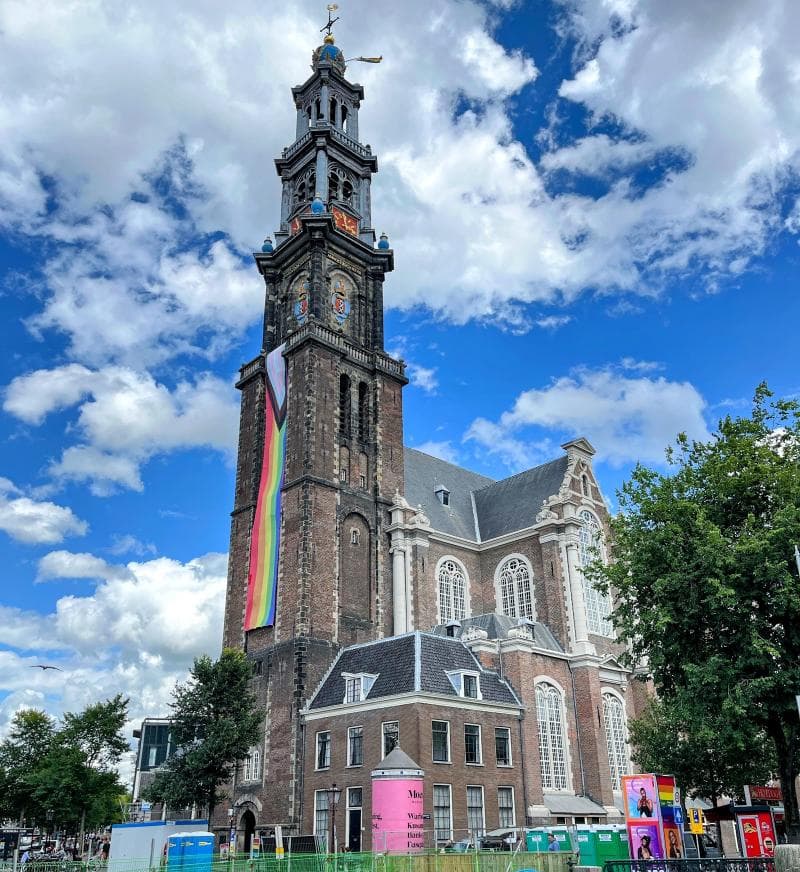
Explore Westerkerk, a historic 17th-century Protestant church in Amsterdam's Jordaan district, linked to Anne Frank and Rembrandt. Discover its iconic Westertoren and rich cultural heritage.
Overview
Nestled on the western edge of Amsterdam's charming Jordaan district, the Westerkerk stands as a magnificent testament to Dutch Renaissance architecture and a cornerstone of the city's rich history. This iconic Protestant church, known for its soaring bell tower, the Westertoren, is not merely a place of worship but a significant cultural landmark. Its grand presence along the Prinsengracht canal makes it a recognizable feature of the Amsterdam skyline, drawing visitors with its historical depth and architectural beauty. As one of the first churches purpose-built for Protestants in Amsterdam, it holds a unique place in the city's spiritual and architectural narrative.
History & Cultural Background
The Westerkerk, or 'Western Church,' was constructed between 1620 and 1631, designed by the celebrated architect Hendrick de Keyser, with its completion overseen by his son, Pieter de Keyser. Commissioned by the Amsterdam City Council, the church proudly displays the city's crests throughout its design, signifying its deep connection to Amsterdam. Its architectural style is Dutch Renaissance, characterized by a distinctive plan that resembles a double Greek cross, a unique feature for its time. Upon its inauguration, the Westerkerk was recognized as the largest Protestant church in the Netherlands, a status it still largely maintains today. The Westertoren, the church's impressive bell tower, was completed in 1638 and is adorned with the Imperial Crown of Austria of Emperor Maximilian I, a symbol of historical ties.
What Makes It Special
The Westerkerk is renowned for several distinct features that set it apart. Its towering spire, the Westertoren, reaches 85 meters, making it the tallest church tower in central Amsterdam. This impressive tower houses a magnificent carillon, a set of 50 bells cast by the famous Hemony brothers in 1658. The harmonious chimes of these bells have become an integral part of the Jordaan's soundscape, playing every 15 minutes. Inside, the church boasts the grand Duyschot organ, built in 1681, featuring beautifully painted panels depicting biblical scenes by the 17th-century artist Gerard de Lairesse. The interior of the Westerkerk, though modest as is typical for Dutch Protestant churches, is bathed in natural light thanks to its 36 large windows and offers a peaceful, reflective atmosphere. A modern and meaningful addition is 'The Burning Bush,' a unique prayer chapel designed in 2007 by sculptor Hans 't Mannetje, offering a space for quiet contemplation and interfaith reflection.
Stories, Fun Facts & Local Details
The Westerkerk carries stories that intertwine with the lives of some of history's most prominent figures. Perhaps its most poignant connection is to Anne Frank. While in hiding in the Secret Annex nearby, Anne frequently mentioned the Westertoren's clock and the comforting chimes of its carillon in her diary, finding solace in its regularity amidst the turmoil of wartime. Today, a memorial statue of Anne Frank stands outside the church, a testament to this enduring link. The church is also the final resting place of the celebrated Dutch painter Rembrandt van Rijn, who was buried here in 1669. Although the exact location of his grave remains unknown due to the practice of burial in unmarked church graves for the poor, a memorial plaque commemorates his burial in the north aisle. The Westertoren is affectionately known by locals as the 'Ouwe Wester' (Old Western) or 'Pearl of the Jordaan,' reflecting its cherished status. Weekly carillon concerts are also a beloved tradition, adding to the cultural vibrancy of the neighborhood.
Visitor Perspective
Visiting the Westerkerk offers a profound journey through history and culture in the heart of Amsterdam. The church welcomes visitors with free admission, though donations are appreciated for its upkeep. It continues to host religious services, regular organ recitals, and cultural events, maintaining its role as a vibrant community hub. While the church's interior provides a serene space for reflection, the Westertoren is particularly sought after for its panoramic views of Amsterdam. It's important to note that the tower is periodically closed for renovations, so checking its accessibility beforehand is advisable. Its prime location adjacent to the Anne Frank House and within the picturesque Jordaan district makes it an essential stop for any curious traveler eager to immerse themselves in the authentic spirit of Amsterdam.
Coordinates: 4.883906125351455, 52.37450470511579
View on Google Maps💬 How Travelers Describe This Place
Based on community votes
Interesting
853Must See
667Unique
190Photogenic
93Beautiful
32
Traveler Stories
Discover memorable experiences shared by travelers who have visited this place.
No traveler stories yet.
Be the first traveler to share what made this place memorable.

Tour
By
Spot
Discover amazing places around the world. Your journey starts here.
Explore
© 2026 TourBySpot. All rights reserved.