West Portal
Berlin, Germany
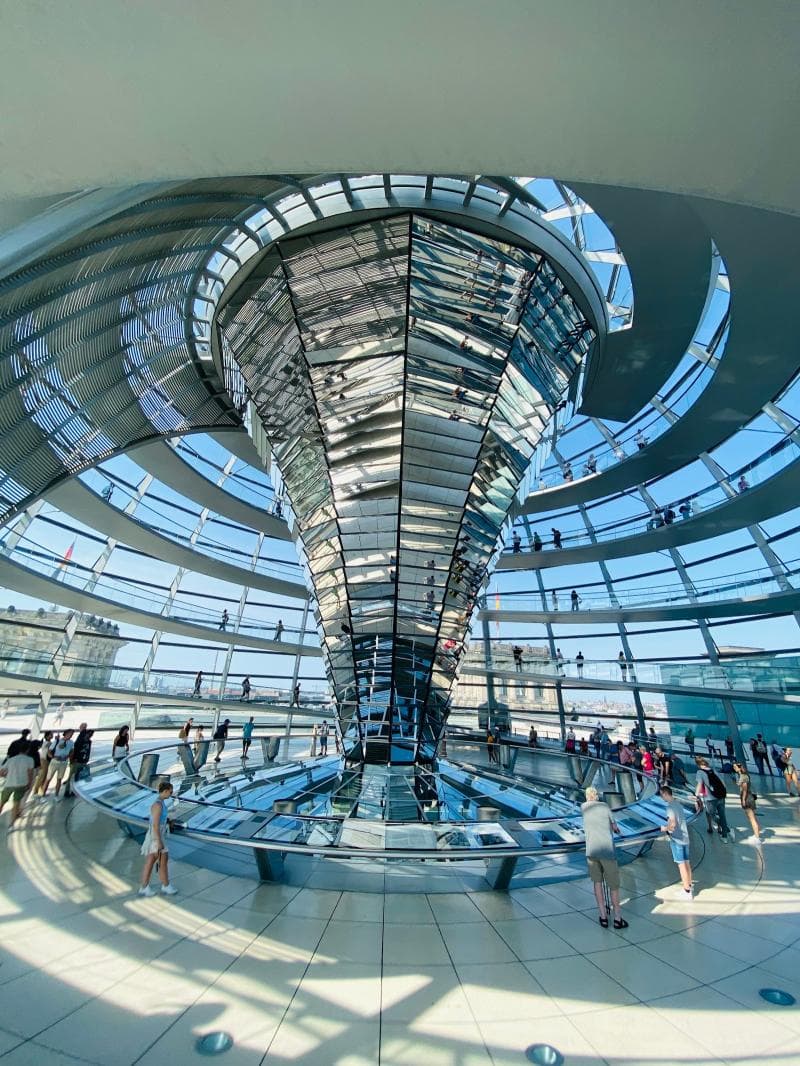
Discover the historic West Portal of the Reichstag Building in Berlin, Germany – a pivotal site for German democracy and visitor access to the iconic dome.
Overview
Nestled within the monumental Reichstag Building in Berlin, the West Portal stands as more than just an entrance; it is a gateway to German history and a symbol of parliamentary transparency. This significant facade, facing the Platz der Republik, greets countless visitors daily, serving as the primary access point for those eager to explore the seat of the German Bundestag. From its grand architectural lines to its profound historical echoes, the West Portal offers a compelling introduction to one of Germany's most important landmarks.
Today, the West Portal facilitates the modern visitor experience, leading directly to the security checks and subsequently to the elevators that ascend to the Reichstag's iconic glass dome and its popular rooftop restaurant. It connects the vibrant present of German democracy with its often turbulent past, inviting travelers to step into a space where pivotal moments unfolded and where the spirit of 'Dem deutschen Volke' – 'To the German People' – resonates deeply.
History & Cultural Background
The West Portal holds a unique place in the annals of German history, primarily as the site where key pronouncements shaped the nation's destiny. On November 9, 1918, from a balcony overlooking the square at the West Portal, Social Democrat Philipp Scheidemann famously proclaimed the German Republic, marking the dramatic end of the imperial era and the birth of the Weimar Republic. This singular moment solidified the portal's status as a witness to the profound shift from monarchy to democracy.
Adding to its historical gravitas is the renowned inscription ‘Dem deutschen Volke’ ('To the German People'), which adorns the frieze above the main entrance. While seemingly integral to the original design, this powerful dedication was actually added later, in 1916 or 1917, during the tumultuous years of World War I. This late addition underscores a significant evolution in Germany's national self-perception, shifting from imperial allegiance to a broader embrace of its populace. The West Portal, with this inscription, thus encapsulates a story of national identity in flux, reflecting the building's own journey through destruction and rebirth.
What Makes It Special
What truly sets the West Portal apart is its dual identity: a historical relic and a functioning gateway to modern governance. Architecturally, it forms the main façade of the Neo-Renaissance building, designed by Paul Wallot, incorporating elements of Italian Renaissance and Baroque styles, culminating in a grand staircase and colonnade. This imposing aesthetic, designed to inspire awe, now welcomes citizens and guests alike into the heart of German parliamentary life.
Beyond its visual appeal, the West Portal serves as the functional nexus for public interaction with the Reichstag. It is the direct link for visitors to ascend to Sir Norman Foster's contemporary glass dome, a symbol of transparency and openness, where one can observe the plenary chamber below and enjoy panoramic views of Berlin. This juxtaposition of historical grandeur with modern, accessible design makes the West Portal a unique threshold where past and present converge.
Stories, Fun Facts & Local Details
Imagine the tension and excitement on November 9, 1918, as Philipp Scheidemann, under immense pressure, announced the new republic from the West Portal's balcony, preempting a communist declaration and forever altering Germany's political landscape. This impromptu yet epoch-making declaration adds a layer of dramatic storytelling to the very stones of the portal.
Another fascinating detail is the journey of the inscription 'Dem deutschen Volke'. Its addition during wartime reflects a conscious effort to unite the nation, a sentiment that the building, despite subsequent fires and wartime damage, continues to embody. Even after enduring the devastation of the 1933 fire and World War II, the West Portal, and indeed the entire Reichstag, stood as a testament to resilience, rebuilt and repurposed to once again house a democratic parliament. The graffiti left by Soviet soldiers in 1945, visible elsewhere in the building, serves as a stark reminder of the building's tumultuous past, complementing the narrative etched into the West Portal's history.
Visitor Perspective
For any traveler to Berlin, experiencing the Reichstag begins at the West Portal. It is here, on Scheidemannstraße, that visitors undertake the necessary security checks before entering. The accessibility features, including dedicated entrances for those with disabilities (known as West C), ensure that everyone can embark on this journey through history and governance.
From the West Portal, efficient elevators whisk guests up to the rooftop terrace, offering direct access to the iconic glass dome, a must-see for its architectural innovation and symbolic significance. Whether you are there to absorb the historical echoes of a nation's birth, admire the intricate architecture, or simply enjoy the breathtaking city views from the dome, the West Portal acts as your essential first step into the beating heart of German democracy. Remember to make reservations in advance for your visit.
Coordinates: 13.376, 52.5186
View on Google Maps💬 How Travelers Describe This Place
Based on community votes
Interesting
672Must See
379Photogenic
356Unique
225Beautiful
19
Traveler Stories
Discover memorable experiences shared by travelers who have visited this place.
No traveler stories yet.
Be the first traveler to share what made this place memorable.

Tour
By
Spot
Discover amazing places around the world. Your journey starts here.
Explore
© 2026 TourBySpot. All rights reserved.