West Lake Waterfront
Hanoi, Vietnam
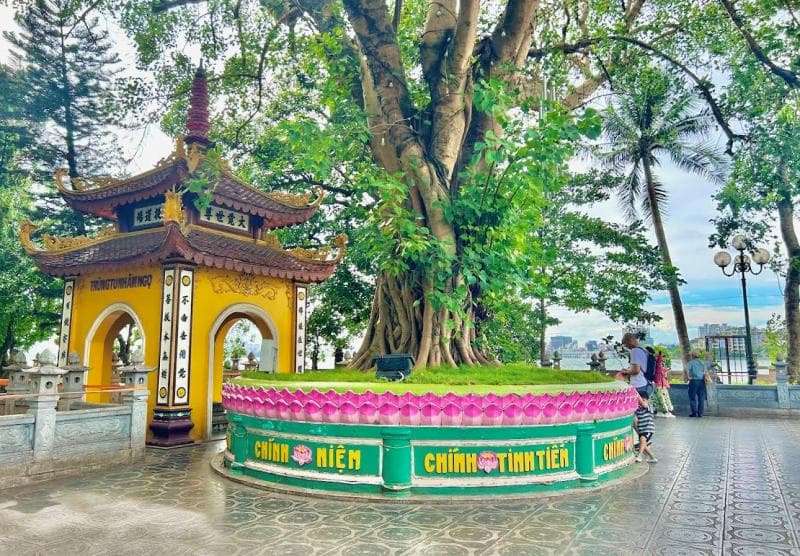
Explore Tran Quoc Pagoda's West Lake Waterfront in Hanoi, Vietnam, an ancient Buddhist temple offering serene views and rich history on Kim Ngu Islet.
Overview
The West Lake Waterfront surrounding Tran Quoc Pagoda in Hanoi, Vietnam, offers a captivating blend of ancient spirituality and serene natural beauty. As Hanoi's largest freshwater lake, West Lake, known locally as Hồ Tây, provides a picturesque setting for the city's oldest Buddhist temple. The pagoda itself stands majestically on Kim Ngu Islet, often translated as 'Golden Fish' Islet, connected to the bustling Thanh Nien Street by a graceful causeway. This unique location allows visitors to experience a peaceful retreat from the urban clamor, where the gentle ripples of the lake meet historical grandeur. The area is cherished by both locals and travelers seeking tranquility, cultural immersion, and stunning photographic opportunities, particularly during sunrise and sunset.
Tran Quoc Pagoda, a significant symbol of Vietnamese Buddhism, boasts a history spanning over 1,500 years. Its traditional Vietnamese Buddhist architecture, characterized by red-painted wooden structures and elegantly curved tiled roofs, creates a harmonious scene against the lake's expansive backdrop. The waterfront area is not merely a scenic spot; it is a living testament to centuries of spiritual devotion, royal patronage, and the enduring connection between Vietnamese culture and its natural environment.
History & Cultural Background
The story of Tran Quoc Pagoda and its West Lake Waterfront begins in the 6th century, specifically between 541 and 545 AD, under the reign of Emperor Ly Nam De. Initially named Khai Quoc Pagoda, meaning 'National Founder's Pagoda,' it was first established along the banks of the Red River. However, due to the river's relentless erosion, the pagoda was strategically relocated in 1615 to its present, more secure location on Kim Ngu Islet within West Lake.
The pagoda received its current name, Tran Quoc, during the reign of King Le Hy Tong (1681-1705). This name, translating to 'National Defense' or 'national protection and harmony,' reflects the pagoda's deep significance as a spiritual guardian of the nation. Throughout various dynasties, Tran Quoc Pagoda served as a vital center for Vietnamese Buddhism, often visited by emperors for important religious ceremonies, underscoring its role in both spiritual and political life. West Lake itself, the largest lake in Hanoi with a 17-kilometer shoreline, holds its own ancient legends. Folk tales suggest its formation from a battle between a dragon lord and a nine-tailed fox spirit, leading to its former name, 'Fox Corpse Swamp.' Another legend speaks of a 'Golden Buffalo Lake.' Interestingly, West Lake also shares a mythical origin story with Hangzhou's West Lake in China, involving two heavenly fairies and bronze mirrors.
What Makes It Special
The West Lake Waterfront of Tran Quoc Pagoda is special due to its exceptional fusion of historical depth, architectural splendor, and a profoundly tranquil lakeside setting. It is not just the oldest pagoda in Hanoi; it's a meticulously preserved historical and cultural relic, recognized as a National Historical and Cultural Monument. The pagoda's distinctive traditional Vietnamese Buddhist architecture, with its vibrant red hues and gracefully curved roofs, stands out beautifully against the serene blue waters of West Lake.
A prominent feature is the 11-story stupa, known as the Bảo Tháp Lục Độ Đài Sen, added in 2003. This impressive structure houses precious statues of Amitabha Buddha and is crowned with a nine-story lotus throne, symbolizing purity and enlightenment. Furthermore, the sacred Bodhi Tree on the pagoda grounds is a direct descendant of the original Bodhi Tree in Bodh Gaya, India, under which Buddha attained enlightenment. This tree was a gift from India's President Rajendra Prasad in 1959, adding a profound spiritual connection to Buddhism's origins. The Stele House, containing 14 ancient stone steles, offers a tangible timeline of the pagoda's evolution, inscribed with intricate Chinese characters.
Stories, Fun Facts & Local Details
One of the most captivating aspects of the West Lake Waterfront is the myriad of stories and local details that imbue it with character. The very name 'Tran Quoc' translates to 'defending the nation,' a testament to the pagoda's historical role beyond mere worship, symbolizing national protection and harmony. It is believed to be one of the most sacred temples for praying for love in Hanoi. The area's tranquil ambiance is so renowned that it's often described as a place where the spiritual essence of Tran Quoc Pagoda is deeply felt, with soft chants, the scent of incense, and the sound of bells creating a meditative experience.
West Lake itself, Ho Tay, holds charming legends explaining its origins, from a battle with a nine-tailed fox spirit that once caused it to be called 'Fox Corpse Swamp,' to a golden buffalo's quest. These stories weave a rich tapestry of folklore around the natural landmark. The pagoda has even gained international recognition, being named one of the 16 most beautiful temples in the world by the British Daily Mail in 2021. Locals frequently visit Tran Quoc Pagoda, especially on the first and fifteenth days of the lunar calendar, to offer prayers and seek peace and luck, making these times particularly vibrant with cultural activity.
Visitor Perspective
For visitors, the West Lake Waterfront, particularly around Tran Quoc Pagoda, offers a uniquely serene and enriching experience. It serves as an idyllic escape from the relentless pace of Hanoi, providing a calm atmosphere perfect for quiet contemplation and photography. A stroll along the causeway leading to the pagoda allows for breathtaking views of West Lake, especially during the golden hours of sunrise or sunset when the light bathes the ancient structures in a warm glow.
Entering the pagoda grounds, one is enveloped by a sense of spiritual peace. Exploring the main hall, the impressive stupa, and the revered Bodhi Tree offers a profound connection to Vietnamese Buddhist traditions and history. Respectful attire, covering shoulders and knees, is required to honor the sacredness of the site. There is no entry fee, inviting all to partake in its beauty and tranquility. The pagoda's location also makes it convenient to combine with other nearby attractions, contributing to a comprehensive cultural exploration of Hanoi's Tay Ho District.
Coordinates: 105.82, 21.055
View on Google Maps💬 How Travelers Describe This Place
Based on community votes
Beautiful
922Must See
665Interesting
379Unique
183Photogenic
19
Traveler Stories
Discover memorable experiences shared by travelers who have visited this place.
No traveler stories yet.
Be the first traveler to share what made this place memorable.

Tour
By
Spot
Discover amazing places around the world. Your journey starts here.
Explore
© 2026 TourBySpot. All rights reserved.