Waterfront Walkway
Reykjavik, Iceland
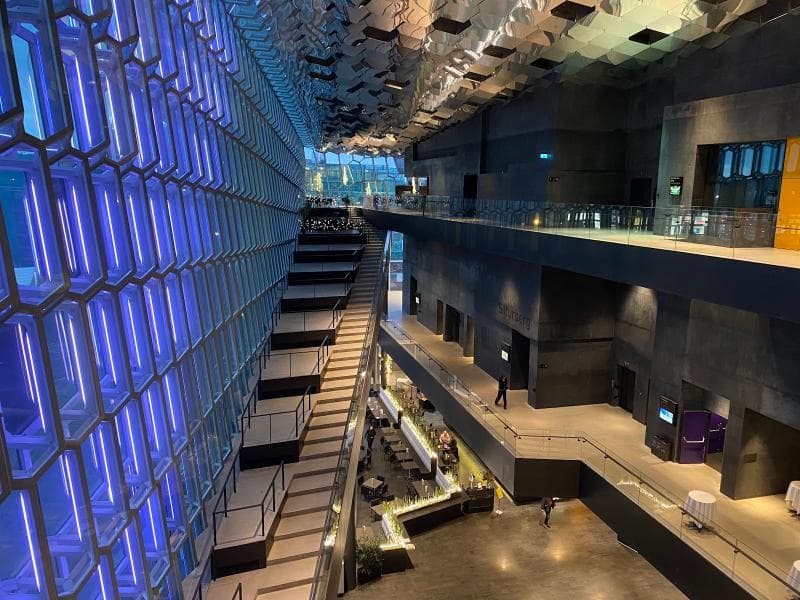
Discover Harpa's Waterfront Walkway in Reykjavik, Iceland, offering stunning harbor views and unique architecture inspired by Icelandic nature.
Overview
Perched gracefully on Reykjavik's vibrant coastline, the Harpa Concert Hall and Conference Centre is not merely a building; it is a profound architectural statement that intimately connects visitors with the Icelandic capital's breathtaking waterfront. While not a distinct, formally named 'Waterfront Walkway' in itself, Harpa's public spaces are meticulously designed to offer an immersive experience of the surrounding harbor and Faxaflói Bay, effectively serving as an indoor promenade for appreciating the coastal scenery. This iconic structure stands as a cultural beacon, inviting exploration of its unique design and the ever-changing vistas of the North Atlantic. From its open ground floor atrium to its upper-level public areas, Harpa provides unparalleled views, making it a natural extension of Reykjavik's scenic waterfront.
History & Cultural Background
The journey of Harpa began in 2007, culminating in its grand opening in May 2011, a period of significant economic challenge for Iceland. Conceived as part of a larger waterfront redevelopment, its construction was momentarily halted by the 2008 financial crisis. However, the decision to complete the project became a powerful symbol of national resilience and a commitment to culture, transforming it from a mere building into a testament to Iceland's spirit. The design, a collaborative masterpiece by Danish firm Henning Larsen Architects and Danish-Icelandic artist Ólafur Elíasson, draws profound inspiration from Iceland's dramatic natural landscapes. Its crystalline facade echoes the country's hexagonal basalt columns, grounding the modern structure deeply in its geological heritage and creating a striking dialogue between architecture and nature.
What Makes It Special
What truly sets Harpa apart, and enables its role as an unofficial 'waterfront walkway,' is its spectacular glass facade. Comprising hundreds of geometric glass panels, often referred to as 'quasi-bricks,' these elements are more than mere adornment. Designed by artist Ólafur Elíasson, they capture and refract light in a mesmerizing kaleidoscope of colors, constantly transforming the building's appearance with the shifting daylight, the glow of the midnight sun, and the ethereal dance of the Northern Lights. As you traverse Harpa's public areas, the glass walls dissolve the boundary between inside and out, offering panoramic, unobstructed views of the harbor, the distant mountains like Mount Esja, and the vast expanse of the ocean. This dynamic interplay of light and reflection ensures that no two visits to Harpa, or indeed, no two moments within its public spaces, are quite the same.
Stories, Fun Facts & Local Details
The name 'Harpa' itself is rich with local meaning. It is an old Icelandic word referring to a month in the ancient Norse calendar, signifying the beginning of spring and brighter times. It is also the Icelandic word for the stringed musical instrument, the harp, a fitting nod to the building's primary function as a concert hall. The facade's unique 'quasi-brick' design was inspired by the basalt formations found along Iceland's coasts, a concept developed in collaboration with geometer Einar Thorsteinn. At night, 714 LED lights embedded within the facade illuminate the exterior, casting vibrant hues across the harbor and making Harpa one of Reykjavik's most photogenic landmarks. The building's strategic location also connects seamlessly with the wider Reykjavik waterfront; a short stroll leads visitors to the popular Sculpture and Shore Walk and the iconic Sun Voyager sculpture, offering further opportunities to embrace the coastal ambiance.
Visitor Perspective
Stepping into Harpa's public areas is an experience in itself, accessible to all without an entrance fee. As a curious traveler, you can wander freely through its spacious lobby and various levels, each offering a distinct vantage point of the harbor. The open layout and extensive use of glass create a feeling of being both indoors and connected to the elements outside, providing a warm and inviting respite from Iceland's often brisk weather while still enjoying the views. Whether you are simply admiring the architectural marvel, seeking a moment of quiet contemplation by the sea, or waiting to attend a world-class performance, the public spaces of Harpa, with their continuous flow and stunning outlooks, truly embody the spirit of a waterfront walkway, allowing you to immerse yourself in Reykjavik's unique maritime charm.
Coordinates: -21.9325, 64.15028
View on Google Maps💬 How Travelers Describe This Place
Based on community votes
Interesting
794Photogenic
562Beautiful
466Unique
155Must See
134
Traveler Stories
Discover memorable experiences shared by travelers who have visited this place.
No traveler stories yet.
Be the first traveler to share what made this place memorable.

Tour
By
Spot
Discover amazing places around the world. Your journey starts here.
Explore
© 2026 TourBySpot. All rights reserved.