Waterfall Area
Tbilisi, Georgia
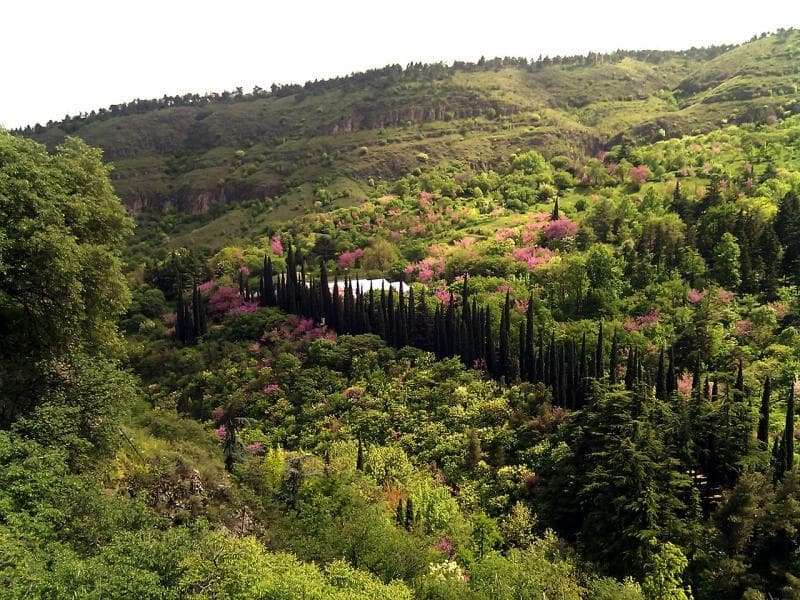
Discover Leghvtakhevi Waterfall, a 22-meter urban cascade in Tbilisi Botanical Garden, Georgia. Explore this unique blend of nature and history in Old Tbilisi.
Overview
Nestled within the expansive Tbilisi Botanical Garden, the Waterfall Area, commonly known as Leghvtakhevi Waterfall, presents a remarkable natural spectacle right in the heart of Georgia's capital city. This approximately 22-meter-high cascade is a highlight, offering a serene escape amidst the bustling urban environment. The waterfall is formed by the Tsavkisistskali River as it carves its path through the picturesque Leghvtakhevi Gorge. Its unique location, tucked away behind the historic Abanotubani sulfur baths, makes it an unexpected and cherished discovery for many visitors. The waterfall runs year-round, with its water volume fluctuating seasonally, offering different captivating views whether it's a powerful torrent in spring or a calmer flow in summer. Accessible from both the Botanical Garden's main entrances and directly from the charming Abanotubani district, the Waterfall Area invites a leisurely stroll through its well-maintained paths.
History & Cultural Background
The story of the Waterfall Area is deeply intertwined with the ancient history of Tbilisi itself. The gorge it inhabits, Leghvtakhevi, translates to 'Fig Gorge' in Georgian, a name derived from the abundance of fig trees that once thrived in this valley. Historical records mention the gorge as early as the 15th century, highlighting its long-standing significance. The area surrounding the waterfall, which now forms part of the Tbilisi Botanical Garden, was originally conceived as royal gardens in the 17th century. These royal gardens were officially established as the Tbilisi Botanical Garden in 1845, gradually expanding to encompass the natural beauty of the Leghvtakhevi Gorge and its waterfall. The gorge is also culturally significant as the origin point of Tbilisi's renowned sulfur springs, which are said to have inspired the city's name – 'Tbilisi' meaning 'warm place'. Throughout history, the waterfall and its surrounding gorge were known by various names, including Tsavkisiskhevi, Sololakiskhevi, and Dabakhana, each reflecting a chapter in its rich past.
What Makes It Special
What truly sets the Leghvtakhevi Waterfall apart is its extraordinary urban placement; it is a natural, cascading waterfall situated right in the core of a capital city, nestled within a verdant botanical garden. This offers a unique juxtaposition of raw natural beauty against a backdrop of historic urban architecture, including glimpses of the ancient Narikala Fortress and traditional Old Tbilisi houses. The Tsavkisistskali River has sculpted a dramatic basalt gorge, through which visitors can wander along a picturesque path featuring charming wooden bridges that crisscross the stream. As evening descends, the area transforms; strategic lighting illuminates the waterfall and the gorge, creating an ethereal and captivating atmosphere that is perfect for memorable photographs. It stands as a tranquil oasis, providing a refreshing respite from the lively pace of the city without ever truly leaving it.
Stories, Fun Facts & Local Details
The very name 'Leghvtakhevi' carries a piece of local history, stemming from the Georgian word 'leghvi' for fig, a nod to the fig trees that once populated the valley. While the abundant fig groves may have receded, their legacy lives on in local culinary traditions, with dried figs and fig jam still savored in cafes around the city. A fascinating detail is the gorge's connection to Tbilisi's name itself, born from the warm sulfur springs that originate here. For those seeking an alternative perspective, a zipline from Narikala Fortress offers an exhilarating ride directly into the Botanical Garden, providing a bird's-eye view of the waterfall and its majestic surroundings. The waterfall's character shifts with the seasons: it can be a 'ferocious' display in spring with higher water levels, become 'calm and peaceful' in summer, and even be 'prone to freezing' in winter, each season offering its own charm.
Visitor Perspective
Visitors consistently describe the Waterfall Area as a peaceful and utterly captivating experience, a truly unexpected gem within the city. While the paths are generally well-maintained, some sections can be hilly or uneven, so wearing comfortable shoes is highly recommended to fully enjoy the exploration. The walk to the waterfall from the Abanotubani district is relatively short and easy, typically taking about 15-20 minutes, making it an accessible natural wonder. This unique destination brilliantly combines scenic natural beauty with deep historical and architectural significance, offering an atmospheric walking route that is distinctly Tbilisi. Whether visited during the day or at dusk when the area is beautifully illuminated, the Leghvtakhevi Waterfall provides a memorable escape and a unique insight into the natural and cultural landscape of Tbilisi.
Coordinates: 44.80904549360275, 41.68675928086441
View on Google Maps💬 How Travelers Describe This Place
Based on community votes
Unique
703Must See
521Photogenic
380Interesting
291Beautiful
28
Traveler Stories
Discover memorable experiences shared by travelers who have visited this place.
No traveler stories yet.
Be the first traveler to share what made this place memorable.

Tour
By
Spot
Discover amazing places around the world. Your journey starts here.
Explore
© 2026 TourBySpot. All rights reserved.