War Command Room
Ho Chi Minh City, Vietnam
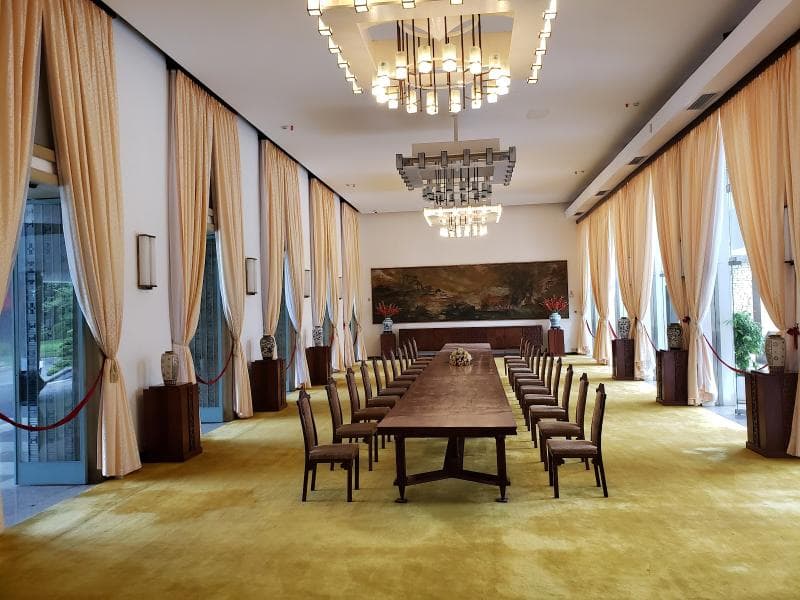
Explore the War Command Room in Ho Chi Minh City's Independence Palace, a preserved underground bunker from the Vietnam War.
Overview
Deep beneath the elegant facade of Independence Palace, known also as Reunification Palace, in Ho Chi Minh City, Vietnam, lies a stark and historically profound sub-spot: the War Command Room. This underground bunker, designed to withstand intense bombardment, served as the operational nerve center for the South Vietnamese government during the most turbulent years of the Vietnam War. Visitors to this preserved space step directly into the strategic heart of a conflict that shaped a nation.
Unlike the opulent reception halls and presidential offices above, the War Command Room is a labyrinth of utilitarian spaces. Here, thick concrete walls, narrow corridors, and an array of communication equipment paint a vivid picture of wartime intensity. It comprises multiple chambers, including communication rooms, map rooms, and a dedicated President's War Room, all meticulously preserved to reflect their crucial function on April 30, 1975, the day Saigon fell.
History & Cultural Background
The current Independence Palace, housing the War Command Room, was constructed after its predecessor, Norodom Palace, was severely damaged in a 1962 bombing incident. President Ngo Dinh Diem ordered the demolition and reconstruction of the palace, envisioning a modern structure that incorporated a robust underground bomb shelter. Designed by Vietnamese architect Ngo Viet Thu, the new palace, completed in 1966, blended modernist aesthetics with traditional Eastern philosophy.
For nine years, the palace was the official residence and workplace of the President of South Vietnam, and its basement became the crucial War Command Room. It was here that military leaders convened, strategic decisions were debated, and urgent communications were dispatched, all in an effort to direct the war effort. The bunker witnessed many critical moments, including President Nguyen Van Thieu seeking shelter and command during a bombing on April 8, 1975, just weeks before the war's conclusion.
What Makes It Special
The War Command Room's most compelling feature is its almost perfectly preserved state. Walking through its reinforced concrete corridors, one encounters original equipment such as manual switchboards, teleprinters, encrypted telephones, and an array of radio systems, all arranged precisely as they were abandoned in April 1975. This authenticity offers an unparalleled, tangible connection to the past, making the strategic decisions and high-stakes operations of the conflict feel remarkably immediate.
Large, detailed maps still adorn the walls, some showing troop movements from the early 1970s, inviting visitors to ponder the intricate strategies and fraught situations that unfolded in these very rooms. The contrast between the grandeur of the upper floors of the palace and the stark, functional environment of the bunker below is striking, underscoring the grim realities of wartime governance versus the public image of power.
Stories, Fun Facts & Local Details
One of the most poignant details within the War Command Room is the evidence of its hurried abandonment. Imagine the tension as commanders and staff made their final decisions and then quickly departed, leaving behind the tools of their trade. The communication center, the largest and most technologically advanced room in the bunker, was designed to ensure uninterrupted contact with battlefields and allied forces, highlighting the relentless pressure on those working there.
The entire underground complex was constructed with immense foresight for its time, featuring a ventilation system and a sturdy design intended to protect against direct hits. Though chilling, the hum of the ventilation system and the cold glare of the fluorescent lights, still operating, help to recreate the intense atmosphere that once pervaded these hidden chambers. It's a testament to the meticulous preservation that visitors can almost feel the weight of history in this enclosed space.
Visitor Perspective
Exploring the War Command Room offers a deeply immersive and educational experience. It’s a journey that moves beyond textbook history, allowing a personal connection to one of Vietnam's most defining periods. The quiet, almost solemn atmosphere of the bunker encourages reflection on the human impact of conflict and the complexities of leadership during wartime. It's a powerful reminder of how ordinary spaces can become extraordinary stages for historical events.
Many visitors describe the experience as tense yet incredibly informative, a stark contrast to the beautiful architecture of the palace above. This sub-spot is an essential component of understanding the Independence Palace's full historical significance, providing a crucial context to the opulent life of the South Vietnamese presidents and the dramatic fall of Saigon on April 30, 1975.
Coordinates: 106.6954, 10.77702
View on Google Maps💬 How Travelers Describe This Place
Based on community votes
Unique
998Photogenic
903Interesting
481Must See
472Beautiful
92
Traveler Stories
Discover memorable experiences shared by travelers who have visited this place.
No traveler stories yet.
Be the first traveler to share what made this place memorable.

Tour
By
Spot
Discover amazing places around the world. Your journey starts here.
Explore
© 2026 TourBySpot. All rights reserved.