Wallenstein Palace
Prague, Czech Republic
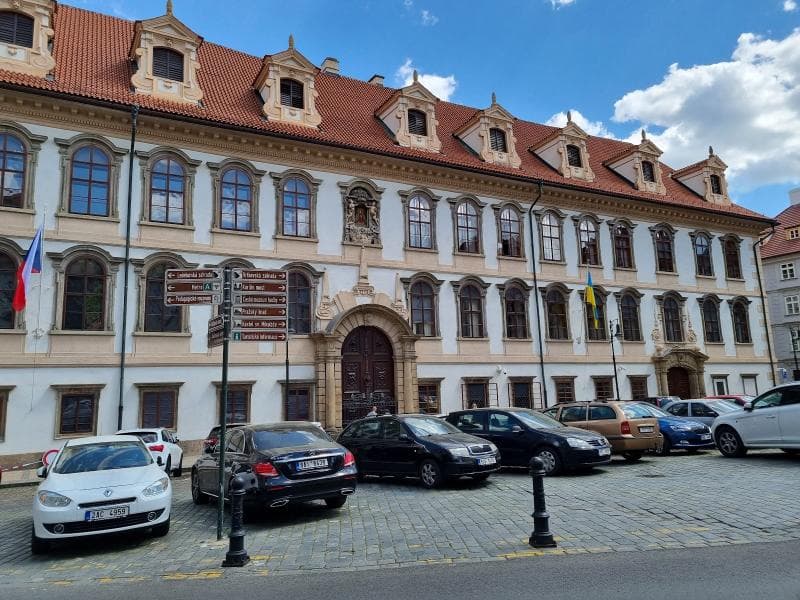
Explore Wallenstein Palace in Prague's Malá Strana, a stunning Baroque masterpiece and seat of the Czech Senate, with its historic gardens.
Overview
Nestled in the historic Malá Strana, or Lesser Town, of Prague, Czech Republic, the Wallenstein Palace (Valdštejnský palác) stands as a magnificent testament to early Baroque architecture. This sprawling complex, comprising a grand palace and one of Europe's most exquisite Baroque gardens, offers a serene escape from the bustling city. Originally conceived as a residence befitting the immense power and ambition of its founder, Albrecht von Wallenstein, it now serves a vital civic role as the seat of the Senate of the Czech Republic. Visitors can wander through its meticulously maintained gardens, admire its striking architecture, and delve into a rich history that intertwines personal ambition with national destiny.
History & Cultural Background
The story of Wallenstein Palace begins with Albrecht von Wallenstein, a formidable and influential military general during the Thirty Years' War. Driven by a desire to create a residence that would rival even Prague Castle, Wallenstein embarked on this ambitious project between 1623 and 1630. To achieve his vision, he acquired and demolished a substantial portion of the Malá Strana, including about twenty-five to thirty houses, six gardens, and two brickworks, reshaping the urban landscape. He employed Italian architects and craftsmen, such as Andrea Spezza and Giovanni Battista Pieroni, to construct this monumental early Baroque edifice. Tragically, Wallenstein enjoyed his opulent palace for only about a year; he was assassinated in 1634 due to the Emperor's fears regarding his growing power. The palace remained in the Wallenstein family's possession until 1945, after which it became state property and eventually the home of the Czech Senate.
What Makes It Special
The Wallenstein Palace is a prime example of early Bohemian Baroque architecture, designed to impress and project power. Its grandeur is immediately apparent in the main palace buildings, but it is perhaps the Wallenstein Garden that truly captivates. This meticulously planned Italian-style Mannerist garden is adorned with elaborate fountains, symmetrical paths, and bronze statues depicting figures from Greek mythology. The monumental Sala Terrena, a three-arched loggia richly decorated with frescoes, serves as a dramatic centerpiece, once hosting lavish banquets. Another unique feature is the artificial grotto, known as the dripstone wall, which imitates natural caves with hidden figures and mysterious formations, creating an almost theatrical effect. The palace's main hall, also known as the Knight's Hall, boasts an impressive ceiling fresco by Baccio del Bianco, famously depicting Wallenstein himself as the god Mars, a clear statement of his military prowess and self-importance.
Stories, Fun Facts & Local Details
Beyond its architectural beauty, Wallenstein Palace is rich in captivating stories. A notable tale concerns the statues in the garden: the original bronze sculptures by Dutch artist Adriaen de Vries were plundered by Swedish troops during the Thirty Years' War in 1648 and are now housed in Drottningholm Castle in Sweden. The statues seen today are skilled replicas, allowing visitors to imagine the garden's original splendor. Keep an eye out for the free-roaming peacocks that add a vibrant splash of color and life to the tranquil green spaces. The artificial grotto, with its intricate, almost grotesque stalactite formations, invites close inspection, as many hidden faces and animals are said to be carved within its depths. The Wallenstein Riding School, once part of the complex, now functions as an exhibition space for the National Gallery Prague, hosting various cultural events.
Visitor Perspective
Visiting Wallenstein Palace offers a unique blend of historical immersion and peaceful contemplation. While the palace interiors are primarily accessible during designated 'open days' hosted by the Czech Senate, the magnificent gardens are generally open to the public seasonally, typically from April to October, and are often free to enter. The garden provides an ideal spot for a leisurely stroll, offering benches for relaxation and numerous vantage points to admire the Baroque landscaping and architectural details. It's easily reachable via public transport, with the Malostranská Metro station just a short walk away, making it a convenient stop for travelers exploring Malá Strana. The atmosphere is typically calm, providing a refreshing contrast to the more crowded tourist sites of Prague. Summer evenings often feature classical music concerts in the Sala Terrena, enhancing the magical ambiance of this historical gem.
Coordinates: 14.4072, 50.0894
View on Google Maps💬 How Travelers Describe This Place
Based on community votes
Unique
894Interesting
862Photogenic
443Beautiful
304Must See
35
Traveler Stories
Discover memorable experiences shared by travelers who have visited this place.
No traveler stories yet.
Be the first traveler to share what made this place memorable.

Tour
By
Spot
Discover amazing places around the world. Your journey starts here.
Explore
© 2026 TourBySpot. All rights reserved.