Wall Walkways
Lucerne, Switzerland
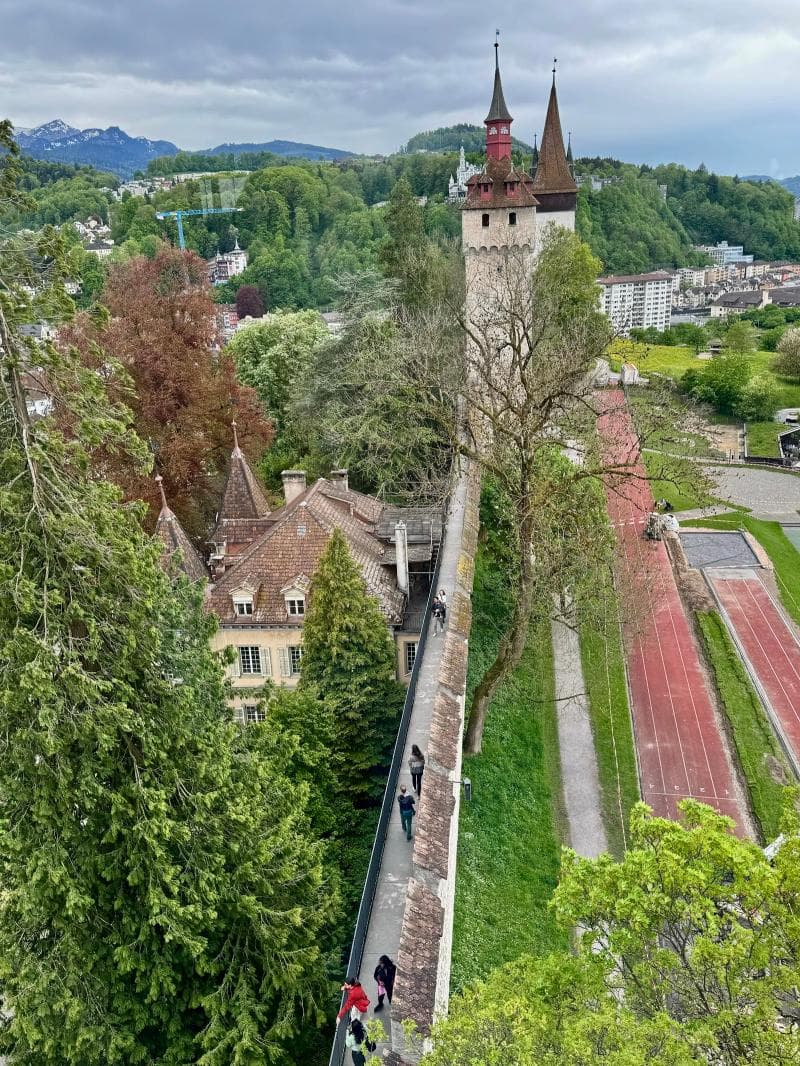
Explore the medieval Wall Walkways of Musegg Wall in Lucerne, Switzerland, offering panoramic city views and historic towers like the Zyt Tower.
Overview
Perched majestically above Lucerne, Switzerland, the Musegg Wall and its iconic Wall Walkways offer a tangible journey back to the city's medieval past. As one of Switzerland's longest and best-preserved continuous city walls, this impressive fortification invites curious travelers to explore its ancient ramparts and historic towers. The Musegg Wall stretches approximately 870 meters, serving not just as a historical landmark but also as an unparalleled vantage point. A walk along its pathways provides breathtaking panoramic views of Lucerne's charming Old Town, the glistening Lake Lucerne, and the majestic snow-capped Alps in the distance.
Of its original thirty watchtowers, nine still stand proudly today, each with its own character and story. Four of these towers, including the Männli, Zyt, Wacht, and Schirmer towers, are freely accessible to the public, allowing visitors to climb ancient wooden stairs and immerse themselves fully in the medieval atmosphere.
History & Cultural Background
The Musegg Wall, known locally as Museggmauer, was a crucial component of Lucerne's defensive fortifications, primarily constructed between 1370 and 1420. However, some historical accounts suggest initial construction began as early as the 13th century, with significant expansion throughout the 14th and 15th centuries. It was strategically built to protect the burgeoning city of Lucerne from external threats, playing a vital role in ancient battles. The wall, standing about 9 meters high and 1.5 to 2 meters thick, exemplifies medieval fortification techniques, crafted from local sandstone and lime mortar.
While its military significance diminished over time, the Musegg Wall remained an integral part of Lucerne's cultural heritage. Extensive restoration efforts undertaken between 2007 and 2015 meticulously preserved its original form, ensuring that this national treasure continues to stand as a testament to the city's rich history. It represents one of the few examples of such well-preserved city walls in all of Switzerland, making it a unique monument of medieval architecture and defensive art.
What Makes It Special
The true magic of the Musegg Wall Walkways lies in their accessibility and the immersive experience they offer. Unlike many historical fortifications, here you can truly walk the ramparts, following the narrow battlement path that medieval guards once patrolled. This 'time-traveling' aspect is a rare opportunity to connect directly with centuries of history. The walk itself is an adventure, leading you through various sections of the wall and into several of its distinctive towers.
Each accessible tower provides a different perspective and a chance to explore unique architectural details. From their elevated positions, visitors are treated to ever-changing, stunning vistas. You can gaze down at the terracotta rooftops of Lucerne's Old Town, watch boats glide across the sapphire waters of Lake Lucerne, and admire the dramatic backdrop of the surrounding mountains, including the iconic Mount Pilatus on a clear day. This combination of historical depth and breathtaking natural beauty makes the Musegg Wall an unforgettable highlight for any traveler.
Stories, Fun Facts & Local Details
Among the nine towers that punctuate the Musegg Wall, several hold particularly captivating stories. The most famous is arguably the Zyt Tower, or Time Tower. It houses the oldest functional public clock in Central Switzerland, dating back to 1535. This clock possesses a charming privilege: it strikes the hour one minute before all other clocks in Lucerne, a unique local tradition born from a time when only the full hours truly mattered. Inside, visitors can observe the intricate 16th-century mechanism up close, a fascinating glimpse into medieval horology, and even see the large clock dials that were specifically designed to be readable by fishermen on Lake Lucerne.
The Männli Tower is easily recognizable by the 'iron Männli', a figure with a standard, adorning its top, a sentinel watching over the land. The Luegisland Tower, the tallest of the nine at 52.6 meters, once served as a primary watchtower, its name literally meaning 'look toward the land'. The Pulver Tower, or Powder Tower, was historically used to store gunpowder, and notably, part of Lucerne's gunpowder supply was kept here after a devastating explosion at the Hay Tower (Wacht Tower) in 1701. Today, while many towers are still leased by local guilds and not always open to the public, the four accessible towers truly open a window into these storied pasts.
Visitor Perspective
Visiting the Wall Walkways of the Musegg Wall is an enriching experience best enjoyed at a leisurely pace. The wall and its accessible towers are typically open from April 1st to November 1st, daily from 8:00 AM to 7:00 PM, remaining closed during the colder winter months for safety reasons. Access to the wall and the open towers is completely free, making it a wonderful and budget-friendly activity.
Be prepared for a walk that involves some narrow sections and stairs, particularly within the towers where steep wooden staircases lead to elevated viewpoints. A moderate level of fitness is recommended, and the path is not suitable for strollers or wheelchairs. For the most tranquil experience and best photographic opportunities, consider an early morning visit to avoid larger crowds. While a quick stroll along the wall might take 30-45 minutes, allowing 1.5 to 2 hours provides ample time to explore the open towers, absorb the historical ambiance, and savor the spectacular views. For an added local flavor, look for the Hof Hinter Musegg, an organic farm nearby, which offers a delightful stop for families.
Coordinates: 8.303, 47.054
View on Google Maps💬 How Travelers Describe This Place
Based on community votes
Must See
910Unique
658Interesting
589Beautiful
374Photogenic
90
Traveler Stories
Discover memorable experiences shared by travelers who have visited this place.
No traveler stories yet.
Be the first traveler to share what made this place memorable.

Tour
By
Spot
Discover amazing places around the world. Your journey starts here.
Explore
© 2026 TourBySpot. All rights reserved.