Walking Trails
Ljubljana, Slovenia
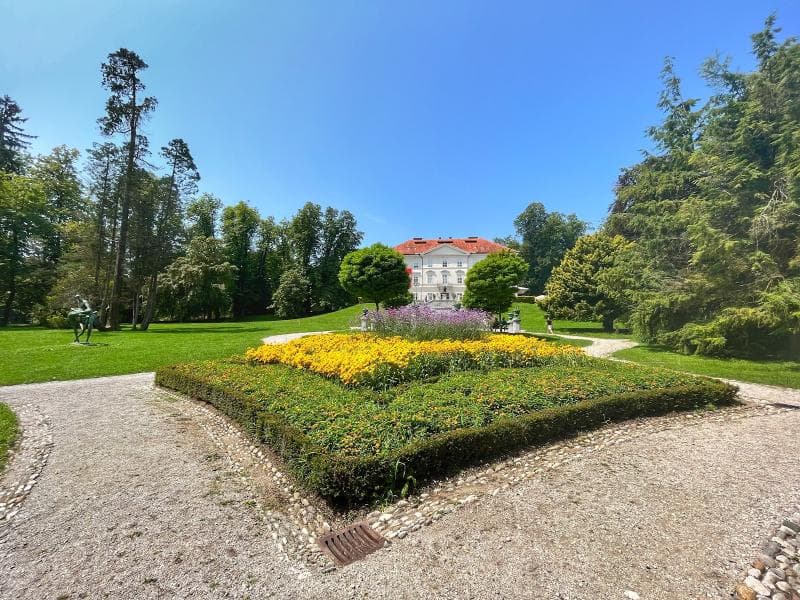
Explore Tivoli Park's diverse walking trails in Ljubljana, Slovenia. Discover history, art, nature, and cultural landmarks in this expansive green oasis.
Overview
The Walking Trails within Tivoli Park offer a refreshing escape into nature and culture in the heart of Ljubljana, Slovenia. As the city's largest and most iconic green space, Tivoli Park spans an impressive five square kilometers, seamlessly blending formal English-style gardens with dense forests that stretch into the nearby Rožnik and Šiška hills. This expansive park is not merely a collection of paths; it is a vital green lung that acts as a bridge between the urban cityscape and the serene woodland beyond. Since 1984, the park has been protected as part of the larger Tivoli–Rožnik Hill–Šiška Hill Nature Park, underscoring its ecological importance.
Visitors to Tivoli Park's walking trails can expect a diverse landscape featuring meticulously designed avenues, meandering woodland paths, and open lawns. The trails cater to all, whether you are seeking a leisurely stroll, a vigorous run, or a peaceful cycling route. Along these paths, you will encounter significant cultural landmarks, art installations, and botanical treasures, making each journey a discovery of both natural beauty and historical depth.
History & Cultural Background
The history of Tivoli Park's walking trails is deeply interwoven with Ljubljana's past. Its origins trace back to the 17th century, when the grounds served as aristocratic gardens for two prominent mansions: Tivoli Castle and Cekin Mansion. It was during the early 19th-century French occupation of Ljubljana, in 1813, that French engineer Jean Blanchard laid out the park's initial design, transforming these private estates into a public recreational area. The park was named in honor of the famous Parisian Tivoli Gardens, highlighting its aspiration to be a grand European park.
A monumental figure in shaping the park's contemporary appearance was Slovenia's renowned architect, Jože Plečnik. In the 1920s and '30s, Plečnik undertook significant redesigns, most notably creating the central Jakopič Promenade. His vision connected the park more intimately with the city center, adding neoclassical lampposts and giving the promenade its distinctive character. Today, the park continues to be a vibrant public space that reflects centuries of historical evolution, serving as a testament to Ljubljana's commitment to integrating nature and culture.
What Makes It Special
The walking trails of Tivoli Park are special for their seamless blend of natural beauty and cultural richness. The grand Jakopič Promenade stands out as a unique feature, an elegant, tree-lined boulevard (often with chestnut trees) that serves as a permanent open-air gallery, frequently hosting large-scale photographic exhibitions. This allows visitors to enjoy art while immersed in nature, transforming a simple walk into an artistic and educational experience.
Beyond the formal avenues, the trails extend into the forested slopes of Rožnik Hill, offering hikers a chance to ascend to viewpoints with panoramic vistas of Ljubljana and even the distant Julian Alps. Within the park, Tivoli Castle houses the International Centre of Graphic Arts, while the elegant Cekin Mansion is home to the Museum of Contemporary Slovenian History, providing cultural enrichment along the routes. The park also features a charming fish pond, established in 1880, and a tropical greenhouse managed by the Ljubljana Botanical Garden, showcasing diverse plant species. Furthermore, a rose garden boasts over 160 varieties, including the native Ljubljana rose cultivar. Tivoli Park is also a habitat for a variety of bird species and even protected insects like the hermit beetle, highlighting its ecological significance.
Stories, Fun Facts & Local Details
Tivoli Park holds a collection of intriguing stories and local details that add depth to its walking trails. One popular anecdote involves the 'dogs without tongues' statues guarding Tivoli Castle. These cast-iron dog sculptures, created around 1870, are famously missing their tongues, leading to a false rumor that their sculptor, Anton D. Fernkorn, committed suicide out of despair over this perceived mistake. The actual designer remains unknown, adding to the mystery.
A lesser-known fact is that the broader Tivoli–Rožnik–Šiška Hill Landscape Park, of which Tivoli Park is a part, encompasses 459 hectares. This makes it larger than some of the world's most famous urban green spaces, including New York City's Central Park and London's Hyde Park. For those interested in botany, the Jesenko Trail offers a three-kilometer educational walk where 30 different tree and shrub species are marked and identified. High above the park on Rožnik Hill, Cankar's Peak is a beloved local spot named after Ivan Cankar, one of Slovenia's greatest writers, who once resided there. Visitors can find a memorial room and a popular inn, Gostilna Rožnik, near the peak. The park is also intersected by a segment of 'The Path of Remembrance and Comradeship,' a 32.5-kilometer recreational trail that encircles Ljubljana, following the route of the barbed wire fence that surrounded the city during World War II.
Visitor Perspective
For any curious traveler, the walking trails of Tivoli Park offer a genuinely enriching experience. Its close proximity to Ljubljana's city center makes it incredibly accessible, often just a short walk away, providing an immediate immersion into nature. The park is an ideal destination for a variety of activities, from leisurely strolls and picnics to more energetic running and cycling. Families will appreciate the scattered playgrounds and open spaces, while those seeking tranquility can find secluded benches amidst the greenery.
To best enjoy the trails, comfortable walking shoes are highly recommended, as the park is extensive and features both paved and gravel paths. The park is open year-round, 24/7, with no admission fee for entry to the park itself. However, museums and specific exhibitions within the castles may have separate charges. The most pleasant times to visit are generally spring and early autumn, when the weather is mild, the foliage is vibrant, and the light is ideal for photography. Visiting in the early morning or late afternoon can offer a quieter experience, away from peak crowds. Whether you seek cultural enlightenment, natural beauty, or simply a peaceful respite, Tivoli Park's walking trails deliver a memorable and engaging experience.
Coordinates: 14.49667, 46.05389
View on Google Maps💬 How Travelers Describe This Place
Based on community votes
Unique
551Beautiful
547Must See
336Interesting
298Photogenic
212
Traveler Stories
Discover memorable experiences shared by travelers who have visited this place.
No traveler stories yet.
Be the first traveler to share what made this place memorable.

Tour
By
Spot
Discover amazing places around the world. Your journey starts here.
Explore
© 2026 TourBySpot. All rights reserved.