Walking Trails
Copenhagen, Denmark
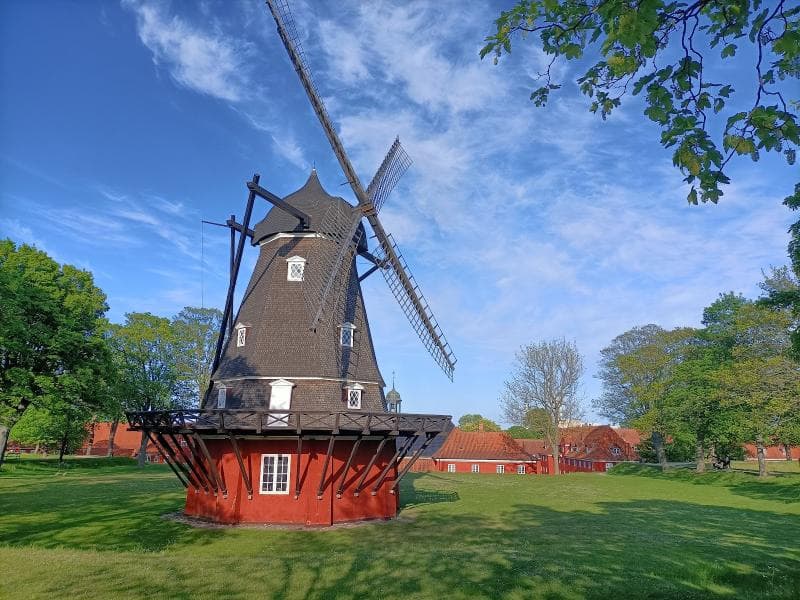
Explore Kastellet's historic walking trails in Copenhagen, Denmark. Discover this 17th-century star fortress, its history, scenic views, and unique charm.
Overview
Tucked away in the vibrant city of Copenhagen, Denmark, Kastellet's Walking Trails offer a tranquil escape into history and nature. This remarkably preserved 17th-century star-shaped fortress is one of Northern Europe's finest examples of its kind. While still an active military area, Kastellet beautifully doubles as a public park, inviting both locals and travelers to explore its unique grounds. Entry to Kastellet is completely free, with its gates welcoming visitors daily from 06:00 to 22:00, making it an accessible haven for leisurely strolls, invigorating jogs, and peaceful moments of reflection. The area is distinguished by its iconic red barracks, a historic windmill, and peaceful ramparts that trace its distinctive star shape, providing a quiet respite from the city's bustle.
History & Cultural Background
The story of Kastellet begins in 1626 when King Christian IV initiated its construction as an advanced coastal post to defend Copenhagen's harbor. However, the star-shaped citadel you see today was largely commissioned by King Frederik III and meticulously engineered by the Dutch military strategist Henrik Rüse between 1662 and 1665. Originally known as Citadel Frederikshavn, this formidable fortress quickly became a cornerstone of Copenhagen's defenses, playing a crucial role during significant historical events like the Swedish siege of 1658–1660 and the Battle of Copenhagen in 1807. Beyond its military functions, Kastellet has served various purposes, including as a barracks and even a prison where figures like Struensee were held before their execution. During World War II, it was occupied by German forces. Today, Kastellet continues its military legacy, housing parts of the Danish Defence Intelligence Service, the Home Guard, and the Judge Advocate Corps, while simultaneously offering its grounds as a beloved public space. A comprehensive restoration in 1999 ensured that its original grandeur and historical integrity were preserved for future generations.
What Makes It Special
What truly sets Kastellet apart is its dual identity as both a historical military stronghold and a serene public park. Its pentagonal, star-shaped layout, a hallmark of 17th-century military architecture, is exceptionally well-preserved and visually striking, especially when viewed from above. The fortress is encircled by a picturesque moat, enhancing its defensive character while also creating a peaceful habitat for local wildlife. Walking along the ramparts provides visitors with breathtaking panoramic views of Copenhagen Harbor and the surrounding cityscape. Within its walls, Kastellet boasts a collection of historic buildings, including the elegant Baroque Citadel Church, completed in 1704, and the Commander's House dating back to 1725. The vibrant red barracks contribute to the site's unique aesthetic, while the historic windmill, built in 1847, stands as an iconic symbol of the fortress's self-sufficiency during sieges. This harmonious blend of enduring military presence with accessible green spaces creates a unique atmosphere where history, nature, and tranquility converge.
Stories, Fun Facts & Local Details
Kastellet is rich with fascinating stories and unique details. The windmill, a Dutch-type mill built in 1847, is not just picturesque but also a functional relic of a time when fortified cities needed to produce their own flour in case of siege. It replaced an earlier mill from 1718 and is the last working windmill among the many that once dotted Copenhagen's ramparts. Adjacent to the Citadel Church lies a former prison complex where, in a rather ingenious setup, holes in the wall allowed inmates to listen to the church services. For a poignant reflection, visitors can find the Monument for Denmark's International Efforts after 1948, honoring Danes who have served and those who did not return. A beloved local tradition is the daily Changing of the Guard ceremony at noon, a small but impactful reminder of Kastellet's continued military function. The moats are not merely defensive features but also home to graceful swans and other waterfowl, adding to the serene ambiance. Interestingly, while King Christian IV initially envisioned a grand castle on this site, budget constraints ultimately led to the construction of the robust fortress we see today. The renowned Danish painter Christen Købke grew up within Kastellet's walls, and many of his works depict the fortress and its surroundings.
Visitor Perspective
For visitors, the walking trails of Kastellet offer a captivating journey. A leisurely stroll along the ramparts typically takes between one to two hours, allowing ample time to soak in the historical atmosphere and enjoy the scenic views. While the pathways are generally accessible, some areas might have slightly uneven terrain, so wearing comfortable, sturdy shoes is advisable, especially as the gravel paths on the ramparts can be slippery after rain. Kastellet is an ideal spot for walking, jogging, and even cycling, providing a peaceful environment to unwind. It's conveniently located near other key Copenhagen attractions, making it easy to combine your visit with a trip to the iconic Little Mermaid statue, the tranquil Churchill Park, Saint Alban's Church, and the majestic Gefion Fountain. Reaching Kastellet is straightforward, whether by foot, bicycle, or public transport, with Østerport Station just a short walk away. Visitors are welcome to bring their own food and drinks to enjoy a picnic amidst the historic surroundings. As Kastellet remains an active military base, it's important to respect the rules, such as refraining from walking on the grass inside the ramparts and observing military protocols. Visiting in the early morning or late afternoon can offer a more peaceful experience, allowing you to enjoy the fortress with fewer crowds, often alongside locals who appreciate this green oasis.
Coordinates: 12.59424, 55.69135
View on Google Maps💬 How Travelers Describe This Place
Based on community votes
Beautiful
981Unique
617Interesting
357Photogenic
147Must See
28
Traveler Stories
Discover memorable experiences shared by travelers who have visited this place.
No traveler stories yet.
Be the first traveler to share what made this place memorable.

Tour
By
Spot
Discover amazing places around the world. Your journey starts here.
Explore
© 2026 TourBySpot. All rights reserved.