Visitor Centre
Dublin, Ireland
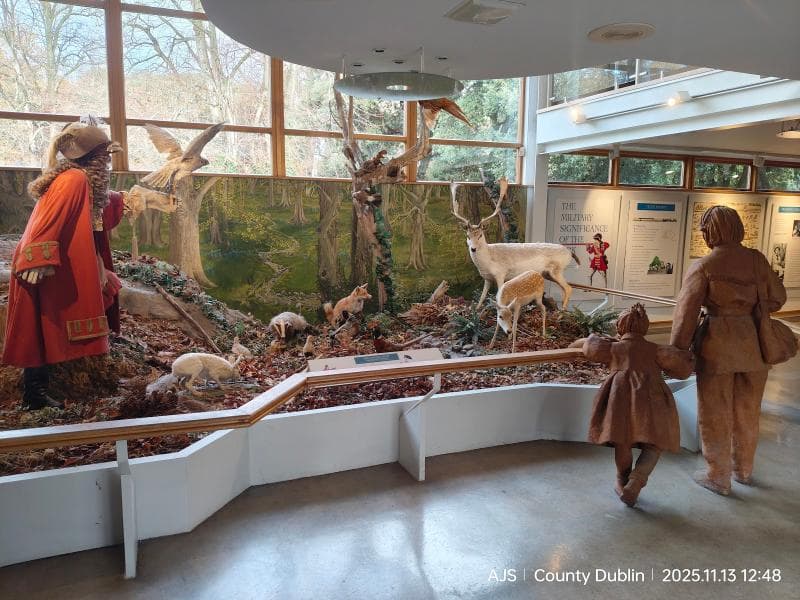
Discover the Phoenix Park Visitor Centre in Dublin, Ireland, exploring its history, cultural exhibitions, and Ashtown Castle.
Overview
Nestled within the vast expanse of Phoenix Park, one of Europe's largest enclosed urban parks, the Phoenix Park Visitor Centre serves as an engaging starting point for any exploration of this historic Dublin landmark. More than just an information hub, it offers a fascinating journey through the park's rich history, diverse wildlife, and cultural significance. The Centre is strategically located beside the historic Ashtown Castle, providing a captivating blend of interpretive exhibitions and tangible heritage.
Visitors can delve into the natural and human stories of Phoenix Park, spanning an impressive timeline from 3500 B.C. to the present day. Through lively exhibitions and an informative audio-visual presentation, the Visitor Centre brings the park's evolution to life, showcasing its transformation from a royal hunting ground to a cherished public amenity. It is a place where curiosity is piqued, and the deeper layers of this iconic Dublin greenspace begin to unfold.
History & Cultural Background
The site where the Phoenix Park Visitor Centre now stands carries its own unique history. The Centre itself is housed in the former stables of the Under Secretary's Lodge, a property that was once part of the demesnes reserved for senior members of the British administration in Ireland. Following Irish Independence, this particular lodge served as the residence of the Papal Nuncio before the area was thoughtfully repurposed for public use.
Adjacent to the Visitor Centre is the beautifully restored Ashtown Castle, a medieval tower house whose origins may date back as far as the 15th century, though it is certainly pre-17th century. This ancient structure was remarkably 'rediscovered' during the demolition of an 18th-century mansion that had encompassed and hidden it for many years. The castle's unveiling offers a tangible link to Dublin's distant past, illustrating centuries of continuous occupation and change within the park's boundaries.
The Phoenix Park itself was established in 1662 by James Butler, Duke of Ormond, on behalf of King Charles II, as a royal deer park. It was later opened to the public in 1747, making it one of the oldest publicly accessible parks in Europe. This rich historical tapestry, from medieval settlements to royal hunting grounds and later a public amenity, is expertly interpreted within the Centre's walls.
What Makes It Special
What truly sets the Phoenix Park Visitor Centre apart is its ability to act as a gateway to understanding the entirety of Phoenix Park. It's not merely a building but a narrative space that contextualizes the park's grandeur and significance. The Centre's exhibitions offer a comprehensive overview of the park's ecological landscape, showcasing its diverse flora and fauna, including the famed herd of fallow deer that have roamed freely since 1662.
The combination of interactive displays, informative panels, and an audio-visual room ensures an engaging experience for all ages. For families, a special section is dedicated to children, allowing them to explore the wonders of forest life, fostering an early appreciation for nature and history. Furthermore, the Centre provides information on a variety of free tours of other key historic sites both within and near Phoenix Park, such as the Magazine Fort and Áras an Uachtaráin (the official residence of the President of Ireland).
Its immediate proximity to Ashtown Castle allows visitors to seamlessly transition from historical interpretation to direct exploration of a genuinely ancient structure, making the past feel incredibly present. The meticulously restored Victorian Walled Garden adjacent to the Centre also provides a serene and beautiful example of historical horticulture, further enriching the visitor experience.
Stories, Fun Facts & Local Details
Imagine walking through grounds that have witnessed centuries of change, from knights hospitaller in the Middle Ages to royal hunts and diplomatic residences. The land occupied by Phoenix Park was once part of the Kilmainham Priory before becoming Crown property and eventually a vast hunting park.
A delightful aspect of Phoenix Park, and a story often shared, involves its resident herd of wild fallow deer. These magnificent creatures are direct descendants of the original herd introduced in 1662, embodying a living link to the park's foundational purpose. While they add immense charm, visitors are gently reminded to observe them from a distance and never feed them, respecting their wild nature.
Another fascinating detail is that the Phoenix Park Visitor Centre once housed diplomatic residents, having served as the Papal Nunciature. This adds a layer of international significance to its historical narrative, revealing its varied roles throughout history. The rediscovery of Ashtown Castle, hidden for centuries within a later mansion, also tells a compelling tale of architectural evolution and the secrets the landscape can hold.
Visitor Perspective
For those embarking on a journey through Phoenix Park, the Visitor Centre acts as an essential first stop, offering context and orientation. It provides a welcoming environment with amenities such as a cafe, car parking, and universal accessibility, including wheelchair access and lifts. This ensures that the rich history and natural beauty of Phoenix Park are accessible to a wide audience.
Many visitors appreciate that admission to the Centre is free, allowing everyone to engage with the park's story without barrier. The knowledgeable staff are on hand to offer insights and advice, helping travelers plan their exploration of the 707-hectare park. Whether one plans to cycle, visit Dublin Zoo, or simply stroll amidst the fallow deer, the Visitor Centre equips them with the background necessary to appreciate the depth of Phoenix Park's offerings. It transforms a simple visit into an educational and memorable experience, connecting visitors to the heart of Dublin's natural and historical landscape.
Coordinates: -6.331667, 53.363889
View on Google Maps💬 How Travelers Describe This Place
Based on community votes
Must See
958Unique
728Interesting
481Beautiful
382Photogenic
183
Traveler Stories
Discover memorable experiences shared by travelers who have visited this place.
No traveler stories yet.
Be the first traveler to share what made this place memorable.

Tour
By
Spot
Discover amazing places around the world. Your journey starts here.
Explore
© 2026 TourBySpot. All rights reserved.