Visitor Center
Athens, Greece
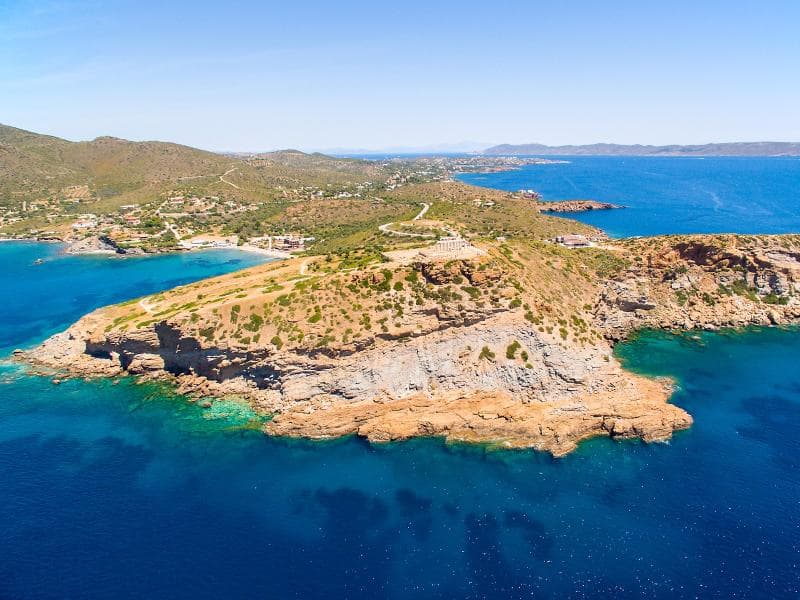
Explore the Temple of Poseidon's visitor facilities at Cape Sounion, Athens, Greece. Discover its rich history, myths, and stunning Aegean views.
Overview
Perched majestically at the southernmost tip of the Attica Peninsula, the Temple of Poseidon at Cape Sounion stands as a timeless beacon overlooking the Aegean Sea. While there isn't a single, dedicated 'Visitor Center' building as some might imagine, the site offers a collection of essential facilities designed to enhance your experience. These include a dedicated parking area for convenience, public restrooms, a small cafeteria or cafe for refreshments, and a museum shop where you can find souvenirs. An information point is also typically available to provide context and guidance, ensuring travelers have everything needed for a fulfilling visit to this ancient marvel. The compact nature of the archaeological site means these amenities are conveniently located near the entrance, preparing you for an immersive journey into Greek history and mythology.
History & Cultural Background
The Temple of Poseidon, dedicated to the mighty Olympian god of the sea, was constructed between 444 and 440 BCE during the 'Golden Age' of Athens, under the leadership of Pericles. This impressive structure was built upon the ruins of an earlier Archaic temple, which had been destroyed by Persian troops in 480 BCE during Xerxes I's invasion of Greece. Cape Sounion itself has been a sacred site since ancient times, with evidence of sanctuaries dating back to the 7th century BCE. Its strategic location was paramount, offering an unobstructed view of the Aegean Sea and serving as a vital naval outpost for Athens to control sea lanes and protect its silver mines in nearby Lavrion, which funded much of its power.
For ancient mariners, the temple's gleaming marble columns served as a crucial landmark, signaling their approach to Athens. The Athenians, a seafaring nation, deeply revered Poseidon, offering sacrifices and prayers for safe voyages and protection from the sea's wrath. Homer even referred to Sounion as 'the sacred point of the Athenians' in his Odyssey, underscoring its long-standing religious significance.
What Makes It Special
What truly sets the Temple of Poseidon apart is its breathtaking location. Perched on a 60-meter high cliff, it offers panoramic, uninterrupted views of the Aegean Sea, often described as a meeting point where history, myth, and the sea converge. The temple's Doric architecture, crafted from local Agrileza marble, exemplifies the classical Greek ideal of harmony and proportion. The stark white columns against the deep blue of the sea and sky create a powerful visual contrast, especially during sunrise and sunset. Only fifteen of the original thirty-four columns still stand, yet they powerfully evoke the grandeur of a bygone era. The enduring appeal of Sounion lies in this dramatic natural beauty combined with profound historical resonance, making it a truly iconic Greek landscape.
Stories, Fun Facts & Local Details
Cape Sounion is steeped in one of the most poignant tales of Greek mythology: the legend of King Aegeus. According to the myth, Aegeus, the king of Athens and father of Theseus, anxiously awaited his son's return from Crete after confronting the Minotaur. Theseus had promised to hoist white sails if victorious, but black sails if he perished. Forgetting his promise in his triumph, Theseus' ship approached Sounion with black sails. Believing his son dead, a grief-stricken Aegeus cast himself from the cliff into the sea, which has since been known as the Aegean Sea in his honor.
In more recent history, the site captured the imagination of the Romantic poet Lord Byron. During his visit in 1810, so moved was he by the temple's beauty and setting that he etched his name onto one of the columns—an inscription that is still visible today, a testament to the enduring allure of Sounion. These layers of myth and history offer a rich narrative for every visitor.
Visitor Perspective
Visiting the Temple of Poseidon offers a captivating experience, whether you arrive by car or bus from Athens, approximately 70 kilometers away. The archaeological site is open daily from morning until sunset, with the last entry usually 20 minutes before sunset. Admission is ticketed, and it's advisable to book in advance, especially during peak season or for sunset visits, as lines can form. Many visitors spend about 45 to 90 minutes exploring the temple and enjoying the views.
While the site itself is relatively compact, the exposed clifftop environment means there's little shade. Therefore, visitors are encouraged to bring a hat, sunglasses, sunscreen, and water, particularly during warmer months. Comfortable footwear is also recommended for navigating the paved but sometimes uneven pathways. For those with mobility challenges, paved pathways lead to the temple, though some uphill areas may require assistance, as extensive wheelchair ramps are not present. The facilities near the entrance, including parking, restrooms, a cafe, and a souvenir shop, provide practical conveniences before or after exploring the ancient ruins.
Coordinates: 24.02455, 37.6502
View on Google Maps💬 How Travelers Describe This Place
Based on community votes
Beautiful
673Photogenic
219Interesting
186Must See
143Unique
80
Traveler Stories
Discover memorable experiences shared by travelers who have visited this place.
No traveler stories yet.
Be the first traveler to share what made this place memorable.

Tour
By
Spot
Discover amazing places around the world. Your journey starts here.
Explore
© 2026 TourBySpot. All rights reserved.