Visitor center
Milan, Italy
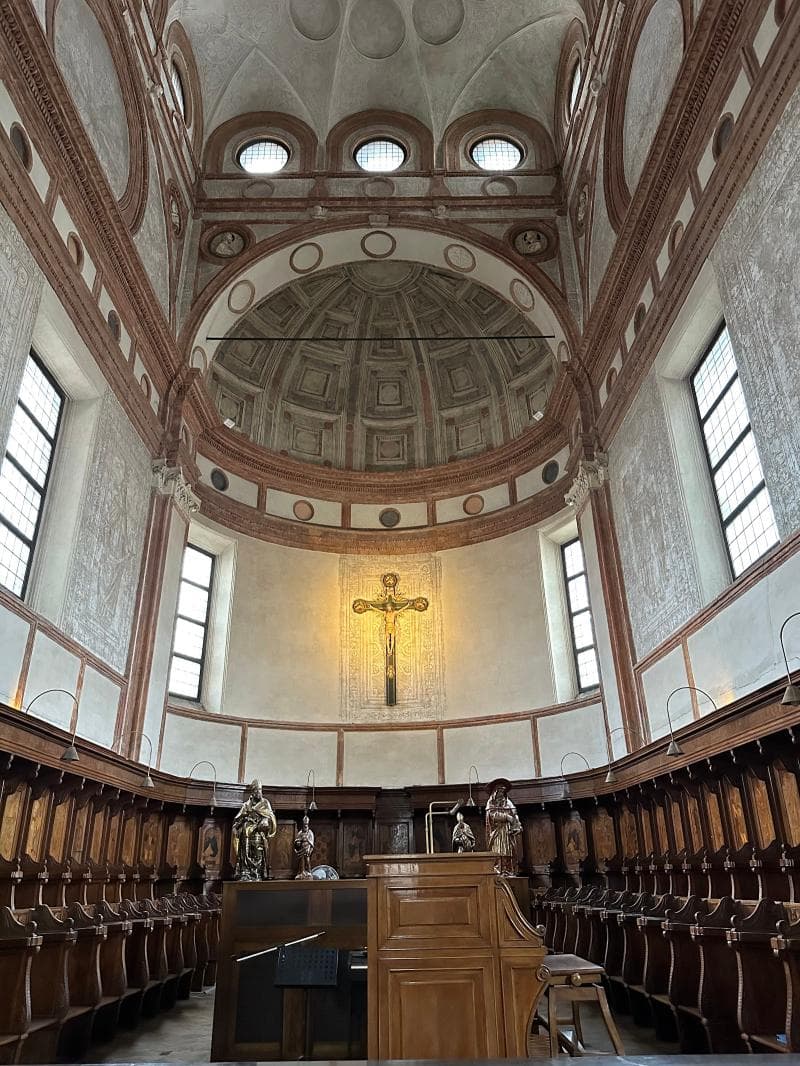
Explore Santa Maria delle Grazie's visitor experience in Milan, Italy, home to Leonardo's 'The Last Supper.' Discover its history, unique features, and essential visitor tips.
Overview
The visitor experience at Santa Maria delle Grazie in Milan, Italy, centers around one of humanity's most profound artistic achievements: Leonardo da Vinci's 'The Last Supper'. While there isn't a standalone 'Visitor Center' in the conventional sense, the entry point and associated services function as the primary hub for guests arriving to behold this UNESCO World Heritage site. This Dominican church and convent complex is an essential stop for anyone seeking to connect with Renaissance art, history, and spiritual devotion in Milan. Visitors navigate a carefully managed system designed to protect the fragile masterpiece, making the initial interaction with the site's staff and information crucial for a smooth and enriching journey into its historical depths.
Understanding the strict visitation protocols, including advance booking and timed entry, is part of the 'visitor center' experience, ensuring that every guest can appreciate the delicate balance between preservation and access. The complex, celebrated for its unique blend of Gothic and Renaissance architecture, offers far more than just the iconic mural; it provides a comprehensive cultural and historical immersion, beginning the moment one approaches its hallowed grounds.
History & Cultural Background
The story of Santa Maria delle Grazie dates back to 1463 when the Duke of Milan, Francesco I Sforza, commissioned the construction of a Dominican convent and church. Designed initially by Guiniforte Solari, the complex evolved significantly over the years. Later, Duke Ludovico il Moro Sforza harbored ambitions to transform the church into a grand family mausoleum, inviting the renowned architect Donato Bramante to contribute to its design. Bramante's influence is particularly evident in the majestic dome and the elegant cloister, showcasing the arrival of High Renaissance architectural styles in Lombardy.
It was within this setting that Leonardo da Vinci was commissioned between 1495 and 1498 to paint 'The Last Supper' on the refectory wall of the convent. This period marked a pivotal moment in art history, as Leonardo's work heralded a new era in painting. His choice of an experimental technique, using tempera and oil on a dry plaster preparation instead of traditional fresco, allowed for greater detail and slower work, but unfortunately contributed to the painting's early deterioration. Despite centuries of challenges, including wartime bombings in 1943 from which the mural miraculously survived thanks to protective sandbags, 'The Last Supper' remains a testament to human genius and resilience.
What Makes It Special
Santa Maria delle Grazie is designated a UNESCO World Heritage site, a testament to its outstanding universal value. Its exceptional nature lies primarily in housing 'The Last Supper', a masterpiece that transcends religious art to become a universal symbol of human emotion and narrative. The painting captures the dramatic moment after Christ announces that one of his disciples will betray him, with Leonardo brilliantly portraying the varied reactions and psychological depth of each apostle.
Beyond Leonardo's work, the architecture of the church itself is a captivating fusion of Lombard Gothic and early High Renaissance styles. The red brick facade, Solari's original Gothic design, and Bramante's later, more classical additions, particularly the dome and apse, create a visually rich and historically significant structure. The complex is not merely a museum but a living testament to centuries of artistic, architectural, and spiritual history, inviting contemplation on the confluence of these profound elements.
Stories, Fun Facts & Local Details
One of the most compelling stories surrounding 'The Last Supper' is Leonardo's revolutionary, yet ultimately problematic, painting technique. Unlike traditional frescoes where paint is applied to wet plaster, Leonardo experimented with applying oil and tempera to a dry wall. This allowed him to achieve unprecedented detail and subtle shading, but it also meant the paint did not bind properly with the wall, leading to rapid deterioration almost from its completion. Centuries of restoration attempts, some more damaging than others, preceded the meticulous restoration completed in 1999, which aimed to bring it closer to Leonardo's original vision.
Another fascinating detail is the painting's miraculous survival during the Allied bombings of Milan in August 1943. While much of the convent was destroyed, the wall bearing 'The Last Supper' remained standing, protected only by sandbags. This event has contributed to the aura of the artwork, highlighting its enduring significance. Today, strict environmental controls and limited visitor numbers, typically 35 people for 15 minutes, are in place to preserve the delicate artwork, making each viewing a rare and cherished experience.
Visitor Perspective
Visiting Santa Maria delle Grazie and 'The Last Supper' is an experience that requires careful planning but rewards abundantly. The 'visitor center' aspect is primarily managed through an efficient, time-slot reservation system. Tickets for 'The Last Supper' are highly sought after and must be booked well in advance, often weeks or even months ahead, especially during peak tourist seasons.
Upon arrival, visitors proceed to the designated ticket collection point, typically located near the entrance to the refectory, where identification matching the booking name is required. Punctuality is paramount, as latecomers may be denied entry due to the strict timed viewing schedule. The journey to the painting involves passing through several climate-controlled chambers, designed to minimize environmental impact on the mural. The actual viewing time of 'The Last Supper' is strictly limited to 15 minutes for small groups, creating an intimate yet intense encounter with the masterpiece. While the focus is often on 'The Last Supper', visitors are encouraged to also explore the beautiful church of Santa Maria delle Grazie, which is often freely accessible and offers its own rich historical and architectural wonders. The church provides a serene space for reflection before or after the timed visit to the refectory.
Coordinates: 9.17096209, 45.4661398
View on Google Maps💬 How Travelers Describe This Place
Based on community votes
Beautiful
910Must See
755Interesting
658Photogenic
589Unique
374
Traveler Stories
Discover memorable experiences shared by travelers who have visited this place.
No traveler stories yet.
Be the first traveler to share what made this place memorable.

Tour
By
Spot
Discover amazing places around the world. Your journey starts here.
Explore
© 2026 TourBySpot. All rights reserved.