Village Paths
Lviv, Ukraine
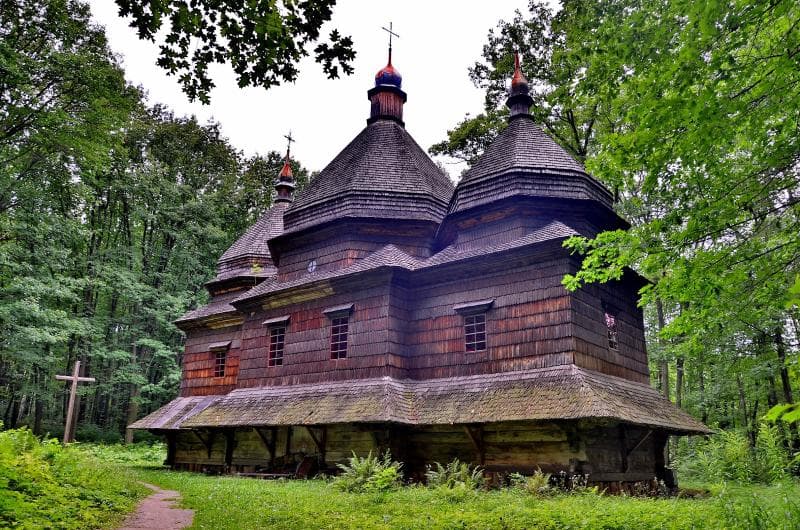
Explore the 'Village Paths' at Shevchenkivskyi Hai Open-Air Museum in Lviv, Ukraine, an immersive journey through traditional Ukrainian villages and folk architecture.
Overview
Stepping onto the 'Village Paths' within the Shevchenkivskyi Hai Open-Air Museum in Lviv, Ukraine, is like embarking on a journey back in time. These aren't just mere walkways; they are thoughtfully designed routes that weave through a sprawling landscape, connecting authentic historical buildings and creating the immersive atmosphere of a traditional Ukrainian village. The museum, officially known as the Klymentiy Sheptytsky Museum of Folk Architecture and Rural Life, acts as a living repository of Western Ukrainian heritage, showcasing the architectural and cultural nuances of various ethnographic regions.
These paths guide visitors through a collection of meticulously relocated and reconstructed wooden structures, including homes, churches, mills, and farm buildings, all set amidst a picturesque park. They offer a unique opportunity to experience the distinct lifestyles, traditions, and craftsmanship of communities like the Boykos, Lemkos, and Hutsuls, creating a sense of wandering through the historical heart of rural Ukraine.
History & Cultural Background
The concept of an open-air museum in Lviv originated with the renowned Ukrainian scholar Ilarion Sventsitsky in the late 1920s and 1930s, inspired by similar European 'skansen' models. His vision was to preserve unique examples of folk architecture for future generations. The first significant step was the relocation of the wooden Church of St. Nicholas from the village of Kryvka in 1930, an 18th-century masterpiece that became the museum's inaugural exhibit.
While the idea was planted early, the museum formally began preparations in 1966 and officially opened its doors to the public in 1971, later in 1972. The subsequent decades saw the painstaking collection and reassembly of over 120 architectural monuments from across Western Ukraine. These structures are grouped into distinct ethnographic zones, such as Boykivshchyna, Lemkivshchyna, Hutsulshchyna, Bukovyna, and Lvivshchyna, each forming a 'miniature village' with its own characteristic buildings and layouts. The 'Village Paths' evolved organically as the conduits between these historical settlements, designed to replicate the authentic experience of traversing a rural Ukrainian landscape.
What Makes It Special
What truly sets the 'Village Paths' apart is their ability to transport visitors into a bygone era. As you follow these routes, you're not just observing; you're immersing yourself in the physical layout of historical villages. Each path leads to another discovery: ancient wooden churches with intricate carvings and tiered domes, traditional residential houses with recreated interiors, and various outbuildings like barns and windmills.
The museum boasts one of Europe's largest and most unique collections of ancient wooden religious buildings, with several churches scattered along the paths, each showcasing regional architectural variations. Beyond the grand structures, the paths reveal the subtle details of rural life—the arrangement of farmsteads, the materials used in construction, and the way communities were organized. The emphasis is on atmosphere and immersion, allowing for a deep understanding of the resourcefulness and artistry of past generations.
Stories, Fun Facts & Local Details
Along the 'Village Paths,' every turn can tell a story. Imagine the echoes of daily life within a peasant hut dating back to 1749, one of the museum's oldest exhibits. The entire collection comprises over 20,000 to 22,000 artifacts, including furniture, tools, textiles, and traditional costumes, meticulously placed within the buildings to give a complete picture of life and leisure in a Western Ukrainian village.
The museum's location within the Znesinnia Regional Landscape Park, an area once known as Kaiserwald, adds to its charm, integrating reconstructed Carpathian vegetation with the historical buildings. This natural setting means the 'Village Paths' are beautiful in any season, whether dusted with winter snow, vibrant with summer greenery, or ablaze with autumn colors. The museum frequently hosts folk festivals, traditional craft workshops—like pottery, weaving, or blacksmithing demonstrations—and themed tours, bringing the history along these paths to life with music, dance, and authentic cuisine.
Visitor Perspective
Walking the 'Village Paths' is an experience of gentle exploration. It encourages a leisurely pace, inviting visitors to step inside many of the structures to examine their authentic interiors, filled with household items and crafts. This hands-on, observational approach provides insights into social customs, agricultural practices, and family traditions that are difficult to glean from traditional indoor museums.
Due to the expansive nature of the museum's territory, which spans dozens of hectares, comfortable shoes are highly recommended for navigating the paths and fully enjoying the numerous exhibits. A visit often requires at least 2-3 hours to appreciate the diverse architecture and absorb the tranquil atmosphere. The 'Village Paths' offer a peaceful retreat from the city, a place where history isn't just displayed, but felt and experienced through every step.
Coordinates: 24.0661, 49.84461
View on Google Maps💬 How Travelers Describe This Place
Based on community votes
Unique
946Beautiful
439Interesting
92Must See
66Photogenic
66
Traveler Stories
Discover memorable experiences shared by travelers who have visited this place.
No traveler stories yet.
Be the first traveler to share what made this place memorable.

Tour
By
Spot
Discover amazing places around the world. Your journey starts here.
Explore
© 2026 TourBySpot. All rights reserved.