Villa Interior
Lucerne, Switzerland
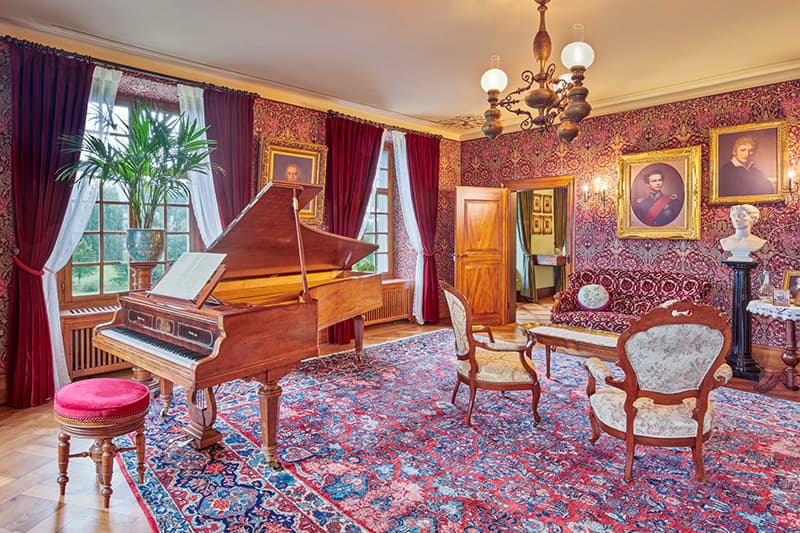
Explore the Villa Interior of the Richard Wagner Museum in Lucerne, Switzerland. Discover where Wagner composed masterpieces like 'Siegfried Idyll'.
Overview
Nestled on the idyllic shores of Lake Lucerne in Switzerland, the Richard Wagner Museum at Tribschen offers a unique glimpse into the life and creative world of one of history's most influential composers. The 'Villa Interior', the heart of this historic residence, is where Richard Wagner lived and worked during his most productive years from 1866 to 1872. Far more than just a collection of artifacts, the interior spaces transport visitors back to a pivotal period in Wagner's life, revealing the domestic and artistic environment that shaped some of his greatest masterpieces. The museum's ground floor houses an exhibition spread across five rooms, showcasing historical photographs, paintings, and original manuscripts, providing an intimate look at Wagner's world. The centerpiece of the interior is undoubtedly Wagner's beloved Erard grand piano, still occasionally used for chamber concerts, allowing his music to resonate once more within these historic walls.
History & Cultural Background
The Tribschen villa, a cube-shaped manor house with origins tracing back to the 15th century, was first inhabited by the Lords of Tripschen. Its current appearance largely dates from an 18th-century remodelling by the Am Rhyn family, from whom Wagner leased it in 1866 with financial assistance from King Ludwig II of Bavaria. Wagner sought refuge here from political pressures and personal scrutiny, finding a tranquil sanctuary on the shores of Lake Lucerne. During his six years at Tribschen, he completed major works such as 'Die Meistersinger von Nürnberg' and 'Siegfried', and continued work on 'Götterdämmerung'. It was also here that he composed his 'Siegfried Idyll', a deeply personal birthday gift for his wife, Cosima, which premiered on the villa's very staircase on Christmas morning, 1870. Following Wagner's departure for Bayreuth in 1872, the villa stood mostly empty before being purchased by the City of Lucerne in 1931 and opened as a museum in 1933.
What Makes It Special
The interior of the Richard Wagner Museum is special because it preserves the authentic atmosphere of a creative genius's home, rather than being merely a sterile exhibition space. It's the place where monumental operas took shape and where personal moments of profound significance unfolded. Imagine the 'Siegfried Idyll' being played for the very first time on the staircase, a truly intimate performance for Cosima's birthday, with guests like Friedrich Nietzsche possibly in attendance. The ground floor rooms display a wealth of memorabilia, from historical photographs to original manuscripts, offering tangible connections to Wagner's life and work. The presence of his Erard grand piano, still functional and sometimes played, bridges centuries, allowing visitors to experience the resonance of his music in its original setting. The villa's interior embodies the 'idyll' Wagner himself described, a sanctuary that fostered his profound artistic output and personal life.
Stories, Fun Facts & Local Details
Life within the Tribschen villa was anything but mundane during Wagner's stay. It was a hub for prominent intellectuals and artists, including King Ludwig II of Bavaria, who visited Wagner incognito, and the philosopher Friedrich Nietzsche, who was deeply influenced by his time there. A charming detail from this period is the 'peacock house' built for Cosima's peacocks between 1866 and 1872. The 'Siegfried Idyll', originally titled 'Tribschen Idyll', was a secret, deeply personal musical love letter from Wagner to Cosima, performed by an ensemble of fifteen players on the villa's stairs as a surprise Christmas morning serenade. This intimate performance was a private dedication of a piece that would later become a beloved part of the classical repertoire. The first floor also witnessed the baptism of Wagner's son, Siegfried Helferich Richard Wagner, solidifying his lineage within these walls.
Visitor Perspective
As you step inside the Richard Wagner Museum, you're invited to embark on a journey through time. The interior spaces evoke a sense of quiet reverence, allowing for personal reflection on Wagner's extraordinary legacy. Visitors can explore the five exhibition rooms on the ground floor at their own pace, absorbing the details presented through well-curated displays of photographs, paintings, and documents. The opportunity to see Wagner's personal belongings, including his grand piano, makes the experience deeply personal. While the second floor now houses a musical instrument museum, the focus on the ground floor's 'Villa Interior' provides direct insight into Wagner's daily life and creative process. An audio guide, available in multiple languages, further enriches the visit, providing context and stories that bring the rooms to life. The serene setting of Tribschen, with its views of Lake Lucerne and the Alps, complements the tranquil exploration of the villa's interior, making it a compelling destination for anyone interested in classical music, history, or simply the intimate world of a great artist.
Coordinates: 8.328944, 47.042444
View on Google Maps💬 How Travelers Describe This Place
Based on community votes
Must See
951Beautiful
491Unique
414Photogenic
310Interesting
277
Traveler Stories
Discover memorable experiences shared by travelers who have visited this place.
No traveler stories yet.
Be the first traveler to share what made this place memorable.

Tour
By
Spot
Discover amazing places around the world. Your journey starts here.
Explore
© 2026 TourBySpot. All rights reserved.