Viking Longhouse Ruins
Reykjavik, Iceland
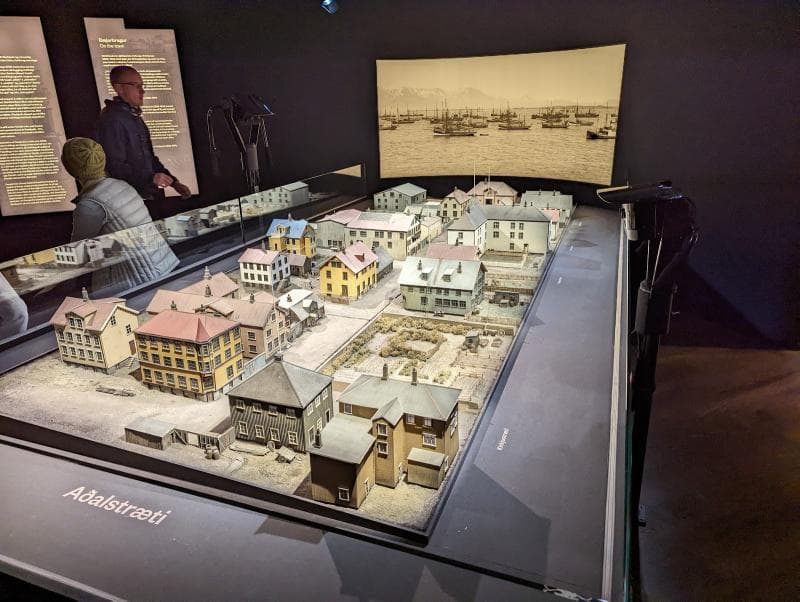
Explore the Viking Longhouse Ruins at The Settlement Exhibition in Reykjavik, Iceland – the oldest evidence of human habitation.
Overview
Deep beneath the bustling streets of Reykjavík, Iceland, lies a silent testament to the city's origins: the Viking Longhouse Ruins, the centerpiece of The Settlement Exhibition. Discovered accidentally in 2001 during construction work on Aðalstræti, these archaeological remains offer a profound glimpse into the lives of Iceland's earliest settlers. Rather than relocating the finds, the Reykjavík City Museum ingeniously built the exhibition around them, preserving the ruins in their original location. The museum is a fascinating journey back to the Viking Age, showcasing the foundations of a 10th-century longhouse and an even older turf wall fragment dating to before 871 ±2 AD. It's an immersive experience that blends authentic historical remnants with modern interactive technology, inviting visitors to connect directly with the very beginnings of human habitation in Reykjavík.
History & Cultural Background
The history of the Viking Longhouse Ruins is deeply intertwined with the saga of Iceland's settlement. The most significant find is a wall fragment dated to before 871 ±2 AD, a precise dating made possible by a layer of tephra (volcanic ash) from a major volcanic eruption that blanketed the region around that time. This tephra layer acts as a chronological anchor, helping archaeologists date other finds from the early settlement period. The longhouse itself, a larger structure built on top of or near these earlier remnants, dates to the 10th century and was likely inhabited from approximately 930 to 1000 AD. The discovery of these ruins significantly expanded understanding of early Reykjavík, suggesting the settlement might have been more extensive than previously thought. These structures represent the oldest confirmed evidence of human presence in Reykjavík, offering tangible proof of the Norsemen who ventured across the sea to establish new lives in this rugged land.
What Makes It Special
What makes the Viking Longhouse Ruins truly special is their undisturbed preservation *in situ*. The decision to build a modern museum directly over the excavation site means visitors can stand mere feet from authentic Viking Age foundations, exactly where the original settlers once lived. This direct connection to the past is immensely powerful. The exhibition masterfully uses multimedia to enhance this experience, projecting digital reconstructions directly onto the ancient stones, allowing imaginations to bridge the gap between fragmented ruins and a bustling Viking home. Artefacts unearthed from the site and surrounding areas, including everyday tools, personal items, and even remnants of a long 'fire' hearth, further enrich the narrative, painting a vivid picture of daily life over a millennium ago. It is a unique example of how a city embraces and celebrates its foundational history, offering an unparalleled archaeological journey.
Stories, Fun Facts & Local Details
The 871 ±2 AD dating refers to a significant volcanic eruption from the Torfajökull area, whose ash layer provides a remarkably accurate timestamp for the earliest human activity in the city. This precision offers a rare opportunity to literally walk through layers of time. The longhouse itself was substantial, measuring at least 20 meters long and 5.5 meters wide, featuring one of the largest 'long fire' hearths ever found in Iceland, stretching over 5.2 meters. This central hearth was vital for heat, light, and cooking, though it also meant the longhouse would have been incredibly smoky. Archaeologists speculate that the longhouse might have been abandoned after a destructive fire, indicated by a layer of red earth and blackened material found during excavation. While the sagas tell tales of Ingólfur Arnarson, the first settler of Reykjavík, these ruins offer a more concrete, archaeological narrative, providing insights beyond written accounts. The exhibition is also connected via an underground tunnel to Aðalstræti 10, the oldest house in downtown Reykjavík, allowing visitors to trace the city's evolution from its Viking roots to more recent times.
Visitor Perspective
Visiting the Viking Longhouse Ruins at The Settlement Exhibition is an experience that resonates deeply with curious travelers. It's a journey not just through space, but through more than 1100 years of history. The museum's intimate setting, built directly around the excavated site, provides a sense of discovery and awe. The use of interactive displays and audio guides in multiple languages ensures that the complex history is accessible and engaging for all ages, including children. You can visualize the lives of the early Norse settlers through digital reconstructions that bring the longhouse back to life, understanding their daily struggles and triumphs. It's a place where history isn't just displayed behind glass but felt underfoot, fostering a profound connection to the origins of Reykjavík and the enduring spirit of its first inhabitants. It's an essential stop for anyone seeking to understand Iceland's foundational past.
Coordinates: -21.942501, 64.147399
View on Google Maps💬 How Travelers Describe This Place
Based on community votes
Unique
926Interesting
450Beautiful
404Photogenic
280Must See
246
Traveler Stories
Discover memorable experiences shared by travelers who have visited this place.
No traveler stories yet.
Be the first traveler to share what made this place memorable.

Tour
By
Spot
Discover amazing places around the world. Your journey starts here.
Explore
© 2026 TourBySpot. All rights reserved.