Viewing Terrace
Athens, Greece
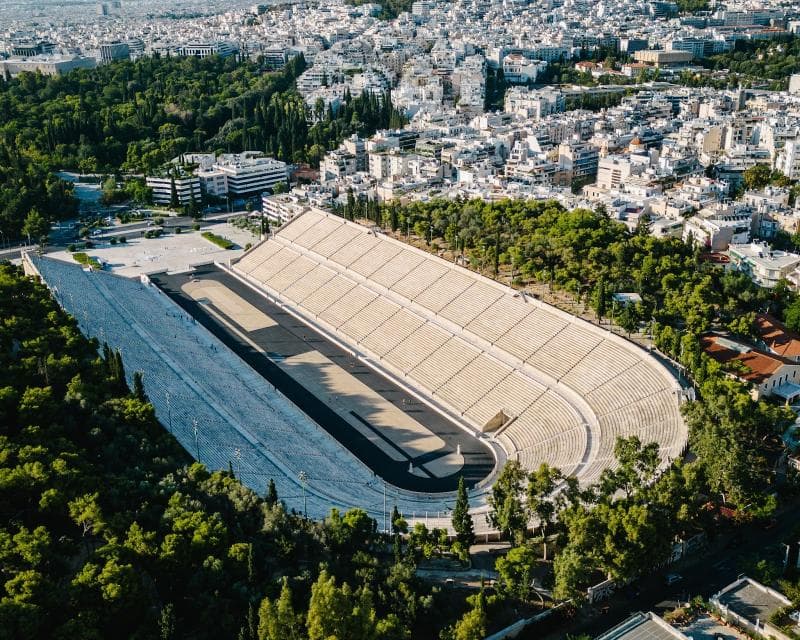
Explore the Panathenaic Stadium's Viewing Terrace in Athens, Greece, offering panoramic views of the Acropolis, Parthenon, and Lycabettus Hill.
Overview
Nestled in the heart of Athens, Greece, the Panathenaic Stadium, affectionately known as Kallimarmaro, which translates to 'beautiful marble,' stands as a testament to millennia of athletic and cultural heritage. It holds the unique distinction of being the only stadium in the world constructed entirely from dazzling Pentelic marble. More than just an ancient ruin, this remarkable site is also the oldest operating stadium globally, its origins tracing back to the 6th century BC. It achieved international prominence as the host of the first modern Olympic Games in 1896, a pivotal moment in sports history. Beyond its historical significance, the stadium offers a truly special experience, particularly from its designated Viewing Terrace, located in the upper bleachers of Section 21. From this vantage point, visitors are treated to an unparalleled panorama of Athens, encompassing iconic landmarks such as the majestic Acropolis, the venerable Parthenon, the elegant Zappeion, the lush National Garden, and the commanding Lycabettus Hill, presenting a harmonious blend of antiquity and modern urban life.
History & Cultural Background
The story of the Panathenaic Stadium began in the 6th century BC as a simple racecourse. Its transformation into a structured stadium commenced around 330 BC under the guidance of the Athenian statesman Lykourgos. This initial construction was primarily to host the Panathenaic Games, a grand athletic and religious festival held every four years in honor of the goddess Athena.
Centuries later, during the Roman era, the stadium underwent a magnificent renovation. Between 140 and 144 AD, the wealthy Roman senator Herodes Atticus funded its complete reconstruction in marble, dramatically increasing its capacity to approximately 50,000 spectators. This period saw the stadium adopt the distinctive horseshoe shape, characteristic of Roman architectural influence. However, with the rise of Christianity in the 4th century, the stadium, along with many ancient pagan festivals, was largely abandoned and fell into disuse.
The stadium lay buried for centuries until its excavation began in 1869. This archaeological effort led to it hosting the Zappas Olympics in 1870 and 1875, an early attempt to revive the ancient games. The most significant restoration, however, came in preparation for the first modern Olympic Games in 1896, largely made possible by the generous sponsorship of Greek benefactor Georgios Averoff.
What Makes It Special
The Panathenaic Stadium's distinction as the only stadium in the world built entirely from marble sets it apart immediately. Its striking white Pentelic marble facade is a sight to behold. Beyond its unique construction, the stadium's historical gravitas as the birthplace of the modern Olympic Games lends it an unparalleled aura. Visitors are not merely observers here; they can actively engage with history by running a lap on the very track where ancient and modern athletes competed.
A highlight for many is the panoramic vista available from the upper tiers, specifically the Viewing Terrace in Section 21. From here, the city of Athens unfolds, presenting a breathtaking tableau that includes the Acropolis, the Parthenon, the Zappeion, the National Garden, and Lycabettus Hill. This viewpoint offers a unique photographic opportunity, capturing the city's ancient and modern landmarks in a single frame.
Beneath the stadium lies a vaulted underground passageway, known as the diodos. This passage is a rare surviving original section of the ancient structure and once served as an entry point for athletes. Today, it leads to a small but engaging Olympic Games Museum, showcasing a collection of Olympic torches and memorabilia, connecting past glories with present traditions.
Stories, Fun Facts & Local Details
The stadium's local name, Kallimarmaro, meaning 'beautiful marble,' perfectly encapsulates its most striking feature. Throughout its long history, it has witnessed numerous memorable events. In 1968, it famously held the world record for the largest attendance at a basketball game, with an estimated 80,000 spectators. It continues to play a significant role in contemporary athletics, serving as the dramatic finishing point for the annual Athens Classic Marathon.
The stadium is also deeply intertwined with the Olympic movement, being the traditional site for the Olympic flame handover ceremony to the host nation before each Olympic Games. A lesser-known fact involves the wealthy benefactor Herodes Atticus, who rebuilt the stadium in marble; he was eventually buried on the stadium grounds as a tribute to his contributions.
Within the ancient underground passageway, there's a fascinating local detail known as the 'Hole of Fate.' Ancient oracles are believed to have used this passage, and spiritual leaders performed rituals there, adding a mystical layer to the athletic grounds. The stadium's architectural form, particularly its horseshoe shape, even inspired the design of later venues, such as Harvard Stadium in the United States.
Visitor Perspective
A visit to the Panathenaic Stadium is an immersive journey through time. Upon entry, most visitors receive an audio guide, available in multiple languages, which enriches the experience with detailed historical context and stories as they explore the grounds. You're encouraged to walk the historic track, ascend the marble seating tiers, and explore the vaulted passage. Don't miss the opportunity to stand on the winner's podium for a memorable photograph, echoing the triumphs of champions past.
The highlight for many is reaching the Viewing Terrace in the upper section of the stands. From here, the expansive views of Athens provide a spectacular backdrop, perfect for capturing photographs that combine the grandeur of the stadium with the city's iconic skyline. It's recommended to visit during the morning or late afternoon, especially in the warmer months, as the white marble can absorb and reflect considerable heat. Wearing comfortable, sturdy shoes is advisable, as the marble steps can be steep and potentially slippery, particularly in wet conditions. Conveniently located in downtown Athens, the stadium is easily accessible by various public transport options or a pleasant walk from central areas.
Coordinates: 23.7404, 37.969
View on Google Maps💬 How Travelers Describe This Place
Based on community votes
Interesting
886Photogenic
564Beautiful
443Must See
310Unique
233
Traveler Stories
Discover memorable experiences shared by travelers who have visited this place.
No traveler stories yet.
Be the first traveler to share what made this place memorable.

Tour
By
Spot
Discover amazing places around the world. Your journey starts here.
Explore
© 2026 TourBySpot. All rights reserved.