Viewing Platforms
San Francisco, United States
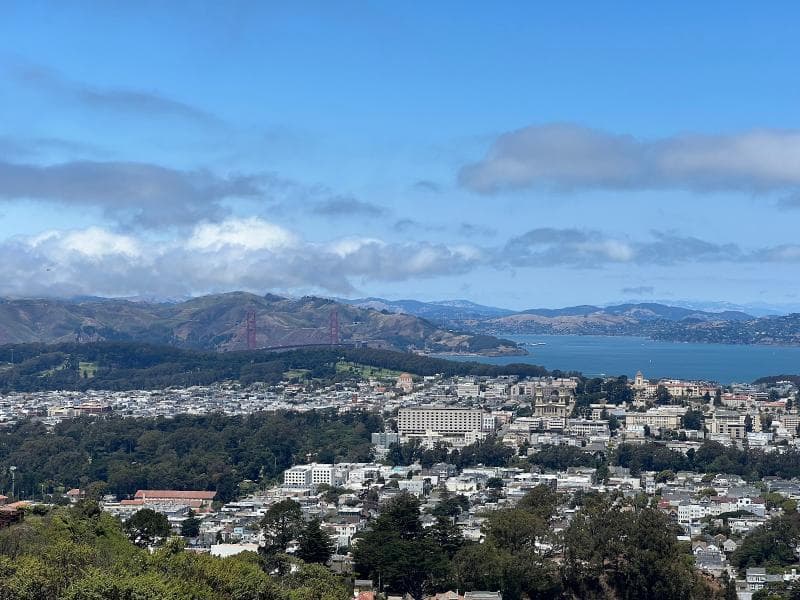
Discover Twin Peaks' breathtaking 360-degree viewing platforms in San Francisco, United States. Explore its history, unique views, and local charm.
Overview
Perched near the geographical heart of San Francisco, the Twin Peaks viewing platforms offer an unrivaled 360-degree panoramic spectacle of the iconic city and its expansive Bay Area surroundings. These two majestic hills, rising approximately 925 feet (282 meters) above sea level, stand as the second highest natural points within San Francisco, surpassed only by Mount Davidson. As you ascend to these natural vantage points, a breathtaking tapestry unfolds before your eyes, showcasing everything from the shimmering waters of the Pacific Ocean to the distant outlines of the Sierra Nevada on a remarkably clear day. It is a place where the city's urban grandeur meets its wild, natural beauty, offering perspectives that encapsulate the very essence of San Francisco. The primary viewing area, accessible by car, is located at Christmas Tree Point Road, providing a readily available vista for all.
History & Cultural Background
Long before it earned its current name, the area now known as Twin Peaks held significant cultural and practical importance. Indigenous Ohlone people reportedly utilized these elevated positions as vital lookout points over the peninsula for centuries. When Spanish conquistadors and settlers arrived in the early 18th century, they were struck by the hills' distinctive shape, christening them 'Los Pechos de la Chola' or 'Breasts of the Indian Maiden.' As San Francisco transitioned to American control in the 19th century, the more colloquial 'Twin Peaks' became its enduring name. Interestingly, each peak also bears its own individual name: the northern peak is known as Eureka Peak, while the southern one is called Noe Peak. The peaks played a crucial role in the city's recovery and planning after the devastating 1906 earthquake and fire, notably with the construction of a massive reservoir in 1954 to ensure a robust water supply for firefighting, a stark reminder of the city's past vulnerabilities.
What Makes It Special
The true magic of the Twin Peaks viewing platforms lies in the sheer scope and diversity of the vistas they provide. From these heights, you can effortlessly trace the iconic Market Street all the way to the Ferry Building, witness the engineering marvels of the Golden Gate and Bay Bridges, spot the historic Alcatraz Island, and marvel at the shimmering Transamerica Pyramid amidst the evolving downtown skyline. Beyond the immediate urban sprawl, your gaze can sweep across Golden Gate Park, the Presidio, the vast expanse of the Pacific Ocean, and even reach the distant cities of Oakland and Berkeley across the bay. What also makes Twin Peaks exceptional is its unique geographical position, acting as a natural barrier that significantly influences San Francisco's distinctive microclimates. The peaks effectively divide the summer fog rolling in from the Pacific, meaning that while west-facing slopes might be shrouded in mist, the east-facing areas often enjoy more sunshine and warmer temperatures. Furthermore, Twin Peaks is not just a viewpoint; it is a vital 64-acre Twin Peaks Natural Area, a protected haven for native vegetation and home to the federally listed endangered Mission Blue Butterfly, making it a unique blend of urban accessibility and ecological importance.
Stories, Fun Facts & Local Details
Twin Peaks is rich with fascinating tidbits that add layers to its allure. For instance, the endangered Mission Blue Butterfly, a delicate resident of these hills, has a remarkable mutualistic relationship with ants. The butterfly larvae secrete a sugary fluid that ants crave, and in return, the ants diligently protect the larvae from predators and parasites. Another interesting fact involves the often-overlooked 1954 Summit Reservoir, discreetly built atop Twin Peaks. This substantial water body, holding 300 million gallons, serves a critical purpose: providing a dedicated water supply for the San Francisco Fire Department's high-pressure fire suppression system, a direct legacy of the lessons learned from the 1906 earthquake and fire. While visitors often notice the prominent Sutro Tower nearby, a distinctive red and white communications tower, it is a separate entity from the Twin Peaks themselves, though it adds to the area's characteristic skyline. It is also a common misconception, particularly for fans of pop culture, that San Francisco's Twin Peaks has any connection to David Lynch's famous television series 'Twin Peaks;' they are entirely unrelated. Historians also recognize Twin Peaks as part of San Francisco's original 'Seven Hills,' a designation that underscores its historical prominence alongside other notable landmarks like Nob Hill and Russian Hill.
Visitor Perspective
Visiting Twin Peaks offers an unforgettable experience, but a little preparation can enhance your journey. The site is open daily from 5 AM to midnight, offering free access, allowing for everything from sunrise photography to sparkling nighttime cityscapes. While the main parking lot at Christmas Tree Point provides spectacular views, intrepid travelers can climb rugged stairs to the top of the individual peaks—the South Peak, Noe Peak, is often cited for having the most expansive views. Coin-operated telescopes are available at the main viewing area for a closer look at city landmarks. It is always advisable to dress warmly and in layers, as the elevation and coastal winds mean temperatures can be significantly cooler and windier than downtown. While clear days offer the most comprehensive panoramas, a visit during the city's famous fog can provide a uniquely ethereal experience, especially when the fog settles below the peaks, creating an 'island in the sky' effect. Twin Peaks is accessible by car, with current access primarily via Portola Road, as some routes have been restricted to pedestrians and cyclists since 2016. Public transportation, such as the 37-Corbett bus, also provides access close to the peaks. As with any popular tourist destination, it is always wise to remain aware of your surroundings and secure any valuables.
Coordinates: -122.4477, 37.7516
View on Google Maps💬 How Travelers Describe This Place
Based on community votes
Must See
839Interesting
445Photogenic
416Beautiful
289Unique
141
Traveler Stories
Discover memorable experiences shared by travelers who have visited this place.
No traveler stories yet.
Be the first traveler to share what made this place memorable.

Tour
By
Spot
Discover amazing places around the world. Your journey starts here.
Explore
© 2026 TourBySpot. All rights reserved.