Viewing Area
Lucerne, Switzerland
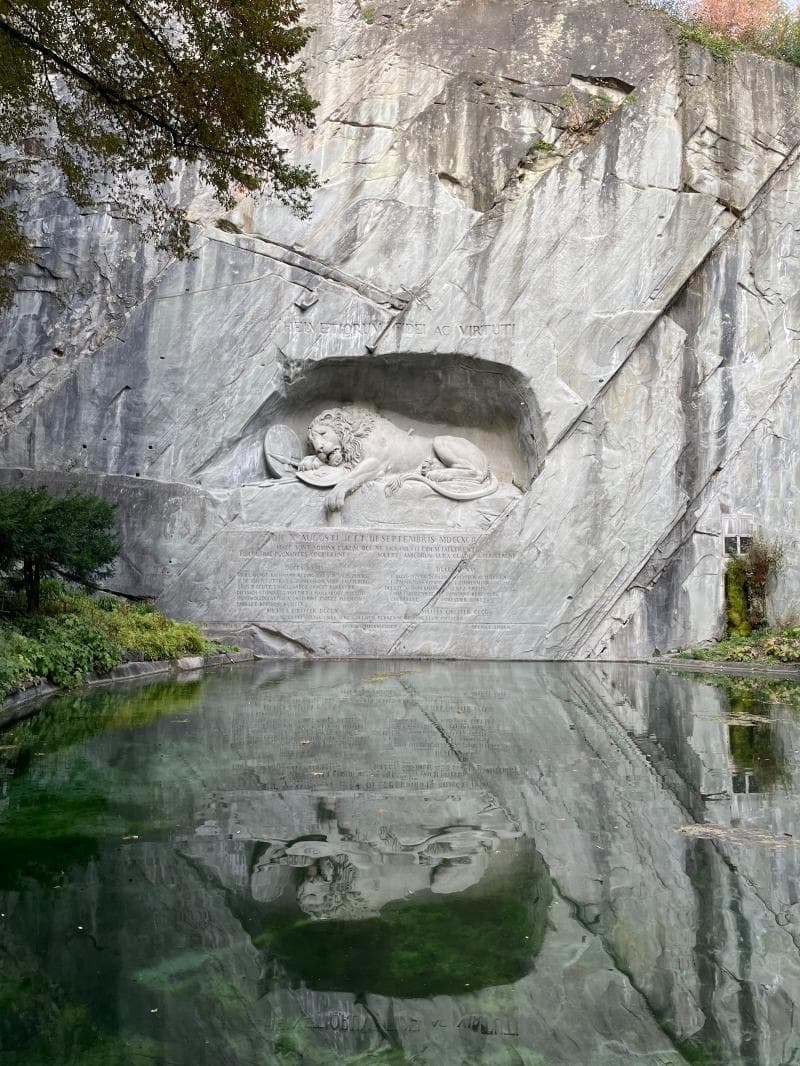
Explore the profound Lion Monument in Lucerne, Switzerland. This powerful rock relief commemorates the Swiss Guards' sacrifice, a 'mournful and moving' sight.
Overview
Nestled within a serene park in Lucerne, Switzerland, the Lion Monument, known locally as Löwendenkmal, is a profoundly moving rock relief that captivates visitors with its powerful depiction of a dying lion. This iconic sculpture is carved directly into a sandstone cliff, above a tranquil pond, creating a contemplative atmosphere that encourages reflection. It stands as one of Switzerland's most revered monuments, drawing approximately 1.4 million visitors annually who come to witness its artistic mastery and historical significance. The area surrounding the monument, often referred to as the 'Viewing Area,' provides ample space for visitors to observe the magnificent carving, absorb its tragic narrative, and enjoy the peaceful park setting.
The monument is freely accessible to the public 24 hours a day, offering a unique opportunity for quiet contemplation at any time. Information boards are available on-site, providing historical context in both German and English, with additional languages accessible via QR code for a deeper understanding of this poignant landmark.
History & Cultural Background
The Lion Monument commemorates a solemn chapter in Swiss history: the sacrifice of the Swiss Guards during the French Revolution. On August 10, 1792, approximately 760 Swiss Guards, bound by an oath to King Louis XVI, were tragically killed while defending the Tuileries Palace in Paris from revolutionary forces.
The idea for this enduring memorial originated with Karl Pfyffer von Altishofen, a Swiss Guards officer who was on leave in Lucerne during the massacre. Deeply affected by the loss of his comrades, Pfyffer initiated a public subscription to fund a monument honoring their loyalty and bravery.
Designed by the celebrated Danish sculptor Bertel Thorvaldsen and meticulously carved into the rock face by Lukas Ahorn between 1820 and 1821, the monument depicts a colossal, mortally wounded lion. The lion lies draped over a shield bearing the French monarchy's fleur-de-lis, with another shield displaying the Swiss coat of arms positioned beside it. This powerful imagery symbolizes the guards' unwavering allegiance and their ultimate sacrifice. Above the carving, the Latin inscription 'HELVETIORUM FIDEI AC VIRTUTI' proudly proclaims 'To the Loyalty and Bravery of the Swiss,' reinforcing the monument's dedication.
What Makes It Special
The Lion Monument's profound impact stems from its raw emotional power and masterful artistry. Unlike many war memorials that glorify victory, this monument focuses solely on the pathos of sacrifice. The lion's expression of agony and resignation is rendered with such heartbreaking realism that it evokes a deep sense of empathy in observers.
American author Mark Twain famously described it as 'the most mournful and moving piece of stone in the world,' a sentiment echoed by countless visitors since. The sculpture's unique placement within a natural rock grotto, with its somber reflection in the still water of the pond below, amplifies its solemnity and contributes to its unique appeal. This setting transforms a mere carving into an immersive experience that resonates deeply with the human spirit.
Furthermore, the monument serves as a tangible link to Switzerland's historical role as a supplier of mercenary soldiers, a tradition that shaped much of its national identity. It's a reminder of virtues like fidelity and courage, which remain central to Swiss culture.
Stories, Fun Facts & Local Details
The Lion Monument's story is rich with compelling details. Karl Pfyffer von Altishofen's dedication to his fallen comrades led him to overcome significant challenges, including political opposition, to bring this memorial to fruition. The monument was carved from a former sandstone quarry, making its integration into the natural landscape particularly striking.
The sculptor, Thorvaldsen, initially hesitated to depict a dead lion, preferring a living one, but ultimately created the dying beast we see today, conveying profound emotion rather than mere lifelessness. Local legend suggests the grotto's shape resembles a sleeping boar, a subtle detail that some believe was Thorvaldsen's hidden jab at Pfyffer over payment issues.
The monument's park-like surroundings offer a tranquil retreat within the bustling city. Visitors can combine their visit with other nearby attractions such as the fascinating Glacier Garden, which showcases glacial potholes and a mirror maze, or the Bourbaki Panorama, a unique circular painting depicting a historical event.
Visitor Perspective
Visiting the Lion Monument offers a peaceful and contemplative experience, distinct from many other tourist attractions. It is easily accessible, located just a short walk (10-20 minutes) from Lucerne's city center and various public transport stops.
To fully appreciate its solemnity and avoid large crowds, an early morning or late afternoon visit is highly recommended. During these quieter times, the soft light enhances the monument's emotional impact, and the reflection of the lion in the pond is particularly striking, offering excellent photographic opportunities. Most visitors spend between 15 to 45 minutes at the site, allowing ample time for reflection and to read the informative panels.
Maintaining a respectful demeanor is encouraged, as this is a site of remembrance and deep historical significance. The tranquil environment provides a chance to pause and reflect on the themes of loyalty, sacrifice, and the often-complex nature of historical events.
Coordinates: 8.3107, 47.0583
View on Google Maps💬 How Travelers Describe This Place
Based on community votes
Photogenic
846Must See
564Beautiful
201Unique
121Interesting
87
Traveler Stories
Discover memorable experiences shared by travelers who have visited this place.
No traveler stories yet.
Be the first traveler to share what made this place memorable.

Tour
By
Spot
Discover amazing places around the world. Your journey starts here.
Explore
© 2026 TourBySpot. All rights reserved.