Viewing Area
Innsbruck, Austria
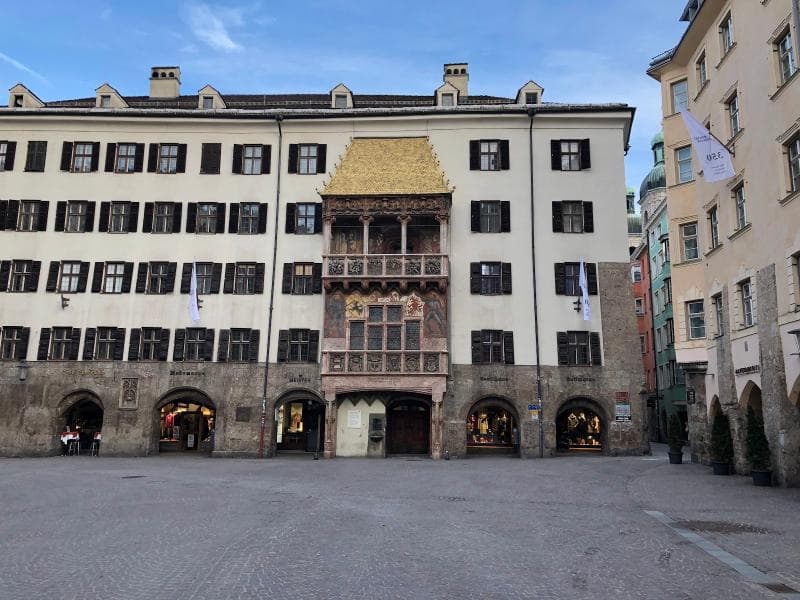
Discover the Golden Roof's Viewing Area in Innsbruck, Austria. Explore imperial history, stunning architecture, and unique perspectives from Emperor Maximilian I's royal balcony.
Overview
In the heart of Innsbruck's historic Old Town, Austria, stands the Golden Roof, or 'Goldenes Dachl' in German, an architectural marvel that has become the city's most iconic landmark. While its shimmering exterior is a familiar sight to many, within this magnificent structure lies a unique 'Viewing Area' that offers more than just a glimpse of the bustling square below. This viewing spot, housed within the Golden Roof Museum, provides a tangible link to the imperial past and an intimate perspective on one of Europe's most captivating historical monuments. It invites curious travelers to step into the shoes of emperors and witness Innsbruck's vibrant history unfold from a privileged vantage point.
The Golden Roof is not merely a facade; it is a profound testament to artistic craftsmanship and imperial ambition. Adorned with 2,657 fire-gilded copper tiles that sparkle under the Alpine sun, the oriel balcony features intricate reliefs and frescoes that narrate tales of a bygone era. For visitors today, the 'Viewing Area' inside the museum allows for a close examination of these historical details and an unparalleled overlook of Herzog-Friedrich-Straße, the main artery of the Old Town.
History & Cultural Background
The story of the Golden Roof begins in the late 15th century, specifically between 1497 and 1500, when Emperor Maximilian I commissioned its construction. It was an extravagant extension to what was then the New Court, a residential building that dated back to the early 15th century under Duke Frederick IV. Maximilian, a pivotal figure in European history, intended the Golden Roof to serve as his royal box or loggia. From this ornate balcony, he could observe tournaments, public spectacles, and festivities in the square below, all while projecting an image of power and affluence.
Maximilian I, known affectionately as the 'Last Knight,' used this prominent position not only to entertain his court but also to engage with his subjects. The Golden Roof was a clear symbol of his imperial status and wealth, a grand statement in a city he transformed into a significant cultural and political center. The construction and embellishment involved master craftsmen of the time, including Nikolaus Türing the Elder, who is credited with the reliefs, and Jörg Kölderer, Maximilian's court painter, who created the stunning frescoes.
What Makes It Special
The Golden Roof's 'Viewing Area' is special because it offers an immersive historical experience that goes beyond simply admiring the exterior. As you step inside the museum housed within the Golden Roof, you gain access to the very balcony that once served as Emperor Maximilian's royal viewing box. This allows you to stand where an emperor once stood, offering a unique perspective of the old town square and a tangible connection to the events of over 500 years ago.
Beyond the panoramic view, the museum itself, known as the Museum Goldenes Dachl or Maximilianum Museum, provides deep insights into Maximilian I's life and reign, as well as the history of Innsbruck and Tyrolean culture. It features centuries-old exhibits combined with modern multimedia technologies, making the imperial era accessible and engaging for all ages. The oriel's intricate reliefs and frescoes, though many are now copies (with originals preserved within the museum), depict scenes from imperial life, courtly entertainment, and Maximilian's family, offering a visual narrative of his legacy.
Stories, Fun Facts & Local Details
One popular, though historically inaccurate, legend attributes the Golden Roof to Duke Frederick IV, often called 'Frederick with the Empty Pockets.' The story claims he built it to flaunt his wealth and silence critics who mocked his supposed poverty. However, historical research confirms Emperor Maximilian I as the true patron.
The meticulous detail of the Golden Roof is a fun fact in itself: the 2,657 copper tiles were not merely painted but fire-gilded, a process that involved applying a thin layer of gold, giving them their characteristic luster and protecting them from the elements. The reliefs on the balustrade include intriguing depictions of Moorish dancers, an exotic element for the time, and one scroll within these carvings remains undeciphered, adding a touch of mystery to the historical narrative. Interestingly, during restoration work in 2012, eight of these precious shingles were stolen, though five were later recovered.
Visitor Perspective
Visiting the 'Viewing Area' of the Golden Roof is an enriching experience for any traveler. After exploring the museum's comprehensive exhibits, which bring Emperor Maximilian I and his era to life through informative panels and multimedia presentations, you arrive at the oriel. Stepping onto this historic balcony, you are greeted with a sweeping view of Herzog-Friedrich-Straße, the bustling pedestrian zone, and the surrounding pastel-colored buildings.
It's a moment to pause and imagine the festive atmosphere Maximilian would have witnessed: knights jousting, merchants hawking their wares, and citizens celebrating. The museum has even installed mirrors that allow visitors to see the intricate frescoes and ceiling details of the oriel that might otherwise be missed. The redesigned museum also prioritizes accessibility, offering features like a stairlift to ensure that everyone can enjoy this unique perspective of Innsbruck's historic heart. The Golden Roof stands not just as a monument, but as a living piece of history, inviting every visitor to connect with its imperial past.
Coordinates: 11.39341, 47.268534
View on Google Maps💬 How Travelers Describe This Place
Based on community votes
Must See
951Beautiful
491Unique
414Photogenic
310Interesting
277
Traveler Stories
Discover memorable experiences shared by travelers who have visited this place.
No traveler stories yet.
Be the first traveler to share what made this place memorable.

Tour
By
Spot
Discover amazing places around the world. Your journey starts here.
Explore
© 2026 TourBySpot. All rights reserved.