Victory Square
Bishkek, Kyrgyzstan
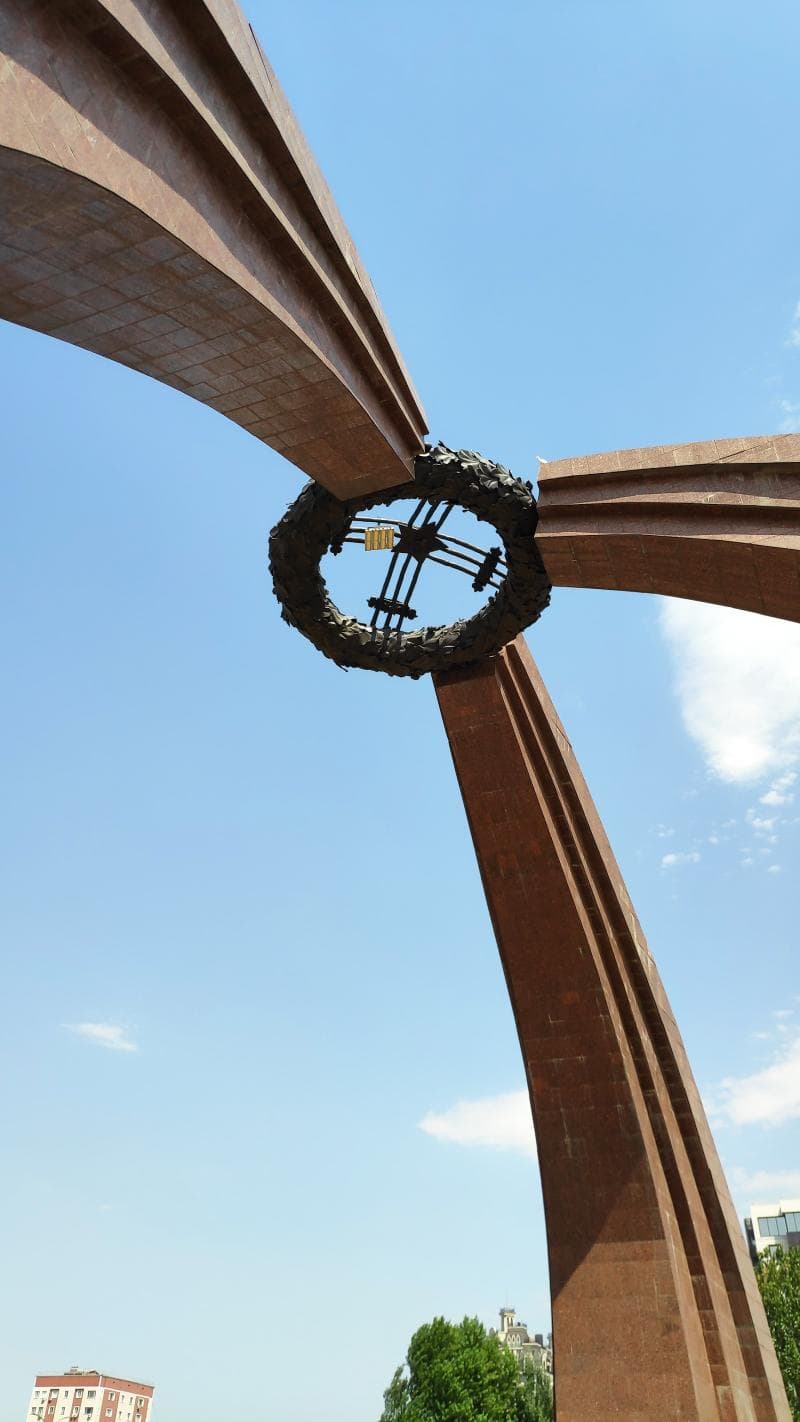
Explore Victory Square in Bishkek, Kyrgyzstan – a poignant memorial to WWII sacrifices, featuring a yurt-shaped monument and eternal flame.
Overview
Victory Square, known locally as Zhumush Akyly, stands as a profound symbol of remembrance and national pride in the heart of Bishkek, Kyrgyzstan. This significant public space is dedicated to commemorating the immense sacrifices and ultimate triumph over Nazi Germany during World War II, a conflict often referred to as the Great Patriotic War in this region. Established in 1985, the square was inaugurated on the 40th anniversary of the war's conclusion, solidifying its role as a perpetual monument to heroism.
The central and most striking feature of Victory Square is its monumental composition, which includes a poignant sculpture of a woman, an eternal flame, and a distinctive archway. Beyond its aesthetic appeal, the square serves as a vital focal point for state ceremonies, parades, and public gatherings, particularly on Victory Day, celebrated annually on May 9th. It offers both residents and visitors a place for quiet reflection, connecting them to a pivotal moment in history and honoring those who ensured peace.
History & Cultural Background
The genesis of Victory Square in Bishkek is deeply rooted in the historical consciousness of Kyrgyzstan's involvement in World War II. The memorial complex was meticulously planned and unveiled in 1985, coinciding with the 40th anniversary of the victory of the Soviet people over Nazi Germany. This timing was deliberate, designed to powerfully acknowledge the collective effort and suffering endured during the war years.
Before its transformation into the solemn memorial it is today, the area where Victory Square now stands had a very different character. It was once home to the bustling Green Market, also known as the Kolkhozny market. Established in 1929, this vibrant marketplace was a hub for farmers and citizens to trade locally grown produce, a far cry from the contemplative atmosphere it now holds. The market was eventually relocated, paving the way for the creation of this historically significant square.
Kyrgyzstan's contribution to the war effort was substantial and deeply impactful. Historical records indicate that over 360,000 Kyrgyz citizens were conscripted and served at the front lines. Tragically, approximately 100,000 of these brave individuals never returned home, having made the ultimate sacrifice for victory. Victory Square thus stands as a direct tribute to these Kyrgyz soldiers and all those who contributed to the immense cost of war. The monumental complex was brought to life by the vision of architects V. Bukhaev and V. Lyzenko, working in collaboration with sculptors M. Anikushkin and T. Sadykov, who skillfully translated the nation's grief and gratitude into enduring stone and bronze.
What Makes It Special
Victory Square's distinction lies in its powerful symbolism and thoughtful design, making it much more than just a public space. At its core is the Victory Monument, an architectural and sculptural marvel. Its most striking feature is the triple archway, composed of three massive red granite pillars that curve upwards to meet at a single point, elegantly mimicking the silhouette of a traditional Kyrgyz yurt. This incorporation of the yurt, a quintessential symbol of Kyrgyz culture, imbues the monument with a profound sense of national identity.
Nestled beneath this symbolic yurt structure is the emotional heart of the square: a bronze sculpture of a woman. She is depicted with an eternal flame at her feet, gazing into the distance, embodying the mothers and wives who endlessly waited for their loved ones to return from the battlefield, many of whom never did. This image is a poignant reminder of the personal toll of war. The eternal flame itself is a solemn tribute to fallen soldiers, kept perpetually alight and honorably guarded by a detachment from the National Guard of Kyrgyzstan. The hourly changing of the guard ceremony adds a ceremonial dignity and a moment of quiet spectacle for visitors.
The square's design extends beyond the central monument. Along the edges of the steps leading to the arch, marble slabs are carefully inscribed. These bear the names of Kyrgyz heroes who fought in the war and worked on the home front, alongside poignant words reflecting on the historical significance of the victory. This meticulous detailing ensures that the monument serves not only as a grand gesture but also as a deeply personal place of remembrance for generations, fostering a continuous connection between past sacrifices and present peace.
Stories, Fun Facts & Local Details
Beyond its monumental presence, Victory Square is rich with narratives and local nuances that add layers to its historical significance. The central sculpture of the waiting woman, often seen holding a bowl or cup, is a powerful cultural reference, symbolizing not just waiting but perhaps also offerings or the act of nurturing hope. This figure resonates deeply with the Kyrgyz spirit of resilience and familial devotion.
The memorial complex also features other compelling sculptural groups. One depicts soldiers joyfully returning from the war, embraced by jubilant children, representing the hard-won peace and the reunion of families. Another portrays two soldiers with a disassembled machine gun, a clear visual metaphor for the cessation of hostilities and the laying down of arms at the war's end. These smaller, yet equally impactful, details help to tell the broader story of the war's impact and its conclusion.
An interesting 'fun fact' is the square's earlier life as the Green Market. Imagine the bustling sounds, vibrant colors, and earthy smells of a traditional Central Asian bazaar in the very spot now dedicated to solemn reflection. This transformation highlights the dynamic history of Bishkek itself. Furthermore, the square is not just a static monument; it's a living part of the city's calendar. On Victory Day, May 9th, the square becomes the epicenter of national commemoration. In a notable tribute for the 75th anniversary of the war's end in 2020, the square was adorned with a large floral panel shaped like a star and the number '75', demonstrating a creative way locals honor the past. It is also a common and meaningful location for wedding parties to visit, symbolizing new beginnings and hope for the future, perhaps in silent acknowledgment of the past sacrifices that made their present joy possible.
Visitor Perspective
Visiting Victory Square offers a unique and contemplative experience for any traveler in Bishkek. Upon arrival, one is immediately struck by the peaceful and reverent atmosphere that pervades the space. It is an ideal spot for a quiet stroll, allowing ample time to reflect on the historical weight and the profound messages conveyed by the monument and its surroundings. The well-maintained gardens and open spaces invite visitors to pause and absorb the significance of the site.
As a place of deep national sentiment, it is important for visitors to approach Victory Square with respect and solemnity. While it is an open and accessible public memorial, a mindful demeanor is always appreciated, in keeping with its commemorative purpose. There are no entrance fees or specific operating hours, making it freely accessible for contemplation at any time. For those interested in exploring the immediate vicinity, the square is conveniently located near other city landmarks. These include the Bishkek circus, major shopping centers like TSUM and GUM, the Hyatt hotel, and the tranquil Oak Park. This allows for Victory Square to be easily integrated into a broader exploration of Bishkek's cultural and urban landscape, providing a poignant historical anchor amidst the city's vibrant daily life.
Coordinates: 74.615922, 42.878958
View on Google Maps💬 How Travelers Describe This Place
Based on community votes
Must See
797Interesting
695Unique
396Beautiful
286Photogenic
22
Traveler Stories
Discover memorable experiences shared by travelers who have visited this place.
No traveler stories yet.
Be the first traveler to share what made this place memorable.
Things to see at Victory Square



Tour
By
Spot
Discover amazing places around the world. Your journey starts here.
Explore
© 2026 TourBySpot. All rights reserved.