Granite Monuments
Bishkek, Kyrgyzstan
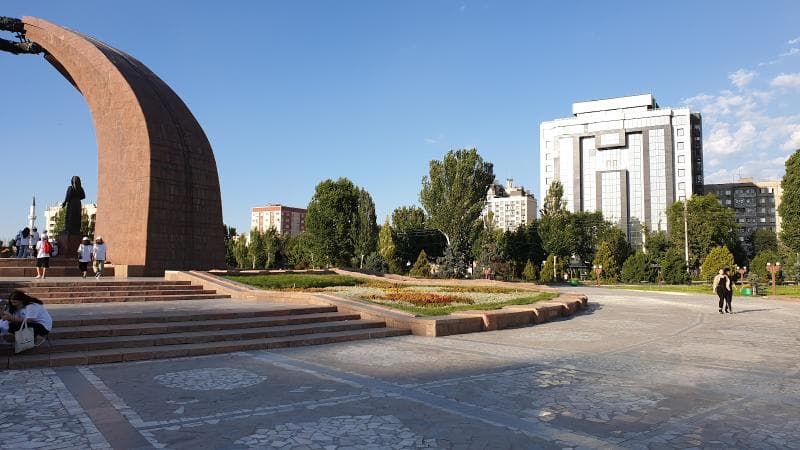
Explore the profound Granite Monuments in Victory Square, Bishkek, Kyrgyzstan, a moving tribute to WWII heroes and Kyrgyz cultural heritage.
Overview
In the vibrant heart of Bishkek, Kyrgyzstan, within the expansive embrace of Victory Square, stands a profound memorial often referred to as the 'Granite Monuments.' This central architectural and sculptural composition is a powerful tribute dedicated to the Heroes of the Second World War, a conflict locally known as the Great Patriotic War. At its core, the monument features three massive arches crafted from red granite, designed to evoke the silhouette of a traditional Kyrgyz yurt, or more specifically, its crown, the *tynduk*. Beneath this symbolic canopy, an enduring sculpture of a woman stands, her gaze fixed into the distance, representing the mothers and wives who waited anxiously for their loved ones to return from the war. An Eternal Flame burns perpetually at her feet, serving as a poignant symbol of remembrance and everlasting gratitude for the immense sacrifices made by the Kyrgyz people.
Victory Square itself, established in 1985, serves as a focal point for national remembrance and celebration, particularly on Victory Day. It's a place where history intertwines with daily life, offering both solemn reflection and a peaceful urban escape.
History & Cultural Background
Victory Square, and its central Granite Monuments, were inaugurated in 1985 to commemorate the 40th anniversary of the victory over Nazi Germany in World War II. Prior to its transformation into a memorial square, this significant urban space was known as the 'Green Market' or collective farm market, a bustling hub where local farmers sold their produce.
The creation of this monument underscored Kyrgyzstan's profound contribution and sacrifice during the war. Historical records reveal that a staggering four hundred thousand Kyrgyz citizens participated in the Second World War. Out of these, a devastating one hundred thousand never returned home, their lives lost in the conflict. The Granite Monuments stand as a lasting testament to their heroism and the collective resilience of the Kyrgyz nation during one of history's most harrowing periods. The monument's design intentionally weaves together this painful history with profound cultural symbols, making it a unique and deeply meaningful site.
What Makes It Special
The Granite Monuments are not merely a collection of stone and sculpture; they are a masterpiece of symbolic design, deeply rooted in Kyrgyz culture and history. The three granite arches, forming the outline of a yurt's *tynduk*, are particularly striking. This national dwelling shape represents not only the nomadic heritage of Kyrgyzstan but also, in this context, serves as a funeral wreath, powerfully conveying the sorrow and immense loss experienced by the nation.
At the heart of this structure, the sculpture of the waiting woman embodies the universal pain of separation and the longing for peace. Her vigil by the Eternal Flame is a powerful artistic representation of sacrifice and enduring hope. The approaches to the monument are thoughtfully designed to create a contemplative journey, guiding visitors slowly and respectfully towards the Eternal Flame, allowing for a gradual immersion into the monument's solemn significance. This thoughtful integration of national symbols, historical narrative, and architectural design sets the Granite Monuments apart as a truly special place.
Stories, Fun Facts & Local Details
Beyond its historical gravitas, Victory Square and its Granite Monuments are woven into the fabric of everyday Bishkek life. One of the most touching traditions associated with the monument is the frequent visits by newlyweds. It's customary for new couples to come to the square, lay flowers at the Eternal Flame, and take photographs. This tradition beautifully links personal celebrations of new beginnings with a solemn respect for the past and those who ensured a future for their country.
Another notable aspect is the hourly changing of the guard ceremony performed by a detachment from the National Guard of Kyrgyzstan, adding a ceremonial dignity to the Eternal Flame's constant vigil. The square is also a major site for the annual Victory Day parade on May 9th, where military personnel and citizens gather to honor veterans and fallen soldiers, transforming the space into a vibrant display of national pride and remembrance. In addition to the central monument, other sculptures throughout the square depict various military events and the joyful return of soldiers, with one particular installation featuring two soldiers with a disassembled machine gun, symbolizing the definitive end of the war.
Visitor Perspective
Visiting the Granite Monuments within Victory Square offers a multifaceted experience for any traveler. The site is accessible year-round and is well-maintained with flowerbeds and green spaces, providing a peaceful atmosphere for reflection. While it can be a quiet place for contemplation, particularly on ordinary days, it transforms into a bustling hub of activity during national holidays like Victory Day.
Travelers can easily spend one to two hours exploring the complex, taking in the intricate details of the granite structures, the poignant sculpture of the waiting woman, and the eternal flame. The square encourages a slow, measured pace, inviting visitors to absorb the historical and emotional weight of the memorial. It's a place to understand a significant chapter of Kyrgyzstan's past, feel the depth of its national pride, and witness how the memory of sacrifice continues to shape the cultural identity of Bishkek.
Coordinates: 74.615922, 42.878958
View on Google Maps💬 How Travelers Describe This Place
Based on community votes
Interesting
995Must See
989Unique
603Beautiful
581Photogenic
388
Traveler Stories
Discover memorable experiences shared by travelers who have visited this place.
No traveler stories yet.
Be the first traveler to share what made this place memorable.

Tour
By
Spot
Discover amazing places around the world. Your journey starts here.
Explore
© 2026 TourBySpot. All rights reserved.