Victory Monument
Bishkek, Kyrgyzstan
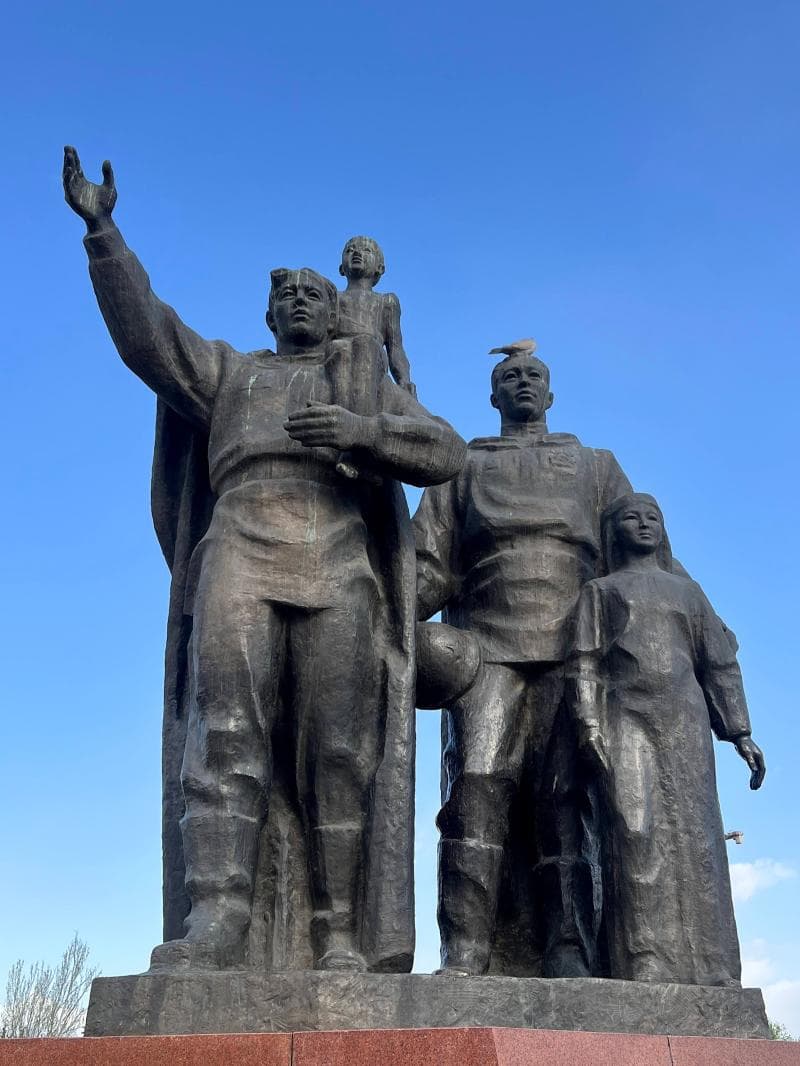
Explore Bishkek's Victory Monument, a powerful WWII memorial in Victory Square, Kyrgyzstan, symbolizing sacrifice with its unique yurt design and eternal flame.
Overview
In the vibrant heart of Bishkek, Kyrgyzstan, stands the profound Victory Monument, a solemn tribute embedded within the expansive Victory Square. This iconic memorial is not merely a collection of statues but a deeply symbolic representation of sacrifice and resilience, commemorating the Soviet Union's triumph in the Great Patriotic War (World War II). Its striking design, evoking the traditional Kyrgyz yurt, immediately captures attention, drawing visitors into a narrative of history and remembrance. The monument serves as a central point for national reflection, a place where the echoes of the past resonate powerfully with the present.
History & Cultural Background
The Victory Monument was unveiled in 1985, precisely 40 years after the conclusion of World War II, a period referred to in the former Soviet Union as the Great Patriotic War. This timing underscores its significance as a milestone commemoration of a conflict that profoundly impacted the region. Kyrgyzstan, then a constituent republic of the Soviet Union, contributed an immense human toll to the war effort; over 360,000 Kyrgyz citizens served at the front, and tragically, approximately 100,000 never returned. The monument, designed by architects V. Bukhaev and V. Lyzenko, and sculptors M. Anikushkin and T. Sadykov, was erected to honor these sacrifices and the collective victory over fascism. It stands as a powerful reminder of the colossal price paid by the people of Kyrgyzstan for peace and freedom.
What Makes It Special
The architectural and sculptural composition of the Victory Monument is rich in symbolism. Its most distinctive feature is the central structure of three curved arcs made of red granite, artfully designed to represent a Kyrgyz yurt, the traditional nomadic dwelling. Where these arcs meet, a wreath with a star inside is held, symbolizing victory. Beneath the central arch, a poignant sculpture of a woman stands, gazing into the distance. This figure embodies the mothers and wives who patiently and anxiously awaited the return of their sons and husbands from the war, a universal symbol of wartime loss and hope. An eternal flame burns perpetually before her, a sacred tribute to the fallen soldiers, ensuring their memory endures. Flanking the central yurt are other sculptural elements, depicting soldiers and laborers, further illustrating the widespread impact and sacrifice made by all segments of society.
Stories, Fun Facts & Local Details
Victory Square, home to the monument, is a living part of Bishkek's cultural fabric. It's a cherished location for newly married couples, who often visit to pay respects to fallen soldiers and capture wedding photographs, blending personal joy with national remembrance. A solemn changing of the guard ceremony takes place hourly at the eternal flame, performed by a detachment from the National Guard of Kyrgyzstan, adding a ceremonial gravitas to the site. Each year on May 9th, Victory Day is celebrated with grand parades and ceremonies at the square, involving the Armed Forces, Ministry of the Interior, and Emergencies Ministry, honoring veterans and reaffirming the historical significance of the victory. The square itself was once the site of Bishkek's bustling Green Market or Kolkhozny market until it was transformed into this significant memorial space.
Visitor Perspective
Visiting the Victory Monument offers a deeply moving experience. The grandeur of the yurt-like structure and the quiet dignity of the mother figure invite contemplation on the profound human cost of war and the enduring spirit of a nation. The eternal flame flickering softly provides a focal point for silent reflection. It is a place that evokes a powerful sense of respect for the past and appreciation for the present. The surrounding Victory Square, with its well-maintained gardens and open spaces, allows for a peaceful stroll, providing ample opportunity to absorb the historical and emotional weight of the monument. It's an essential stop for any traveler seeking to understand the soul of Bishkek and the historical narrative that shaped Kyrgyzstan.
Coordinates: 74.615922, 42.878958
View on Google Maps💬 How Travelers Describe This Place
Based on community votes
Beautiful
934Must See
741Unique
276Interesting
30Photogenic
16
Traveler Stories
Discover memorable experiences shared by travelers who have visited this place.
No traveler stories yet.
Be the first traveler to share what made this place memorable.

Tour
By
Spot
Discover amazing places around the world. Your journey starts here.
Explore
© 2026 TourBySpot. All rights reserved.