Velázquez Gallery
Madrid, Spain
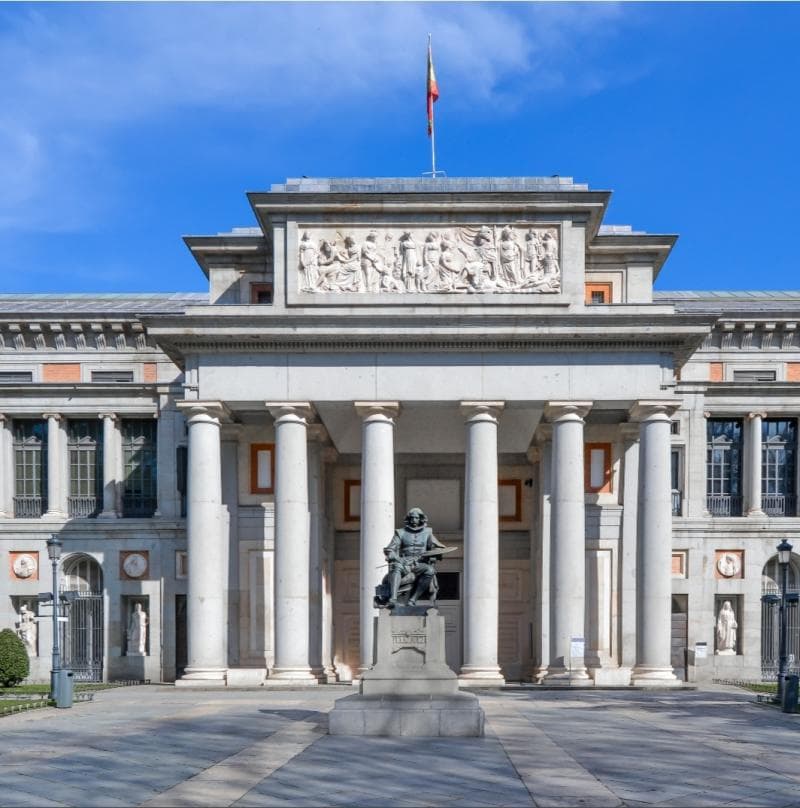
Explore the Velázquez Gallery at the Prado Museum in Madrid, Spain. Discover iconic works like 'Las Meninas' and delve into the life and art of this Spanish Golden Age master.
Overview
Stepping into the Velázquez Gallery within Madrid's magnificent Prado Museum is an immersion into the golden age of Spanish art, a journey through the profound genius of Diego Velázquez. Far from being a single, confined room, this 'gallery' encompasses a series of specially curated spaces dedicated to showcasing the unparalleled breadth and depth of his work. The Prado Museum proudly houses the world's most comprehensive collection of Velázquez's paintings, presenting nearly half of his entire artistic output, including almost all his most significant masterpieces. These rooms have been meticulously re-hung and updated to provide an optimal viewing experience, inviting visitors to intimately engage with the artist's revolutionary techniques and captivating narratives.
As you wander through these galleries, you'll encounter iconic works such as 'Las Meninas', 'The Surrender of Breda', and 'The Spinners', each telling a unique story of 17th-century Spain, its royalty, mythology, and everyday life. The collection is thoughtfully arranged, often following chronological and thematic concepts that illuminate Velázquez's artistic evolution, from his early naturalist phase to his profound Italian influences and his definitive period as court painter.
History & Cultural Background
Diego Velázquez, born in Seville in 1599, rose to become the preeminent painter of the Spanish Golden Age and a pivotal figure in Western art history. His artistic journey began under the tutelage of Francisco Pacheco, who would later become his father-in-law, in a vibrant Seville that was a hub of artistic activity. At the young age of 24, Velázquez moved to Madrid and was appointed court painter to King Philip IV, a position he held until his death in 1660. This appointment was instrumental, granting him access to the royal art collection, where he studied and absorbed the techniques of masters like Titian and Peter Paul Rubens, profoundly shaping his evolving style.
Velázquez undertook two significant trips to Italy, broadening his artistic horizons and influencing his mythological and historical compositions. These travels and his privileged position within the court allowed him to capture the essence of his era, not only through grand royal portraits but also through penetrating studies of common people, mythological scenes, and historical events. The Prado Museum itself, established in 1819, largely owes its foundational collection to the Spanish royal family's vast acquisitions, a legacy that Velázquez significantly contributed to, even bringing many Italian masterpieces to Spain.
What Makes It Special
The Velázquez Gallery's unique appeal lies in its comprehensive display of an artist whose impact on painting is immeasurable. It's not just a collection of paintings; it's a profound narrative of artistic innovation. Velázquez revolutionized painting with his mastery of psychological realism, his 'alla prima' method of direct painting, and his remarkably loose brushwork, which anticipated Impressionism by centuries. His use of light and atmosphere created a sense of depth and life rarely seen before, drawing the viewer into the scene.
What makes this collection particularly special is the Prado's commitment to presenting his works in a way that highlights their original impact. For instance, the renowned painting 'The Spinners' is now displayed with a special installation that restores it to its original size, revealing its full compositional genius by concealing later additions. This meticulous attention to detail allows visitors to experience Velázquez's vision as authentically as possible, understanding why he is often called 'the painter's painter' for his enduring influence on subsequent generations of artists.
Stories, Fun Facts & Local Details
One cannot discuss Velázquez without delving into the captivating stories behind his works. His undisputed masterpiece, 'Las Meninas' (The Maids of Honor), housed prominently in Room 12, is not only the most famous painting in the collection but also one of the most analyzed in art history. It's a complex, multi-layered composition that challenges perceptions of reality and representation. A delightful fun fact is that Velázquez himself is prominently featured in this painting, brush in hand, creating a self-portrait within his grandest work. The painting was so famous even during his lifetime that the Italian Baroque painter Luca Giordano called it 'the theology of painting'.
Another fascinating work, 'The Surrender of Breda' (also known as 'Las Lanzas'), immortalizes a moment of magnanimous victory, depicting the key exchange between the Dutch governor and the Spanish general with a sense of dignity and respect. Velázquez was a master of detail, even depicting the various types of lances that gave the painting its alternative name. His portraits of King Philip IV and other court figures reveal an intimate understanding of his subjects, capturing their character with startling realism. As you explore, consider the artist's personal journey, from a young apprentice in Seville to the most revered painter in the Spanish court, a trajectory brilliantly chronicled within these very walls.
Visitor Perspective
Visiting the Velázquez Gallery at the Prado Museum is an essential experience for any art lover or curious traveler in Madrid. The museum is conveniently located in central Madrid, forming a crucial part of the city's 'Golden Triangle of Art'. To fully appreciate the collection, allow ample time, as each painting offers layers of detail and narrative. The recently re-hung rooms, with their updated lighting and wall coverings, significantly enhance the viewing experience, allowing Velázquez's vibrant colors and subtle textures to truly shine.
You'll find that 'Las Meninas', in particular, often draws a crowd, and taking a moment to simply observe it from various distances can unlock new perspectives on its intricate composition and the interplay of gazes. Exploring the various galleries dedicated to Velázquez's different thematic periods provides a coherent overview of his development, making the visit both educational and deeply moving. Whether you're drawn to the grandeur of royal portraits, the drama of mythological scenes, or the candid realism of everyday life, Velázquez's work offers a profound connection to the heart of Spanish artistic heritage.
Coordinates: -3.692127, 40.413786
View on Google Maps💬 How Travelers Describe This Place
Based on community votes
Beautiful
953Unique
658Photogenic
585Interesting
69Must See
22
Traveler Stories
Discover memorable experiences shared by travelers who have visited this place.
No traveler stories yet.
Be the first traveler to share what made this place memorable.

Tour
By
Spot
Discover amazing places around the world. Your journey starts here.
Explore
© 2026 TourBySpot. All rights reserved.