Vaulted Ceiling & Brick Arches
Istanbul, Turkey
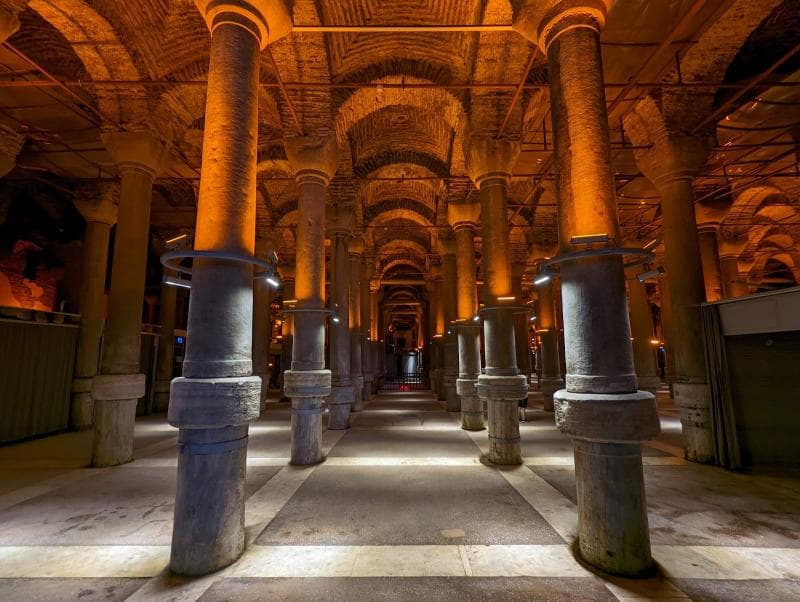

Explore the stunning vaulted ceilings and brick arches of Istanbul's Basilica Cistern, a 6th-century Byzantine marvel in Turkey.
Overview
Beneath the bustling streets of Istanbul, Turkey, lies a mesmerizing testament to Byzantine engineering: the Basilica Cistern, known locally as 'Yerebatan Sarnıcı' or the 'Sunken Palace'. This ancient underground water reservoir, constructed in the 6th century, captivates visitors with its vast, cathedral-like expanse. Among its most striking architectural features are the intricate vaulted ceilings and robust brick arches that stretch across hundreds of columns, creating a sense of profound depth and historical grandeur.
History & Cultural Background
The Basilica Cistern's origins trace back to the reign of Byzantine Emperor Justinian I (527-565 AD), who commissioned its construction in 532 AD. Its primary purpose was to provide a crucial water supply to the Great Palace of Constantinople and other surrounding buildings, especially vital during sieges or dry periods. Historical texts suggest that as many as 7,000 slaves were involved in this monumental undertaking. The cistern measures approximately 140 meters long and 70 meters wide, capable of holding up to 80,000 cubic meters of water. The materials used in its construction, particularly the 336 marble columns, were often repurposed from earlier Roman structures and temples across the empire, showcasing a pragmatic approach to building that was common in the Byzantine era.
What Makes It Special
The sub-spot 'Vaulted Ceiling & Brick Arches' highlights the extraordinary architectural design that supports this subterranean marvel. The ceiling is a complex network of brick vaults and arches, seamlessly interconnecting with the 336 columns below. These arches, built from brick, are not only aesthetically pleasing but are crucial for the structural integrity of the vast underground space, efficiently distributing the immense weight above. The rhythmic arrangement of the columns, typically 12 rows of 28, combined with the elegant curves of the arches and vaults, creates a powerful visual symphony. This masterful use of brickwork and vaulting allowed for the creation of an expansive, open interior, a monumental engineering feat for its time that effectively transformed a functional water reservoir into what feels like an underground palace or cathedral.
Stories, Fun Facts & Local Details
The cistern is steeped in fascinating stories and unique details. One of the most famous elements is the presence of two Medusa heads used as column bases, positioned mysteriously sideways and upside down. While their exact origin remains a mystery, legends suggest they were placed this way to negate Medusa's petrifying gaze and ward off evil spirits, though practical reasons like fitting the column height might also explain their unusual orientation. Another poignant feature is the 'Weeping Column,' or 'Tear Column,' distinguished by tear-like carvings and its perpetually damp surface. It is believed to be a memorial to the hundreds of slaves who perished during the cistern's demanding construction. The nickname 'Sunken Palace' (Yerebatan Sarayı) itself speaks to the grandeur and almost mythical atmosphere that the locals associated with this hidden world beneath their feet.
Visitor Perspective
Stepping into the Basilica Cistern today is an immersive journey into history. The transition from Istanbul's vibrant streets to the cool, dimly lit subterranean space is immediate and dramatic. The subtle, atmospheric lighting enhances the grandeur of the vaulted ceilings and illuminates the rows of columns, many of which reflect in the shallow, still water below. Elevated wooden walkways guide visitors through this 'forest of columns,' offering breathtaking perspectives of the architectural marvels above and around. The gentle dripping of water, coupled with the profound silence that often fills the chamber, evokes a mystical and serene ambiance, a striking contrast to the bustling city above. It truly feels like walking through a forgotten world, where every arch and vault whispers tales of Byzantine ingenuity and enduring heritage.
Coordinates: 28.9778, 41.0084
View on Google Maps💬 How Travelers Describe This Place
Based on community votes
Photogenic
996Must See
953Beautiful
658Interesting
585Unique
69
Traveler Stories
Discover memorable experiences shared by travelers who have visited this place.
No traveler stories yet.
Be the first traveler to share what made this place memorable.

Tour
By
Spot
Discover amazing places around the world. Your journey starts here.
Explore
© 2026 TourBySpot. All rights reserved.