Vatican Grottoes
Rome, Italy
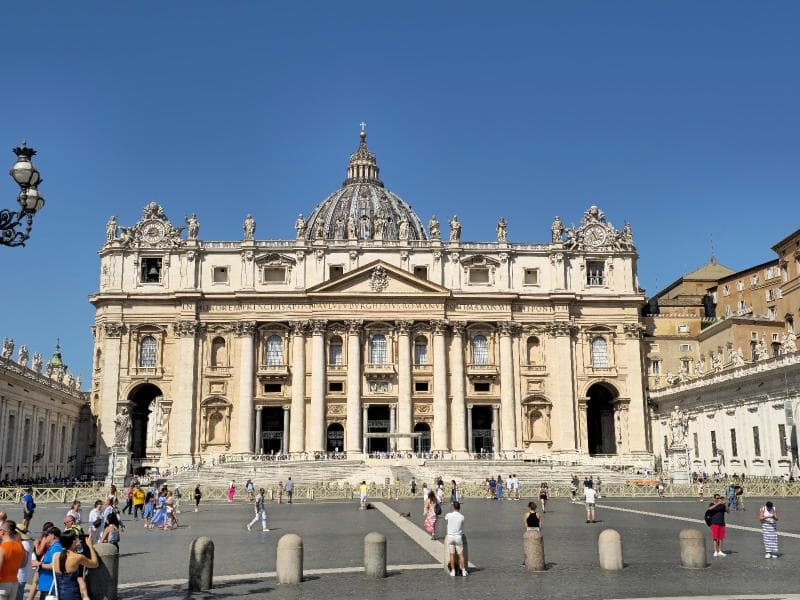
Explore the Vatican Grottoes in Rome, Italy, a sacred subterranean crypt beneath St. Peter's Basilica, housing papal tombs and ancient relics.
Overview
Deep beneath the grandeur of St. Peter's Basilica in Vatican City, Rome, lies a sacred and historical marvel known as the Vatican Grottoes. This subterranean network of chapels and tombs serves as a profound resting place for numerous popes, royals, and other esteemed figures of the Catholic Church. Often described as a 'lower basilica,' the Grottoes provide a unique glimpse into centuries of spiritual legacy and architectural evolution. While distinct from the much deeper Vatican Necropolis, the Grottoes occupy the space between the current basilica floor and the foundation of the ancient Constantinian basilica, making them an accessible and integral part of any visit to St. Peter's.
History & Cultural Background
The story of the Vatican Grottoes begins in the late 16th century, specifically between 1590 and 1591, when they were ingeniously constructed to support the colossal weight of the new Renaissance St. Peter's Basilica being built above. However, their roots delve much deeper into Rome's past. The area was originally a Roman cemetery, gaining immense religious significance in the 4th century when Emperor Constantine chose this site to build the first St. Peter's Basilica directly over what was traditionally believed to be the tomb of St. Peter, the Apostle.
Over the centuries, the Grottoes evolved from mere structural foundations into a consecrated space. Pope Clement VIII initiated significant renovations in 1592, creating the Clementine Chapel, which now stands closest to St. Peter's revered burial site. Further expansions were undertaken by Pope Paul V in the early 17th century, who added new corridors and chapels. As the ancient basilica was gradually dismantled to make way for the magnificent structure we see today, the Vatican Grottoes became a vital repository, preserving precious relics, artworks, and fragments from the earlier church, effectively transforming into an 'ante litteram museum' of its time. The meticulous archaeological excavations conducted in the 1940s under Pope Pius XII were pivotal in identifying the precise location of St. Peter's tomb, adding immense weight to the Grottoes' spiritual significance.
What Makes It Special
What truly sets the Vatican Grottoes apart is their profound connection to the earliest days of Christianity and their role as a sacred necropolis. At its heart lies the venerated tomb of St. Peter, the first Pope, a site of pilgrimage for millions across the globe. Beyond this central shrine, the Grottoes serve as the final resting place for more than 90 pontiffs, offering a tangible link to the unbroken lineage of papal succession. Visitors can find the initial burial sites of revered figures like Pope John Paul II (whose remains were later moved to the basilica above) and Pope Pius XII, alongside other medieval popes.
The Grottoes are not solely dedicated to religious leaders; they also house the tombs of historical royalty, such as Queen Christina of Sweden, who famously abdicated her throne to convert to Catholicism, and Queen Charlotte of Cyprus. The architectural blend within the Grottoes, featuring vaulted ceilings and intricate chapels, is adorned with ancient mosaics, frescoes, and sculptures. Many of these artworks are precious remnants from the original 4th-century basilica, offering a unique artistic and historical journey through different eras of the Church. It is a place where history, faith, and art converge in a hushed, contemplative atmosphere.
Stories, Fun Facts & Local Details
The Vatican Grottoes are rich with stories and fascinating details that bring its history to life. One such anecdote surrounds the Clementine Chapel, which acts as a protective enclosure for St. Peter's tomb. Within this chapel, the 'subterranea Confession,' dating back to the late sixth century, has remarkably retained its original form and purpose through the ages. A significant discovery during the 1940s excavations was the presence of Greek inscriptions reading 'Πέτρος ἐνί' ('Peter is here'), which played a crucial role in confirming the location of the Apostle's tomb.
You might encounter the ancient fresco known as 'Madonna della Bocciata' (Madonna with the swollen face), which has its own intriguing legend. Another touching tradition involves pilgrims making gestures of kissing the feet of a marble statue of St. Peter enthroned, located near the exit, a testament to enduring devotion. It's also interesting to note that the Grottoes are not true catacombs, but rather an elevated crypt built above the ancient Roman necropolis, which lies even further below. Among the non-papal burials, you'll find the Stuarts, claimants to the English throne who lived in exile in Rome. These layers of history and personal stories create a truly immersive experience.
Visitor Perspective
Accessing the Vatican Grottoes is a seamless part of visiting St. Peter's Basilica. Entry is free of charge, and visitors can descend into this remarkable space directly from the main basilica, typically near the statues of St. Helen and St. Andrew. It is situated approximately three meters below the current floor of the basilica, forming a distinct underground church. As with the Basilica above, visitors are expected to adhere to a modest dress code, ensuring shoulders and knees are covered. The Grottoes are generally open from Monday to Sunday, usually between 9:00 and 18:00, though it's always wise to check for any seasonal variations in opening hours. While photography is generally not permitted within the Grottoes to preserve their contemplative atmosphere, the experience itself is an enduring memory. Many find it most beneficial to explore the Grottoes after touring the magnificent Basilica above, allowing for a natural progression through layers of history and reverence.
Coordinates: 12.452, 41.9013
View on Google Maps💬 How Travelers Describe This Place
Based on community votes
Unique
826Must See
800Beautiful
387Interesting
242Photogenic
82
Traveler Stories
Discover memorable experiences shared by travelers who have visited this place.
No traveler stories yet.
Be the first traveler to share what made this place memorable.

Tour
By
Spot
Discover amazing places around the world. Your journey starts here.
Explore
© 2026 TourBySpot. All rights reserved.