Vasco Da Gama Park
Lisbon, Portugal
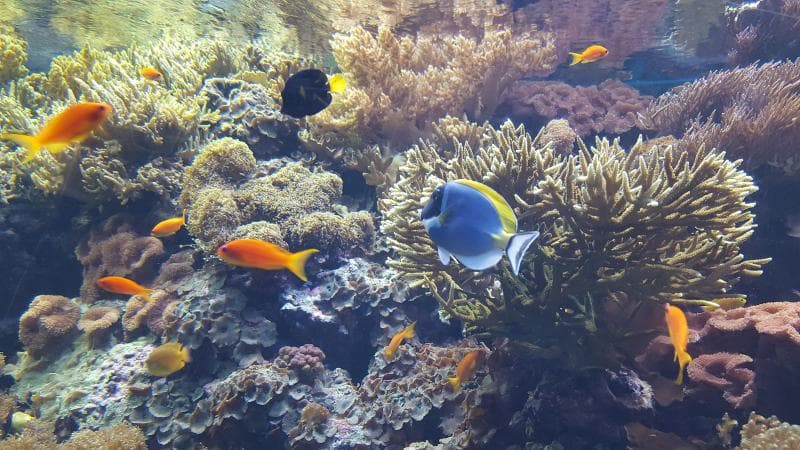
Explore Lisbon's Parque das Nações, home to Oceanário de Lisboa, where the spirit of Vasco da Gama's discoveries enriches this modern waterfront district.
Overview
Stepping into the area surrounding the Oceanário de Lisboa, one enters a remarkable district known as Parque das Nações, or the Park of Nations. While there isn't a dedicated 'Vasco da Gama Park' precisely *inside* the Oceanário itself, the entire modern waterfront expanse where the Oceanário proudly stands is deeply intertwined with the legacy of the intrepid Portuguese explorer, Vasco da Gama. This area, transformed from a dilapidated industrial zone, was the stage for Expo '98, a world's fair commemorating the 500th anniversary of Vasco da Gama's pioneering voyage to India. As such, the spirit of discovery and maritime heritage permeates every corner, from its striking architecture to its prominent landmarks, offering a unique fusion of history and futurism.
The Oceanário de Lisboa, an acclaimed oceanarium, serves as the vibrant heart of this district, drawing visitors into the depths of the world's oceans. However, to truly appreciate the full context and emotional resonance of the location, one must explore the surrounding Parque das Nações, which vividly narrates Portugal's profound connection to the sea and its Age of Discoveries, largely personified by Vasco da Gama.
History & Cultural Background
The genesis of this futuristic district dates back to the late 20th century, specifically the preparations for Expo '98, held in Lisbon from May to September 1998. The central theme of this international exhibition was 'The Oceans, a Heritage for the Future,' a deliberate choice to align with the quincentenary of Vasco da Gama's historic arrival in India in 1498. This pivotal event in history opened up crucial sea trade routes and profoundly shaped Portugal's identity as a maritime power.
Before Expo '98, the eastern riverside of Lisbon was an overlooked industrial wasteland. The decision to host the World Fair spurred a massive urban regeneration project, transforming this neglected area into a symbol of modern Portugal. Architects and planners envisioned a sustainable, multi-functional district, with the Oceanário as one of its flagship attractions, designed to last long beyond the exposition itself. The successful integration of the Expo site into a thriving urban neighborhood stands as a testament to thoughtful urban planning and the enduring cultural significance of Portugal's seafaring past.
What Makes It Special
The Parque das Nações offers a striking contrast to Lisbon's older, historic quarters, showcasing sleek, modern architecture, expansive public spaces, and contemporary art installations. What makes this area particularly special, especially in connection to the Oceanário, is the constant homage paid to maritime exploration and Vasco da Gama. The district boasts several prominent structures named in his honor: the towering Vasco da Gama Bridge, one of Europe's longest bridges stretching across the Tagus River, forms a breathtaking backdrop. The Torre Vasco da Gama (Vasco da Gama Tower), with its distinctive ship-mast design, and the bustling Centro Vasco da Gama (Vasco da Gama Shopping Centre), further embed the explorer's presence into the fabric of the modern landscape.
The Oceanário itself, resembling an aircraft carrier or a floating vessel, is purposefully situated on a pier surrounded by water, reinforcing the maritime theme. This deliberate design, coupled with the panoramic views of the Tagus River, creates an immersive experience that evokes a sense of embarking on a journey of discovery, much like Vasco da Gama's own epic voyages. The entire environment encourages visitors to reflect on the vastness and importance of the oceans, both historically and for the future.
Stories, Fun Facts & Local Details
During Expo '98, the mascot was 'Gil,' a cheerful surfer dude named after another Portuguese explorer, Gil Eanes, underscoring the nation's adventurous spirit beyond just Vasco da Gama. The Expo's success was not just in its attendance of over 11 million visitors, but in its legacy of transforming the area into a vibrant, liveable district. Many of the specially constructed buildings were pre-sold to developers, ensuring their post-Expo utility and preventing the 'white elephant' syndrome often associated with such events. For example, the Utopia Pavilion, a popular attraction during the Expo, was converted into the Altice Arena, a major concert venue.
A fun way to experience the broader 'Vasco da Gama' themed park is to take the Telecabine Lisboa, a cable car that offers a serene ride above the river, providing spectacular aerial views of the Oceanário, the various pavilions, and the immense Vasco da Gama Bridge, truly making you feel like you're soaring over a land shaped by explorers. These subtle details and lasting infrastructure contribute to the area's unique charm and its continuous narrative of discovery and progress.
Visitor Perspective
A visit to the Oceanário de Lisboa is undoubtedly a highlight, immersing you in a world of diverse marine life. But the experience extends far beyond its walls. For the curious traveler, exploring the Parque das Nações offers a compelling juxtaposition of old and new, tradition and innovation. Imagine strolling along the wide riverside promenade, feeling the breeze off the Tagus, and gazing at the Vasco da Gama Bridge, contemplating the journeys of discovery that set sail from these very shores centuries ago.
The area provides ample opportunities for relaxation, dining, and cultural engagement, all within a setting that consciously celebrates Portugal's maritime prowess. It's a place where history isn't just confined to museums but is alive in the modern urban landscape, inspiring a sense of wonder and connection to the vast oceans that connect us all. The 'Vasco da Gama Park' experience, then, is less about a single green space and more about an entire district that embodies the spirit of an explorer and the nation's enduring bond with the sea.
Coordinates: -9.093611, 38.763611
View on Google Maps💬 How Travelers Describe This Place
Based on community votes
Beautiful
958Interesting
728Must See
719Photogenic
481Unique
382
Traveler Stories
Discover memorable experiences shared by travelers who have visited this place.
No traveler stories yet.
Be the first traveler to share what made this place memorable.

Tour
By
Spot
Discover amazing places around the world. Your journey starts here.
Explore
© 2026 TourBySpot. All rights reserved.