Vasa Museum Grounds
Stockholm, Sweden
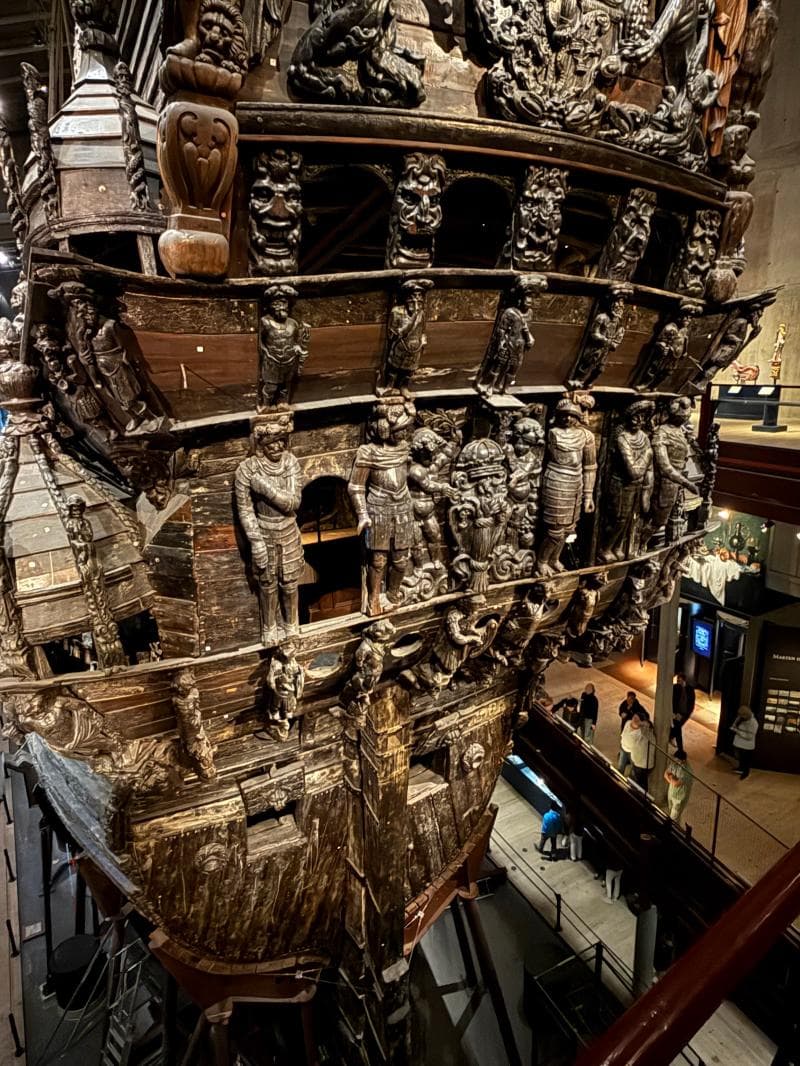
Explore the Vasa Museum Grounds in Djurgården, Stockholm, Sweden, home to the remarkably preserved 17th-century warship Vasa. Discover its dramatic history and unique cultural significance.
Overview
Nestled on the serene island of Djurgården in Stockholm, Sweden, the Vasa Museum Grounds invite visitors into a captivating historical journey. This renowned institution is home to the majestic Vasa warship, a remarkably preserved 17th-century vessel that offers an unparalleled glimpse into Sweden's maritime past. Recognized as one of Scandinavia's most popular museums, it attracts millions annually, drawn by the sheer scale and profound story of this unique artifact.
History & Cultural Background
The story of the Vasa begins in 1625 when King Gustavus Adolphus of Sweden commissioned its construction during a period of war with Poland. Envisioned as a powerful symbol of Swedish naval might, the 64-gun warship was intended to be a masterpiece of engineering. However, its ambitious design led to its tragic demise. On its maiden voyage on August 10, 1628, the Vasa sailed merely 1,300 meters from Stockholm's harbor before a sudden gust of wind caused it to list heavily and quickly sink, taking with it many lives. For 333 years, the Vasa lay preserved in the cold, brackish waters of the Baltic Sea until its spectacular salvage in 1961. The arduous process of recovery and conservation culminated in the opening of the purpose-built Vasa Museum in 1990, providing a permanent home for this extraordinary ship.
What Makes It Special
What sets the Vasa Museum apart is its central exhibit: the Vasa itself. It is the only almost fully intact 17th-century ship ever salvaged, with an astonishing 98 percent of its original components still preserved. Adorned with hundreds of intricately carved wooden sculptures that reflect the artistry and symbolism of its era, the ship is a unique art treasure. The museum is specifically designed to house and protect this delicate artifact, maintaining a precise temperature of 18-20°C to ensure its long-term preservation. Beyond the ship, the museum offers a rich context of early 17th-century Sweden, showcasing archaeological findings, artifacts, and exhibitions that illuminate life on board and the historical period.
Stories, Fun Facts & Local Details
The Vasa's dramatic sinking is a tale of ambition meeting unfortunate design. Despite being a marvel for its time, the ship was inherently unstable—too tall and too narrow, making it top-heavy. The open gunports during its maiden voyage allowed water to flood in rapidly when the ship tilted, sealing its fate. Interestingly, the name 'Vasa' comes from an older word for a 'sheaf of grain' or 'bundle of twigs,' a symbol used by the Swedish royal family that appears in three places on the ship as its 'nameplate'. The sheer scale of the Vasa is impressive; visitors can see specially built masts on the museum's roof that indicate the original height of the ship's masts. The ongoing research and preservation efforts highlight the continuous dedication required to maintain such a valuable historical treasure, ensuring it doesn't 'sink' again due to decay.
Visitor Perspective
A visit to the Vasa Museum is an immersive experience. Upon entering, the immense size of the ship immediately commands attention, towering over spectators. The museum is thoughtfully laid out over multiple levels, allowing visitors to view the ship from various angles and distances, observing its hull, decks, and intricate carvings up close. While visitors cannot walk *inside* the delicate ship itself due to preservation concerns, numerous exhibitions delve into the ship's construction, its sinking, salvage, and the lives of its crew. To enhance the experience, the museum offers daily guided tours in English and Swedish, as well as audio guides in multiple languages and a captivating 17-minute film about the Vasa's story. It's recommended to allocate at least 1.5 hours to fully explore the museum, which is considered an awe-inspiring experience for both children and adults.
Coordinates: 18.09139, 59.32811
View on Google Maps💬 How Travelers Describe This Place
Based on community votes
Beautiful
934Must See
741Unique
276Interesting
30Photogenic
16
Traveler Stories
Discover memorable experiences shared by travelers who have visited this place.
No traveler stories yet.
Be the first traveler to share what made this place memorable.

Tour
By
Spot
Discover amazing places around the world. Your journey starts here.
Explore
© 2026 TourBySpot. All rights reserved.