Upper Temples
Bali, Indonesia
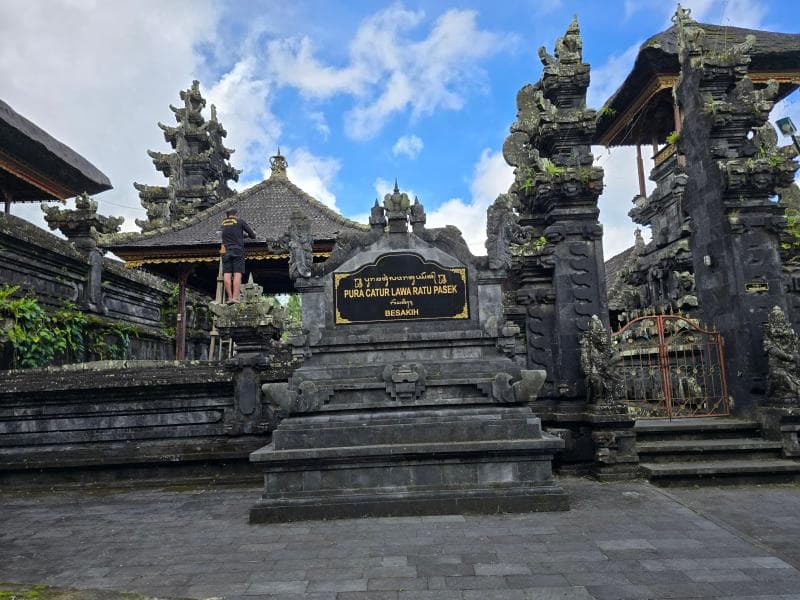
Explore the sacred Upper Temples of Besakih Temple in Bali, Indonesia. Discover ancient history, cultural significance, and breathtaking views.
Overview
Nestled high on the southwestern slopes of Mount Agung, Bali's sacred and highest volcano, lies the expansive Besakih Temple complex, often revered as the 'Mother Temple' of Bali. While not a single, distinct sub-spot, the 'Upper Temples' refer to the collection of sacred structures and shrines situated on the higher terraced levels of this grand complex, beyond the central and largest Pura Penataran Agung. This monumental site is a spiritual journey in itself, with its architecture designed to lead devotees and visitors alike physically and spiritually upward towards the heavens. The entire complex is composed of anywhere from 23 distinct temples to over 80 individual shrines, all meticulously arranged across six to seven terraced levels that follow the natural incline of the mountain.
The path through Besakih is one of ascending reverence, where each step higher brings you closer to the divine realm of the gods believed to reside on Mount Agung. These upper areas offer not only profound spiritual significance but also breathtaking panoramic views of the surrounding Balinese landscapes, including lush rice terraces and distant ocean vistas. Visitors embarking on this ascent will encounter various important temples such as Pura Pangubengan, which provides stunning views, and other directional temples that protect Bali from negative forces.
History & Cultural Background
The origins of Besakih Temple are steeped in antiquity, with archaeological evidence suggesting its importance as a holy site dates back to prehistoric times, possibly over two millennia ago. The stone bases of some structures, including those in Pura Penataran Agung, resemble ancient megalithic stepped pyramids. The temple's documented history can be traced to at least the 8th century, when the Hindu sage Rsi Markandeya is believed to have founded the site, establishing a sacred space dedicated to the Hindu trinity of Brahma, Vishnu, and Shiva. By the 15th century, Besakih had grown in prominence, becoming the state temple of the influential Gelgel dynasty.
Besakih holds a central place in Balinese Hinduism, serving as the spiritual heart of the island. It is unique in that it is the only temple where people of all castes worship together, symbolizing unity across Balinese society. The layout of the temple complex adheres to the Balinese Hindu concept of Tri Hita Karana, emphasizing harmony between God, humans, and nature, and its design as a three-dimensional mandala guides worshippers through increasingly sacred spaces. A testament to its sacredness, the temple miraculously survived the devastating 1963 eruption of Mount Agung, with lava flows stopping just meters from the main complex, an event interpreted by the Balinese as a divine signal of protection.
What Makes It Special
What truly sets the Upper Temples of Besakih apart is the profound journey of spiritual ascent they represent. The terraced architecture, with its countless stone steps, is not merely structural; it's a symbolic climb towards purification and enlightenment. Each level and each temple within these upper reaches is imbued with specific religious meaning and contributes to the overall cosmic design. The multi-tiered Meru towers, with their distinctive thatched roofs, symbolize Mount Meru, the sacred cosmic mountain in Hindu cosmology. The tallest of these, reaching up to eleven tiers, are reserved for the most revered deities like Shiva, signifying the highest levels of divinity.
These elevated temples also offer unparalleled vistas. From Pura Pangubengan, often considered one of the highest accessible points for visitors, the panoramic views extend across the entire complex, down to the lowlands, and out towards the ocean, framed by the majestic presence of Mount Agung itself. This unique combination of spiritual significance, architectural brilliance, and breathtaking natural beauty creates an awe-inspiring experience that transcends the ordinary.
Stories, Fun Facts & Local Details
Legend has it that Besakih's name derives from 'Basuki' or 'Besuki', meaning 'safe', linked to the mythical Naga Basuki, a dragon deity believed to inhabit Mount Agung and protect the island. Another tale recounts that the sage Rsi Markandeya planted five types of metal (Panca Datu) at the site, which later became Pura Basukian, one of the foundational temples within the complex.
During the annual Bhatara Turun Kabeh festival, usually held in March or April, the Upper Temples become a vibrant spectacle. Devotees believe all deities descend from Mount Agung to reside in the shrines for a month. Thousands of worshippers, particularly women balancing elaborate cylindrical offerings of fruit and cakes (known as 'gebogan') on their heads, make the arduous climb up the steep steps, creating a mesmerizing display of faith and tradition. The resilience of the temple, having survived major earthquakes in 1917 and the near-miss of the 1963 volcanic eruption, is seen as a miracle, reinforcing its divine protection and central role in Balinese spiritual life.
Visitor Perspective
Exploring the Upper Temples of Besakih is an immersive experience that demands respect and a spirit of adventure. Be prepared for a considerable amount of uphill walking across hundreds of ancient, often uneven, stone steps that can become slippery when wet. Comfortable, high-grip walking shoes are essential for navigating the six terraced levels. Adhering to the dress code is mandatory: a sarong and sash must be worn, usually provided with the entrance ticket. Modest clothing, covering shoulders and legs, is also recommended.
To truly appreciate the serenity and the stunning views, it's highly recommended to visit early in the morning, ideally between 7:00 AM and 9:00 AM, to avoid larger crowds and to witness Mount Agung before clouds typically obscure its peak. While many inner sanctums are reserved for Hindu worshippers, the journey through the courtyards and the access to various upper temples like Pura Pangubengan offer deep insights into Balinese spiritual practices and unparalleled photo opportunities. Engaging with an official local guide can also greatly enrich the visit, providing invaluable context and explanations of the intricate symbolism and history.
Coordinates: 115.450936, -8.374368
View on Google Maps💬 How Travelers Describe This Place
Based on community votes
Must See
797Interesting
695Unique
396Beautiful
286Photogenic
22
Traveler Stories
Discover memorable experiences shared by travelers who have visited this place.
No traveler stories yet.
Be the first traveler to share what made this place memorable.

Tour
By
Spot
Discover amazing places around the world. Your journey starts here.
Explore
© 2026 TourBySpot. All rights reserved.