Upper Plateau
Skopje, North Macedonia
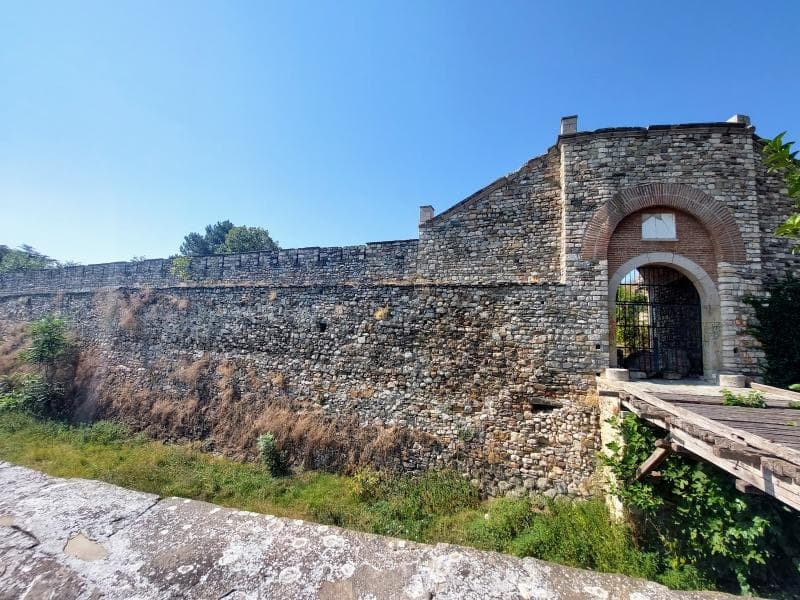
Explore Skopje Fortress's Upper Plateau in Skopje, North Macedonia. Discover its ancient history, stunning views, and cultural significance.
Overview
Perched majestically above the Vardar River, the Upper Plateau of Skopje Fortress, locally known as Kale Fortress, offers a journey through millennia of history in Skopje, North Macedonia. This ancient site, whose name 'Kale' simply means 'fortress' in Turkish, is a silent sentinel, observing the city's unfolding narrative from its highest point. The Upper Plateau itself forms the strategic heart of this historic stronghold, a natural elevated position that has drawn human habitation for thousands of years. Today, it stands as a prominent landmark, inviting curious travelers to explore its weathered walls and soak in the breathtaking panoramic views of the modern city below. Admission to this significant cultural site is free, making it an accessible and enriching experience for all visitors.
History & Cultural Background
The history of the Upper Plateau at Skopje Fortress stretches back to incredibly ancient times, with archaeological evidence suggesting human settlements here as early as the Neolithic and Bronze Ages, roughly 4000 BC onwards. The first significant fortifications on this strategic plateau were constructed in the 6th century AD, under the reign of the Byzantine Emperor Justinian I. These early structures were ingeniously built using yellow limestone and travertine, salvaged from the nearby Roman city of Skupi, which had been devastated by an earthquake in 518 AD.
Throughout the centuries, the fortress underwent numerous transformations and expansions, reflecting the changing powers that ruled Skopje. It was further developed during the 10th and 11th centuries, building upon the Byzantine foundations. The fortress witnessed the city become the capital of the First Bulgarian Empire between 992 and 1015, and later, in 1346, it was here that Stefan Dušan crowned himself Emperor, making Skopje the capital of the Serbian Empire. With the Ottoman conquest in the 14th century, the fortress was reconstructed multiple times, serving as a vital military and administrative center. The 19th century saw structures like warehouses, arsenals, and even a military hospital within its confines. Despite its robust construction, the fortress has repeatedly suffered damage from earthquakes, notably in 1555 and again significantly in 1963, which left much of it in ruins. Recent decades have seen efforts towards excavation and partial restoration, revealing more of its layered past, including foundations of a 13th-century church and the largest stash of Byzantine coins ever found in Macedonia.
What Makes It Special
The Upper Plateau's unique appeal lies in its unparalleled historical depth and its commanding presence over Skopje. It's a living archive, where every stone wall and excavated ruin whispers tales of bygone eras, from prehistoric settlements to Roman, Byzantine, Bulgarian, Serbian, and Ottoman periods. The very materials used in its construction tell a story, repurposing remnants of the ancient Roman city of Skupi, a testament to resilience and continuity. The continuous habitation of this strategic high ground for over six millennia speaks volumes about its enduring importance. Beyond its archaeological significance, the fortress offers some of the most spectacular panoramic views in Skopje. From its battlements, visitors can gaze across the Vardar River to the Stone Bridge, the Old Bazaar, Macedonia Square, and the distant Vodno Mountain, providing a unique perspective on the city's geography and development.
Stories, Fun Facts & Local Details
A fun fact for any visitor is that the Skopje Fortress, or Kale, is so integral to the city's identity that it is proudly depicted on the coat of arms of Skopje, which in turn is incorporated into the city's flag. Imagine Stefan Dušan declaring himself emperor right here, on this very plateau, in 1346, shifting the center of an empire to Skopje. Archaeological digs within the fortress have unearthed fascinating artifacts, including woodwind instruments and clay ornaments dating back to 3000 BC, offering glimpses into the daily lives of its earliest inhabitants. While walking through the plateau today, one can observe the diverse construction methods and materials used across different historical periods, making it a tangible timeline. Despite its long and often tumultuous history, marked by wars and natural disasters, the Kale Fortress remains a symbol of Skopje's enduring spirit. Locals often visit the fortress for quiet reflection, family outings, and to enjoy the sunset, especially around St. George's Day on May 6th, when there might be festive gatherings to celebrate spring.
Visitor Perspective
Exploring the Upper Plateau of Skopje Fortress is an experience designed for the curious and reflective traveler. As you ascend towards the fortress, perhaps walking up from the Old Bazaar, you'll feel the city's modern bustle recede, replaced by a sense of timelessness. The fortress has no formal entry fees or strict opening hours, allowing visitors the freedom to wander its grounds and walls at their leisure. While extensive interpretive signs are not always present, the sheer scale of the surviving walls and towers, some remarkably well-preserved, evokes a powerful sense of history. Walking along the sturdy walls, particularly the southeastern section, offers the most rewarding views of the Old Bazaar, the Vardar, and the sprawling cityscape, providing excellent opportunities for photography. The paths are generally cobbled and uneven, adding to the authentic, ancient feel, though this might pose a challenge for those with mobility issues. The Upper Plateau serves not just as an archaeological site but as a natural viewpoint, a place to pause, breathe, and appreciate the layers of history that have shaped Skopje, making it an essential stop for anyone seeking to understand the soul of the city.
Coordinates: 21.4344, 42
View on Google Maps💬 How Travelers Describe This Place
Based on community votes
Photogenic
551Interesting
547Unique
336Beautiful
219Must See
186
Traveler Stories
Discover memorable experiences shared by travelers who have visited this place.
No traveler stories yet.
Be the first traveler to share what made this place memorable.

Tour
By
Spot
Discover amazing places around the world. Your journey starts here.
Explore
© 2026 TourBySpot. All rights reserved.