Upper Flower Garden
Tallinn, Estonia
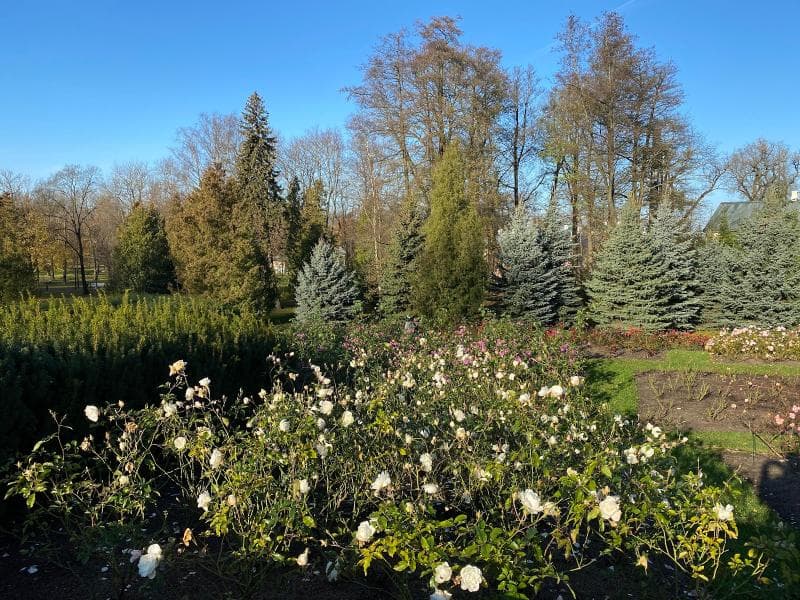
Discover the exquisite Upper Flower Garden in Kadriorg Palace, Tallinn, Estonia. Explore its Baroque history, unique design, and royal tales.
Overview
Nestled gracefully behind the magnificent Kadriorg Palace in Tallinn, Estonia, lies the enchanting Upper Flower Garden, a jewel within the expansive Kadriorg Park. This meticulously designed Baroque garden serves as a sophisticated extension of the palace itself, offering a serene and historically rich landscape to explore. Conceived as a formal garden, the Upper Flower Garden captivates visitors with its elegant symmetry, intricate parterre de broderie, and soothing water features. It was initially envisioned as a two-terraced ensemble, featuring a 'Mirage Pond' on the upper level and a dramatic 'Mirage Wall' adorned with a cascade and decorative mascarons. Today, the garden stands as a testament to centuries of design, having been lovingly restored to reflect its 18th-century Baroque splendor, and now includes a striking bronze sculpture of Neptune at its cascade.
History & Cultural Background
The genesis of the Upper Flower Garden dates back to 1718, when Peter the Great commissioned the construction of Kadriorg Palace and its surrounding park for his wife, Catherine I. The name 'Kadriorg' itself, meaning 'Catherine's valley' in Estonian, pays homage to her. Italian architect Nicola Michetti spearheaded the design, envisioning a grand three-level ensemble that included the Lower Garden, situated in front of the palace, and the Upper Garden, stretching across two terraces behind it. This Baroque masterpiece skillfully integrates diverse European garden design principles, showcasing Italian-inspired terraces, Dutch-influenced canals, and a French-style axial symmetry in its pathways and parterres, alongside a Russian selection of flowers. While the original layout persisted for many years, the Upper Garden underwent significant transformation between 1937 and 1938. During this period, the construction of the President's administrative building necessitated a remodelling. The historic Mirage Pond was filled in, and its location transformed into a rose garden, dramatically altering a portion of the original design. However, a comprehensive restoration, based on historical drawings and archaeological findings, brought the Baroque flower garden back to its former glory, reopening to the public on July 22, 2000.
What Makes It Special
The Upper Flower Garden's unique allure lies in its seamless integration with Kadriorg Palace, designed to feel like a natural extension of the palace's opulent interiors. The grand doors of the main hall were intended to lead directly into this floral haven, where the 'stone flowers' of the palace's stucco decorations harmoniously blended with the living blooms in the symmetrical parterres. The intricately shaped parterre de broderie, a hallmark of Baroque garden design, creates a captivating tapestry of color and texture. A particularly striking feature is the reconstructed Mirage Wall, with its central cascade, which originally featured water-spewing mascarons. In 2005, a bronze sculpture of Neptune by Mati Karmin was installed in this cascade, adding a focal point of artistic beauty. The garden's ability to encapsulate the grandeur of a royal Baroque ensemble, while blending elements from various European traditions, truly sets it apart as a significant historical and horticultural landmark in Northern Europe.
Stories, Fun Facts & Local Details
The very name 'Kadriorg' is a charming historical detail, translating directly to 'Catherine's valley,' a direct tribute to Empress Catherine I, for whom Peter the Great established this magnificent estate. A poignant historical anecdote tells of King Gustav V of Sweden, who, during a visit in 1929, planted an oak tree in the Upper Garden. This very tree still stands today, a living piece of history. Interestingly, a memorial stone bearing the monarch's monogram, once thought lost, was rediscovered during the garden's 1999 reconstruction, linking past and present. Originally, the intricately shaped Mirage Pond on the upper terrace was deliberately concealed behind a triple row of trees, designed to reveal itself to a casual stroller as a 'marvellous vision.' From its very inception, Peter the Great desired that the royal park be accessible to all, making it a public space from the outset – a forward-thinking gesture for its time. The red crushed brick used between the floral parterres was intentionally chosen to complement the red walls of the palace, creating a vivid contrast with the vibrant green foliage and blossoms.
Visitor Perspective
Stepping into the Upper Flower Garden is like taking a stroll through a living painting, an experience that transports visitors back to the opulence of the 18th century. The garden provides a tranquil escape and an impressive visual spectacle, perfect for those who appreciate historical garden design and architectural grandeur. Its direct connection to the main palace hall allows for a holistic appreciation of Baroque artistry, where indoor and outdoor spaces flow seamlessly into one another. While the broader Kadriorg Park is free to enter and open year-round, exploring the intricate details of the Upper Flower Garden, especially during spring and summer, reveals its full splendor when the flowerbeds are in full bloom. It's a place for leisurely walks, quiet contemplation, and absorbing the rich cultural heritage of Tallinn, offering a unique blend of natural beauty and human artistry.
Coordinates: 24.788, 59.4365
View on Google Maps💬 How Travelers Describe This Place
Based on community votes
Unique
685Photogenic
472Beautiful
446Interesting
399Must See
33
Traveler Stories
Discover memorable experiences shared by travelers who have visited this place.
No traveler stories yet.
Be the first traveler to share what made this place memorable.

Tour
By
Spot
Discover amazing places around the world. Your journey starts here.
Explore
© 2026 TourBySpot. All rights reserved.