Upper Castle Tower
Vilnius, Lithuania
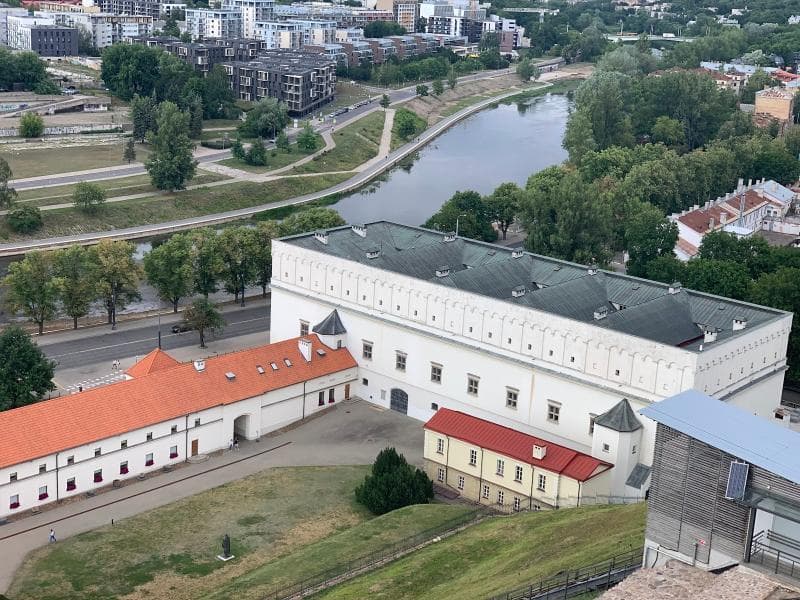
Explore Gediminas Castle Tower, the last remnant of Vilnius's Upper Castle, a powerful symbol of Lithuanian history and independence.
Overview
Perched majestically atop Castle Hill in Vilnius, Lithuania, the Upper Castle Tower, more commonly known as Gediminas Castle Tower, stands as an enduring emblem of the nation's rich history and resilience. This iconic red-brick tower is the sole remaining structure of the once formidable Upper Castle, a vital part of the larger Vilnius Castle complex that safeguarded the city for centuries. It offers visitors an unparalleled vantage point, revealing breathtaking panoramic views of Vilnius' historic Old Town, the winding Neris River, and the modern city skyline. Beyond its striking silhouette, the tower houses a museum that serves as a profound gateway into Lithuania's medieval past, showcasing archaeological findings, historical models, and interactive exhibitions that narrate the city's foundation and its enduring struggle for independence.
History & Cultural Background
The history of Gediminas Castle Tower is inextricably linked to the very genesis of Vilnius. Archaeological evidence suggests human settlement on Castle Hill dates back to Neolithic times, with early wooden fortifications appearing as early as the 9th to 13th centuries. The first wooden castle on this strategic site was constructed by Grand Duke Gediminas, the legendary founder of Vilnius, around the 13th to 14th century. The city's founding is famously attributed to Gediminas's dream of an iron wolf howling on the hill, interpreted by a pagan priest as an omen to establish a magnificent capital there.
The transformation to a more robust structure began under Grand Duke Vytautas the Great, who completed the first brick castle in 1409. This marked the height of the Grand Duchy of Lithuania, with the castle complex, comprising the Upper, Lower, and Crooked Castles, serving as a critical political and military center. Throughout the 14th and 15th centuries, the castle endured numerous attacks, particularly from the Teutonic Knights, witnessing battles, sieges, and repeated reconstructions. Though damaged over time and losing its primary defensive importance, the tower gained renewed significance in the 19th and 20th centuries as a powerful national symbol during Lithuania's struggle for independence. It became a beacon of hope, its flag representing national aspirations.
What Makes It Special
Gediminas Castle Tower is special not only for its historical depth but also for its symbolic power. As the sole surviving component of the Upper Castle, it stands as a tangible link to Vilnius's medieval past and the grandeur of the Grand Duchy of Lithuania. Its strategic position atop Gediminas Hill provides an unparalleled 360-degree panorama of the city, making it a favorite spot for visitors to witness the convergence of historical and modern Vilnius. The tower itself is considered an impressive example of Gothic defensive architecture.
Inside, the tower houses a branch of the National Museum of Lithuania, where exhibitions illuminate the development of the Vilnius Castle territory from the 14th to the 21st centuries. Visitors can explore archaeological findings, including cannonballs from medieval sieges, models depicting the castles at various stages, and interactive displays that allow one to 'look through the windows' of history, experiencing past events like crusader attacks or Renaissance Vilnius. This combination of tangible artifacts and immersive storytelling offers a truly engaging experience for understanding Lithuania's foundational history.
Stories, Fun Facts & Local Details
The most cherished legend associated with the tower is the 'Iron Wolf' dream of Grand Duke Gediminas. After a successful hunt, he dreamt of a giant iron wolf howling on the hill. The pagan priest Lizdeika interpreted this to mean that Gediminas should build a great city here, which would become a renowned capital. This dream is widely credited with inspiring the founding of Vilnius.
A more recent, poignant story relates to the 2017 landslides on Gediminas Hill, which unexpectedly uncovered the unmarked graves of 1863-1864 uprising rebels. This discovery, made just before Lithuania's Centennial of restored independence in 2018, was seen by many as a powerful, almost miraculous, reawakening of national memory. The tower also played a silent but significant role in modern history; the Lithuanian flag was famously re-hoisted atop it on October 7, 1988, by the Sąjūdis independence movement, symbolizing the nation's enduring desire for freedom, and is raised annually on January 1st to commemorate Flag Day. Interestingly, in 1838, the tower was repurposed for a period, housing the city's first optical telegraph.
Visitor Perspective
Visiting Gediminas Castle Tower is an immersive journey through time. The ascent to the tower can be made either by a pleasant uphill walk through the scenic park or by a convenient funicular from the Old Arsenal courtyard, making it accessible to most travelers. For those choosing to walk, comfortable footwear is a must to navigate the paths leading up the hill. Once inside, the museum's exhibitions are spread across multiple floors, guiding you through the castle's evolution and Lithuania's history. While the tower itself promises incredible views, be aware that the exhibition halls do not have wheelchair access.
The observation deck at the very top offers arguably the best panoramic views of Vilnius, a captivating tapestry of red rooftops, church spires, and the modern cityscape that spreads out below. Guided tours are available in several languages for a deeper understanding of the site's significance. It's advisable to check the official website for seasonal opening hours, as they can vary. Whether you're a history enthusiast, a culture seeker, or simply in search of a memorable view, Gediminas Castle Tower provides a meaningful connection to the heart of Vilnius and the soul of Lithuania.
Coordinates: 25.2907, 54.6867
View on Google Maps💬 How Travelers Describe This Place
Based on community votes
Beautiful
1.0kPhotogenic
563Must See
309Unique
100Interesting
63
Traveler Stories
Discover memorable experiences shared by travelers who have visited this place.
No traveler stories yet.
Be the first traveler to share what made this place memorable.

Tour
By
Spot
Discover amazing places around the world. Your journey starts here.
Explore
© 2026 TourBySpot. All rights reserved.