Underground Wine Tunnels
Chisinau, Moldova
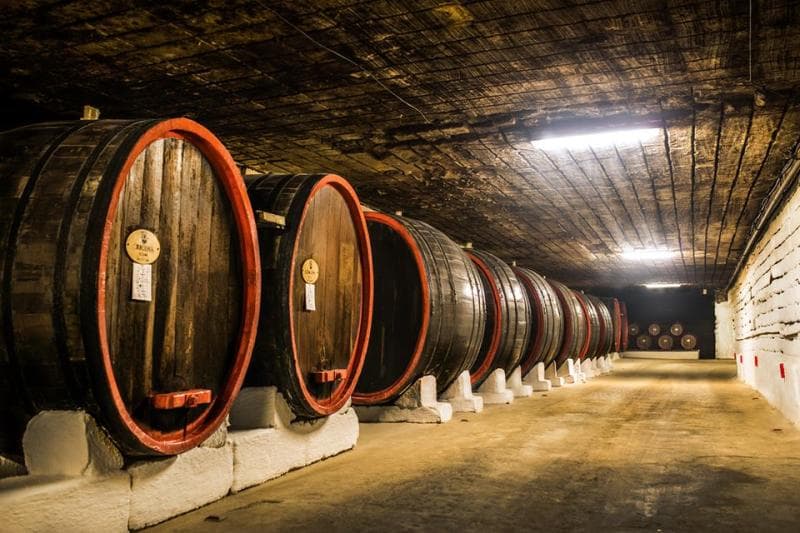
Explore the immense Underground Wine Tunnels of Cricova Winery in Chisinau, Moldova – an underground city with millions of wine bottles.
Overview
Deep beneath the rolling landscapes of Moldova, just a short drive from the capital Chisinau, lies an extraordinary subterranean world: the Underground Wine Tunnels of Cricova Winery. This vast network, often affectionately called an 'underground city' of wine, stretches for over 120 kilometers, making it one of the largest wine cellars globally. Around 80 kilometers of these labyrinthine corridors are actively used for the storage and aging of precious wines.
The tunnels, originally limestone mines, provide an unparalleled natural environment for viticulture. Here, at depths ranging from 60 to 100 meters, a constant temperature of 12-14°C and a high humidity level of 95-98% prevail year-round, conditions that are perfectly stable for wine maturation without the need for artificial climate control. Cricova is not only a production site but also a national treasure, housing an impressive collection of over 1.3 million bottles and recognized as a National Cultural Heritage site of the Republic of Moldova since 2003.
History & Cultural Background
The story of Cricova Winery's underground realm began in 1952. It was then that two Moldovan winemakers, Petru Ungureanu and Nicolae Sobolev, envisioned transforming the extensive galleries of disused limestone mines into ideal wine cellars. These mines themselves have a rich history, with limestone extracted since the 15th century to construct the buildings of Chisinau. The natural coolness and consistent humidity of these subterranean passages proved perfect for wine storage and aging, quickly establishing Cricova's reputation across the Soviet Union.
Moldova boasts an ancient winemaking tradition, deeply ingrained in its culture and economy. Wine remains a cornerstone of the country's economic output, and Cricova stands as a proud testament to this heritage. Its designation as a National Cultural Heritage site in 2003 solidified its importance not merely as a winery, but as a cultural landmark reflecting centuries of Moldovan dedication to winemaking.
What Makes It Special
The sheer scale and natural perfection of Cricova's Underground Wine Tunnels truly set them apart. Imagine driving through an actual city, complete with streets and traffic lights, yet all of it is hundreds of feet below the earth. The tunnels are organized like this, with 'streets' named after the very grape varieties they house, such as 'Cabernet,' 'Fetească,' 'Aligote,' and 'Sauvignon'. This unique organizational system allows for precise storage and reflects the diverse range of wines maturing within.
Beyond its immense size, Cricova is home to an extraordinary National Collection, or Vinoteque, which safeguards over 1.3 million bottles of wine. This includes some of the rarest vintages in Eastern Europe, such as the legendary 'Jerusalem of Easter' from 1902 and a 1902 'Jan Becher' liqueur. Cricova is also renowned for its sparkling wine, which is produced using the meticulous traditional French method, known as 'Méthode Traditionnelle'. The underground complex also features an array of unique facilities, including elegant tasting rooms, an underground cinema, and even a small underground church, creating an unforgettable experience for visitors.
Stories, Fun Facts & Local Details
The Underground Wine Tunnels of Cricova are steeped in fascinating stories and fun facts that add to their mystique. One notable tale recounts that a significant portion of Hermann Göring's private wine collection, amassed during World War II, found its way to Cricova after the Nazi defeat. Another famous anecdote involves the Soviet cosmonaut Yuri Gagarin, who reportedly became 'lost' in the tunnels during a visit in 1966, only to emerge the next day, playfully promising to bring gold from other planets for the winery's medals. Even modern leaders have been drawn to its charm; Vladimir Putin chose Cricova as the venue for his 50th birthday celebration.
Behind the acclaimed sparkling wines, a remarkable human touch is at play. A dedicated team of five women daily performs the traditional 'riddling' process, manually turning as many as 35,000 bottles to aid in sediment separation. While Milestii Mici is often cited as having the longest underground wine cellars, Cricova holds its own as one of the largest in terms of active storage area, contributing significantly to Moldova's status as a prominent wine exporter. Locally, the concept of wine cellars is deeply ingrained; it is a Moldovan tradition for every household to have its own small cellar for homemade wine.
Visitor Perspective
Visiting Cricova's Underground Wine Tunnels is much more than a typical winery tour; it is an immersive journey into a subterranean world of viticulture. Travelers typically explore the vast network by electric tourist train, meandering through the dimly lit 'wine streets' that stretch for miles. Due to the constant cool temperatures underground, typically 12-14°C, visitors are always advised to bring warm layers of clothing, regardless of the season above ground.
The experience is often described as a unique blend of a wine tour, a history lesson, and an underground adventure. Guided tours are available in various languages, ensuring that the rich history and winemaking processes are accessible to international visitors. These tours culminate in tasting sessions, where guests can sample Cricova's world-class still and sparkling wines. While some visitors find the tasting experience to be more formal than other wineries, it provides an invaluable opportunity to appreciate the wines aged in this exceptional environment. Before departing, many enjoy browsing the underground wine shop, a treasure trove of local vintages and souvenirs.
Coordinates: 28.85991969899043, 47.13316861013352
View on Google Maps💬 How Travelers Describe This Place
Based on community votes
Must See
540Photogenic
252Unique
147Beautiful
114Interesting
19
Traveler Stories
Discover memorable experiences shared by travelers who have visited this place.
No traveler stories yet.
Be the first traveler to share what made this place memorable.

Tour
By
Spot
Discover amazing places around the world. Your journey starts here.
Explore
© 2026 TourBySpot. All rights reserved.