Underground Galleries
Yerevan, Armenia
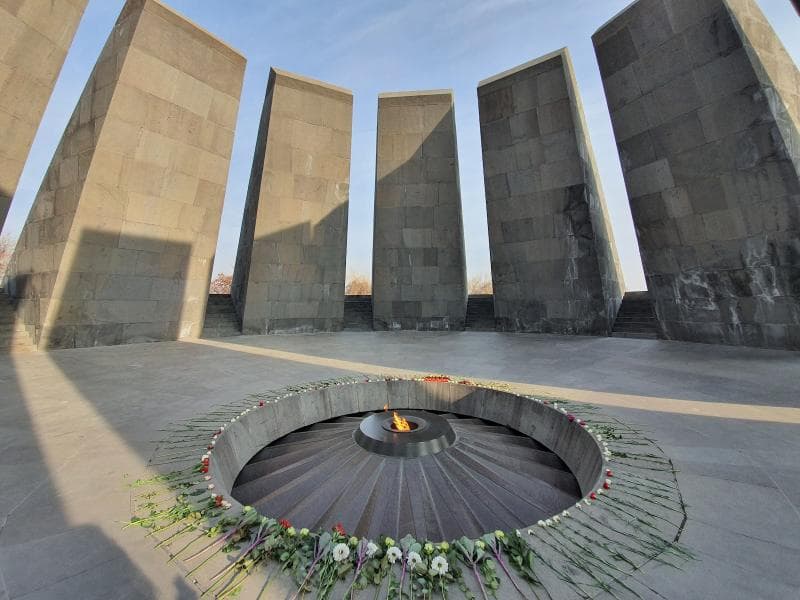
Explore the Underground Galleries of the Armenian Genocide Museum-Institute at Tsitsernakaberd, Yerevan, Armenia, dedicated to remembrance and education.
Overview
Nestled within the poignant Tsitsernakaberd Armenian Genocide Memorial Complex in Yerevan, Armenia, lies the Armenian Genocide Museum-Institute, often referred to as the 'Underground Galleries' due to its unique architectural design. This profound institution serves as Armenia's official memorial and research center dedicated to the 1.5 million victims of the Armenian Genocide carried out by the Ottoman government in the early 20th century. Inaugurated in 1995, on the 80th anniversary of the genocide, the museum is largely built into the hillside, a deliberate choice to ensure it does not visually overshadow the monumental stele and eternal flame of the main memorial above. The complex as a whole has become an integral part of Yerevan's landscape and a significant pilgrimage site for Armenians and international visitors alike.
History & Cultural Background
The establishment of the Tsitsernakaberd Memorial Complex began in 1967, following widespread demonstrations in 1965 that called for recognition of the genocide. The memorial itself, comprising the 44-meter 'Reborn Armenia' stele and the circular sanctuary with its eternal flame, was designed by architects Arthur Tarkhanyan and Sashur Kalashyan. Decades later, the need for a dedicated space to educate and preserve the memory of the genocide led to the creation of the Armenian Genocide Museum-Institute. The museum's construction, finalized in 1995, was a collaborative effort by architects Sashur Kalashyan, Lyudmila Mkrtchyan, and Arthur Tarkhanyan, with sculptor Ferdinand Arakelyan. Its purpose extends beyond commemoration, actively engaging in research, documentation, and the dissemination of information about the genocide, serving as a vital educational and cultural institution under the National Academy of Sciences of Armenia.
What Makes It Special
The 'Underground Galleries' are distinguished by their subterranean design, a thoughtful architectural choice that allows the museum to complement rather than compete with the solemnity of the outdoor memorial. Inside, the museum's permanent exhibition spans over 1,000 square meters, organized into twelve halls that chronologically and thematically explore the events of 1915-1916. Visitors encounter an extensive collection of primary sources, including rare photographs, archival documents, maps, personal belongings, and powerful survivor testimonies. A striking feature is the large, engraved stone map of the Armenian Plateau and neighboring countries in the first exhibit hall, depicting Armenian settlements before the genocide. Another profoundly symbolic element is found in one of the final halls, where granite pedestals hold crystal vases containing earth collected from historic Armenian regions, underscoring the deep connection to ancestral lands. The museum also incorporates multimedia displays, providing historical context and making the complex history accessible to a wide audience.
Stories, Fun Facts & Local Details
The hill on which the complex stands is named Tsitsernakaberd, which translates to 'swallow's fortress' in English. Legend has it that swallows, known for always returning to their nests, once helped the pagan gods Vahagn and Astghik communicate, symbolizing resilience and return. Annually, on April 24th, thousands gather at Tsitsernakaberd to lay flowers around the eternal flame, commemorating Armenian Genocide Remembrance Day. The museum's flat roof offers a panoramic viewpoint, providing visitors with a striking vista of the scenic Ararat Valley and, on clear days, the majestic Mount Ararat, a powerful symbol of Armenia now located beyond its modern borders. The museum is a hub for historical research, collecting thousands of documents, photographs, and oral histories, constantly enriching its understanding and presentation of the genocide. Its commitment to education and remembrance is further highlighted by the availability of guided tours in multiple languages, including Armenian, Russian, English, French, and German.
Visitor Perspective
Visiting the 'Underground Galleries' offers a deeply emotional and intellectually engaging experience. Admission to the museum is free, making it accessible to all who wish to learn and pay their respects, though donations are welcomed to support its vital work. The chronological presentation of exhibits, from the peaceful pre-genocide era to the horrors and the resilience of survivors, creates a powerful narrative arc. Walking through the halls, one is immersed in the documented reality of the genocide, from heartbreaking personal stories to diplomatic reports. The respectful design and presentation prioritize factual information and remembrance over sensationalism, allowing visitors to absorb the gravity of the events in a dignified environment. The museum's role as a research institution ensures that the narrative is continually informed by scholarly inquiry, offering a profound educational journey. The experience is often described as sobering, yet essential for understanding Armenian identity and the universal importance of preventing such atrocities.
Coordinates: 44.4877, 40.1848
View on Google Maps💬 How Travelers Describe This Place
Based on community votes
Interesting
998Beautiful
817Unique
711Photogenic
641Must See
19
Traveler Stories
Discover memorable experiences shared by travelers who have visited this place.
No traveler stories yet.
Be the first traveler to share what made this place memorable.

Tour
By
Spot
Discover amazing places around the world. Your journey starts here.
Explore
© 2026 TourBySpot. All rights reserved.