Umeda Sky Building
Osaka, Japan
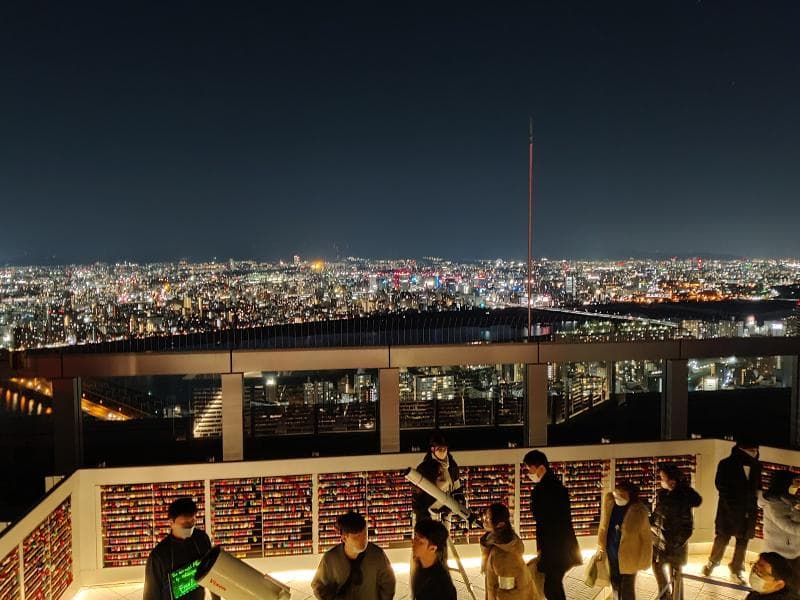
Discover the Umeda Sky Building in Osaka, Japan, an iconic skyscraper known for its unique Floating Garden Observatory and 360-degree city views.
Overview
The Umeda Sky Building, an iconic architectural marvel, stands proudly in Osaka, Japan, captivating visitors with its distinctive silhouette. Located in the Kita district, on the outskirts of the Umeda business hub, this skyscraper is instantly recognizable for its two towering structures interconnected at their uppermost floors. Standing at approximately 173 meters (567 feet) tall, it comprises two 40-story towers linked by an impressive sky bridge and the renowned 'Floating Garden Observatory' (Kuchu Teien Observatory) at its zenith. Completed in 1993, it has become a celebrated landmark, blending seamlessly with Osaka's urban landscape while offering unparalleled panoramic views of the city and beyond.
History & Cultural Background
The vision for the Umeda Sky Building emerged in 1988 as the ambitious 'City of Air' project, initially conceived as a complex of four interconnected towers. However, the economic climate of Japan in the late 1980s led to a revised plan, culminating in the construction of the two towers we see today. Designed by the acclaimed architect Hiroshi Hara, who also lent his creative genius to Kyoto Station, the building was completed by Takenaka Corporation in 1993. Hara's design was groundbreaking, aiming to create a modern landmark inspired by structures like the Grande Arche in Paris, while also embodying a 'floating city' concept. Its construction involved a pioneering technique known as the 'Lift-Up' method, where the massive 10,000-ton central observatory structure, including escalators, was assembled at ground level and then hydraulically hoisted over 150 meters into its final position—a feat unprecedented at the time. The Umeda Sky Building's architectural significance garnered international recognition in 2008 when the British publishing company Dorling Kindersley, and subsequently The Times, listed it among the 'Top 20 Buildings Around the World,' alongside historic wonders like the Sagrada Familia and the Taj Mahal.
What Makes It Special
What truly sets the Umeda Sky Building apart is its audacious design and the unique experience it offers. Unlike many enclosed observation decks, the 'Floating Garden Observatory' provides a remarkable open-air rooftop experience. This allows visitors to not only see the cityscape but also feel the wind and atmosphere from 173 meters above ground, offering a visceral connection to Osaka that climate-controlled towers cannot replicate. The journey to the top is an adventure in itself, involving transparent glass elevators and spectacular 45-meter long glass-layered escalators that appear to hang in mid-air as they bridge the gap between the two towers. This 'sky walk' through an open atrium space creates a thrilling and almost cinematic sense of ascension. The building's exterior, clad with approximately 17,000 half-mirrored glass panels, reflects the sky and its surroundings, making the structure appear to blend seamlessly with the heavens and earning it the 'Sky Building' moniker.
Stories, Fun Facts & Local Details
Beyond its striking architecture, the Umeda Sky Building is rich with fascinating details. The 'Floating Garden' name, while not literally a garden of greenery at its highest point, refers to the open-air circular oculus at the center of the rooftop observation deck, which allows visitors to look directly up at the sky. However, at its base, the Shin-Umeda City complex features several green spaces. The 'Island Garden Forest' provides a tranquil oasis with waterfalls and greenery, while the 'New Satoyama' is an 8,000 square-meter garden where local elementary students cultivate flowers, vegetables, and even rice, bringing a piece of Japan's countryside into the heart of Osaka. Additionally, architect Tadao Ando contributed the 'Wall of Hope,' a 78-meter long, 9-meter high green plant wall. Deep in the building's basement lies the 'Takimi Koji Retro Street,' a charming recreation of Osaka from the early Showa period (around the 1920s). This nostalgic area, complete with traditional shops and restaurants serving local delicacies like takoyaki and okonomiyaki, offers a delightful contrast to the futuristic heights above. It's a culinary journey back in time, often less crowded than the observation deck, providing a unique cultural immersion.
Visitor Perspective
A visit to the Umeda Sky Building is designed as an engaging journey. After a swift elevator ride to the 35th floor, guests transition to the breathtaking see-through escalators that carry them to the 39th floor. The final ascent leads to the 'Floating Garden Observatory,' which spans the 39th, 40th, and rooftop levels. Here, the 360-degree panoramic views are simply spectacular, encompassing the sprawling Osaka cityscape, the winding Yodo River, and on clear days, distant sights such as the Rokko mountain range, Awaji Island, and even the Akashi Kaikyo Bridge. Many visitors time their visit for sunset to witness the dramatic transformation of the sky and the city lights igniting below, a spectacle considered one of Japan's best sunsets and night views. The open-air 'Sky Walk' on the rooftop provides an unobstructed experience, with just low steel rails separating you from the vast expanse. Indoors, the 40th floor hosts 'Café Sky 40' and the 'Fence of Vows,' a popular spot for couples to affix heart locks. The building is accessible via a 7-minute walk from JR Osaka Station, often through an underground pedestrian tunnel, making it a convenient and essential stop for anyone exploring Osaka.
Coordinates: 135.489653, 34.705243
View on Google Maps💬 How Travelers Describe This Place
Based on community votes
Beautiful
996Interesting
673Must See
585Unique
143Photogenic
80
Traveler Stories
Discover memorable experiences shared by travelers who have visited this place.
No traveler stories yet.
Be the first traveler to share what made this place memorable.
Things to see at Umeda Sky Building



Tour
By
Spot
Discover amazing places around the world. Your journey starts here.
Explore
© 2026 TourBySpot. All rights reserved.