Floating Garden Observatory
Osaka, Japan
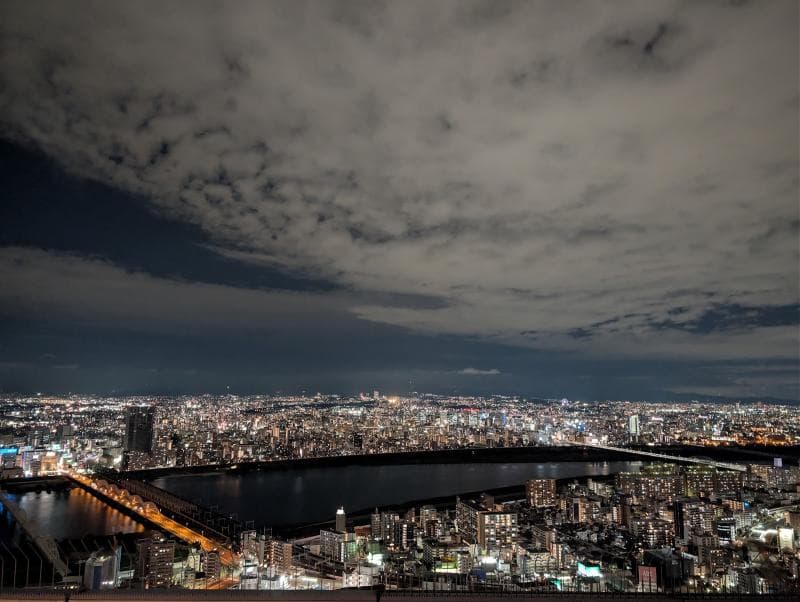
Discover Osaka's Floating Garden Observatory in the Umeda Sky Building, offering breathtaking 360-degree open-air views of Japan's vibrant city. Explore its unique architecture and history.
Overview
Perched atop the distinctive Umeda Sky Building in Osaka, Japan, the Floating Garden Observatory, or Kuchu Teien Observatory, offers a truly singular experience. This observation deck is not merely a viewing platform; it's an architectural marvel connecting two towering skyscrapers. Standing at approximately 173 meters (567 feet) above the bustling city, it provides visitors with breathtaking 360-degree panoramic vistas of Osaka and its surroundings. Unlike many enclosed observatories, the Floating Garden boasts an open-air rooftop deck, allowing a genuine connection with the elements and the vibrant cityscape below. It has become an iconic landmark in Osaka's Kita district, celebrated for both its innovative design and the expansive views it affords day and night.
History & Cultural Background
The Umeda Sky Building, home to the Floating Garden Observatory, was completed in 1993, emerging during Japan's 'economic bubble' period. It was conceived by renowned architect Hiroshi Hara, who envisioned a futuristic urban structure. Initially, the ambitious project was planned to consist of four interconnected skyscrapers. The final design, however, features two 40-story towers linked by the observatory at their summit. This pioneering architectural feat, often described as a 'connected super high-rise building,' involved a remarkable construction process where the observatory section was largely assembled at ground level before being hoisted into place and fixed atop the towers. Its innovative design has earned international recognition, including being ranked among the world's top 20 buildings by The Times of London and lauded by CNN Travel. The building's cultural contribution extends beyond its heights; its basement houses a nostalgic 'Showa Retro Shopping Street,' known as Takimi-koji, which meticulously recreates a townscape from Japan's early Showa Period (early 20th century). This offers a fascinating historical contrast to the modern marvel above, providing insight into Japan's rich past.
What Makes It Special
What truly sets the Floating Garden Observatory apart is its unique blend of innovative architecture and an immersive visitor experience. The journey begins with a ride up a glass-walled elevator to the 35th floor, followed by an awe-inspiring, 45-meter-long transparent escalator that appears to float freely as it ascends between the two towers, carrying you towards the observatory. This ascent itself is a cinematic experience, building anticipation for the views to come. The observatory's design, with its open-air rooftop deck, provides an unobstructed 360-degree panorama of Osaka. Visitors can feel the breeze, hear the city sounds, and experience the altitude directly, a rare feature compared to many sealed observation decks. From this vantage point, on a clear day, the views extend far beyond the urban sprawl, encompassing the tranquil Yodo River, the distant Rokko mountain range, and even Awaji Island. At night, the 'Lumi Sky Walk' transforms the rooftop into a glowing path, creating a magical atmosphere likened to wandering through a galaxy of city lights.
Stories, Fun Facts & Local Details
The Floating Garden Observatory holds many intriguing details and local connections. Architect Hiroshi Hara, the visionary behind this structure, also designed the iconic Kyoto Station, further cementing his legacy in Japanese urban landscapes. The name 'Floating Garden' is not just poetic; it aptly describes the observatory's suspended position, seemingly hovering between the twin towers, a literal garden in the sky. The building's exterior, clad with approximately 17,000 half-mirrored glass panels, reflects the sky so effectively that it appears to merge with the heavens, contributing to its ethereal 'floating' quality. It has also gained a reputation as a romantic destination, particularly popular among couples who visit at sunset. Here, they can symbolize their enduring affection by attaching 'Heart Locks' to a special fence, making it a meaningful spot for shared memories. Downstairs, the Takimi-koji gourmet street in the basement not only offers a step back in time but also a taste of authentic Osaka cuisine, such as savory 'okonomiyaki' pancakes and 'takoyaki' octopus dumplings, providing a complete sensory journey from past to present.
Visitor Perspective
Visiting the Floating Garden Observatory is more than just sightseeing; it's an immersive journey designed to engage and delight. The carefully orchestrated ascent, from the initial elevator ride to the open-air escalator, heightens the sense of adventure and wonder. Upon reaching the summit, the transition to the open-air deck offers a profound connection to the urban environment, allowing visitors to breathe in the city air and feel truly above it all. Many travelers recommend timing your visit to coincide with sunset, known as the 'magic hour,' when the sky transitions from vibrant oranges and blues to the sparkling illumination of the city's nightscape. Night visits are equally popular for the dazzling display of Osaka's lights and the romantic ambiance of the Lumi Sky Walk. For those seeking a quieter experience and expansive clear views, a mid-morning weekday visit can be ideal. The observatory is designed to be accessible, with elevators accommodating visitors with disabilities, ensuring that everyone can enjoy this unique perspective of Osaka. For a moment of repose, the Café Sky 40 on the 40th floor provides a place to relax and enjoy refreshments while still immersed in the spectacular views.
Coordinates: 135.4872, 34.7032
View on Google Maps💬 How Travelers Describe This Place
Based on community votes
Must See
673Photogenic
336Interesting
219Unique
186Beautiful
80
Traveler Stories
Discover memorable experiences shared by travelers who have visited this place.
No traveler stories yet.
Be the first traveler to share what made this place memorable.

Tour
By
Spot
Discover amazing places around the world. Your journey starts here.
Explore
© 2026 TourBySpot. All rights reserved.