Trick Fountains
Salzburg, Austria
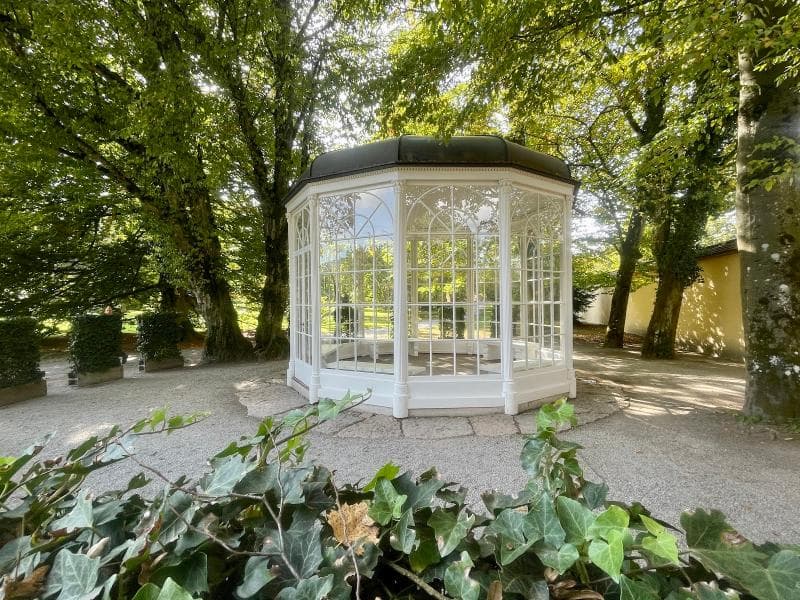
Discover the whimsical Trick Fountains at Hellbrunn Palace in Salzburg, Austria. Explore centuries-old water-powered surprises and grottoes.
Overview
Nestled within the enchanting grounds of Hellbrunn Palace in Salzburg, Austria, the Trick Fountains, or 'Wasserspiele', offer a truly unique and playful experience. For over 400 years, these historical water features have delighted and surprised visitors with their ingenious design and unexpected splashes. They stand as a testament to the wit and creativity of their original patron, Prince-Archbishop Markus Sittikus, and remain one of Salzburg's most popular attractions.
Far from being mere decorative elements, the Trick Fountains are an elaborate system of hidden jets, water-powered automata, and theatrical grottoes designed purely for amusement. A guided tour through this verdant landscape promises a journey filled with laughter, wonder, and the refreshing sensation of cool water, making it an unforgettable highlight of any visit to the region.
History & Cultural Background
The Hellbrunn Palace and its celebrated Trick Fountains were conceived by Prince-Archbishop Markus Sittikus von Hohenems, who served as Salzburg's ruler in the early 17th century. Construction began in 1612 and, remarkably, the primary structures were completed in a mere three years, by 1615. Sittikus envisioned Hellbrunn not as a permanent residence, but as a 'villa suburbana' – a pleasure palace, a summer retreat purely for enjoyment, entertainment, and hosting guests.
The choice of location at the foot of Hellbrunn Mountain was strategic, as it provided an abundant supply of natural springs. Water thus became the central theme and driving force behind the palace's design. The fountains represent a masterful example of Late Renaissance and Mannerist hydraulic engineering, showcasing the era's fascination with art, nature, and mechanical ingenuity. The renowned Italian architect Santino Solari, also responsible for Salzburg Cathedral, contributed to this magnificent creation.
What Makes It Special
What truly sets the Trick Fountains apart is their enduring capacity to surprise and entertain, using principles of hydraulics that are centuries old and require no electricity. The entire system is gravity-fed, relying on the natural water pressure from the Hellbrunn Mountain springs. This ancient technology powers an array of features that once astonished 17th-century nobility and continue to charm modern visitors.
Among the highlights are the various grottoes, each a work of artistic Mannerist design. There's the Neptune Grotto, the Ruins Grotto, the Shell Grotto, the Mirror Grotto, and the Birdcall Grotto. The Birdcall Grotto, for example, employs a sophisticated mechanism of water wheels, bellows, and organ pipes to mimic the sounds of different birds.
Another marvel is the Mechanical Theater, constructed slightly later between 1748 and 1752. It features 163 moving wooden figures depicting everyday life, trades, and court scenes of the 18th century, all animated by the power of a single water wheel. The Crown Grotto also captivates with a jet of water that magically suspends a crown, illustrating the rise and fall of power.
Stories, Fun Facts & Local Details
Prince-Archbishop Markus Sittikus was famously a jovial host with a mischievous sense of humor. He designed the Trick Fountains specifically to surprise and often thoroughly drench his unsuspecting guests. The most famous example is the 'Prince's Table', an outdoor dining table with stone seats. During banquets, Sittikus would secretly activate hidden jets that would spray water from the seats, soaking everyone present – except, of course, the Archbishop himself, whose seat remained dry. This playful 'trick' was a central part of the Hellbrunn experience.
Beyond the fountains, the Hellbrunn grounds hold other historical treasures. The Stone Theater (Steintheater), carved directly into the natural rock quarry, holds the distinction of being Europe's oldest open-air stage, where the first opera north of the Alps was performed in 1617. The 'Monatsschlössl', or 'Little Month Palace', constructed in just one month, now houses the Folklore Museum. While the Trick Fountains themselves were designed for summer enjoyment, Hellbrunn also hosts an Advent market in winter, though the water mechanisms are not in operation due to freezing risks.
Visitor Perspective
A visit to the Trick Fountains is an engaging and interactive experience, typically enjoyed as part of a guided tour. Visitors are encouraged to embrace the playful spirit of Markus Sittikus and be prepared for light splashes, especially around the 'Prince's Table' and other surprise jets hidden throughout the grottoes and pathways.
The tours are designed to be both educational and entertaining, explaining the history and mechanics behind these remarkable water features. Audio guides in multiple languages are often available, enhancing the understanding of Sittikus's 'mischief'. The park and the Trick Fountains are notably wheelchair accessible, ensuring that a wide range of visitors can enjoy this historical marvel. Expect to spend about an hour exploring the fountains, immersing yourself in a delightful blend of history, engineering, and good-natured fun.
Coordinates: 13.0645, 47.777
View on Google Maps💬 How Travelers Describe This Place
Based on community votes
Beautiful
948Unique
913Interesting
337Must See
196Photogenic
94
Traveler Stories
Discover memorable experiences shared by travelers who have visited this place.
No traveler stories yet.
Be the first traveler to share what made this place memorable.

Tour
By
Spot
Discover amazing places around the world. Your journey starts here.
Explore
© 2026 TourBySpot. All rights reserved.