Treasury
Budapest, Hungary
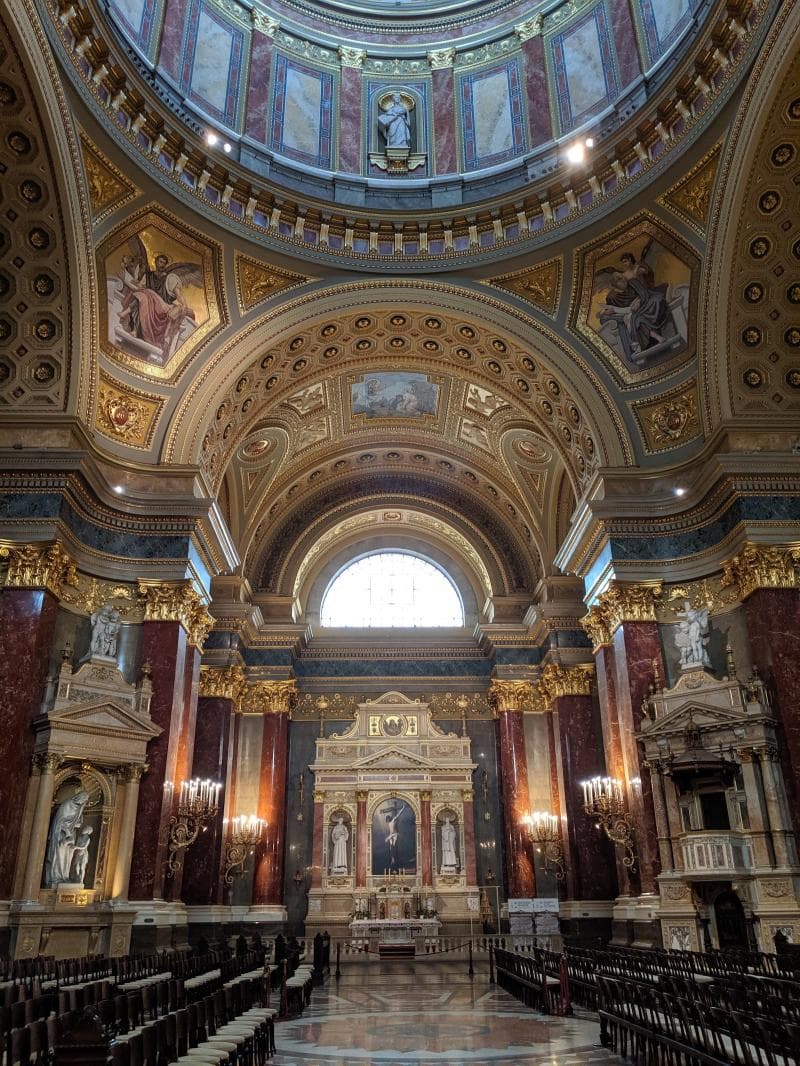
Explore the Treasury of St. Stephen’s Basilica in Budapest, Hungary. Discover sacred art, historical relics, and Cardinal Mindszenty’s personal items.
Overview
Deep within the majestic St. Stephen’s Basilica in Budapest, Hungary, lies the Treasury, a captivating sub-spot offering a profound glimpse into centuries of ecclesiastical artistry and Hungarian religious heritage. This carefully curated collection, significantly expanded and re-opened in 2011, serves not merely as a museum but as a living testament to the ongoing liturgical life of the Basilica’s community. Visitors ascend to the second floor, often by a convenient small lift, to discover a serene space filled with sacred objects.
The Treasury houses a remarkable array of liturgical implements, from shimmering chalices and censers to ornate ciboria and vestments, each telling a story of faith and devotion. Among its most striking displays is an unforgettable Art Deco double monstrance, dating back to 1938, a true highlight of the collection. Beyond these ceremonial pieces, the Treasury also holds a poignant exhibition dedicated to Cardinal József Mindszenty, a towering figure in 20th-century Hungarian Catholicism. Here, personal effects, devotional objects, and even his death mask offer a deeply personal connection to a challenging era in the nation’s history.
History & Cultural Background
The story of the Treasury is inextricably linked to the grand narrative of St. Stephen’s Basilica itself, a neoclassical masterpiece that took over five decades to complete, finally consecrated in 1905. Initially opened to the public as an ecclesiastical collection in 1971, the Treasury underwent a significant transformation in 2011. This renovation tripled its previous exhibition space, allowing for a richer, more comprehensive display of its sacred artifacts.
The artifacts within the Treasury represent a continuous thread of sacred art spanning centuries, reflecting the enduring spiritual traditions of Hungary. Unlike many museum exhibits, a unique aspect of this collection is that many of its items are not solely historical relics but remain in active liturgical use, breathing life into the history they represent. This connection to contemporary worship underscores the Basilica’s role not just as an architectural marvel but as a vibrant center of faith. The Basilica is, of course, dedicated to St. Stephen, Hungary’s first Christian king, whose revered mummified right hand, the Holy Right, is housed in a distinct chapel within the Basilica, a foundational relic of Hungarian nationhood and Catholicism. The Treasury’s contents amplify the significance of this spiritual legacy.
What Makes It Special
What truly sets the Basilica’s Treasury apart is its blend of exquisite craftsmanship, historical depth, and profound personal narratives. Visitors can marvel at some truly exceptional pieces, such as the country’s largest monstrance, created in 1938, a testament to the era’s artistic and religious fervor. Another treasured item is a chalice, a personal gift from Pope Blessed John Paul II in 1991, symbolizing the Basilica’s enduring connection to the wider Catholic world.
The collection further includes a complete set of a crown guard’s vestments, offering insight into the ceremonial traditions surrounding Hungary’s sacred regalia, alongside a meticulously crafted Herend porcelain copy of the Holy Crown. Perhaps most compelling, however, is the section devoted to Cardinal József Mindszenty. His personal belongings, presented with reverence, transform the abstract concept of history into a deeply human experience, allowing visitors to connect with a figure who embodied resilience and conviction during a turbulent period. This active integration of historical and ongoing liturgical items distinguishes the Treasury from a static display, making it a dynamic repository of faith and culture.
Stories, Fun Facts & Local Details
The very existence and growth of the Treasury speak to Hungary’s dedication to preserving its spiritual heritage. Its expansion in 2011 was a significant undertaking, demonstrating a commitment to making these sacred objects more accessible and understandable to the public. Each piece in the collection holds silent stories of blessings, ceremonies, and generations of faithful who have passed through the Basilica’s doors.
The display of Cardinal Mindszenty’s personal items offers a particularly powerful narrative. Mindszenty was a symbol of resistance against communist rule, and seeing his actual clothing and devotional objects allows for a profound, almost intimate, moment of reflection on the sacrifices made for faith and freedom. The Basilica itself has a storied past, having provided shelter for important documents and artworks during the bombings of World War II, a testament to its protective role within the community. The Treasury continues this tradition by safeguarding and presenting treasures that define Hungarian identity.
Visitor Perspective
For any traveler exploring St. Stephen’s Basilica, a visit to the Treasury is a highly recommended and enriching experience. It often forms part of a combined ticket that also includes access to the main church and the breathtaking panoramic dome, offering a comprehensive cultural and spiritual journey. Located conveniently on the second floor and accessible by lift, it’s an easily navigable addition to your visit.
Stepping into the Treasury allows for a deeper appreciation of the Basilica’s spiritual heart, moving beyond its magnificent architecture to the tangible symbols of its faith and history. It offers a moment of quiet contemplation amidst the grandeur, providing context to the broader religious and national narratives that define Hungary. Expect to be moved by the beauty of the sacred art and the historical resonance of the personal artifacts, each contributing to a fuller understanding of this iconic Budapest landmark.
Coordinates: 19.05398869799336, 47.50085393829758
View on Google Maps💬 How Travelers Describe This Place
Based on community votes
Unique
996Interesting
726Photogenic
717Must See
494Beautiful
193
Traveler Stories
Discover memorable experiences shared by travelers who have visited this place.
No traveler stories yet.
Be the first traveler to share what made this place memorable.

Tour
By
Spot
Discover amazing places around the world. Your journey starts here.
Explore
© 2026 TourBySpot. All rights reserved.