Tram Ride
Los Angeles, United States
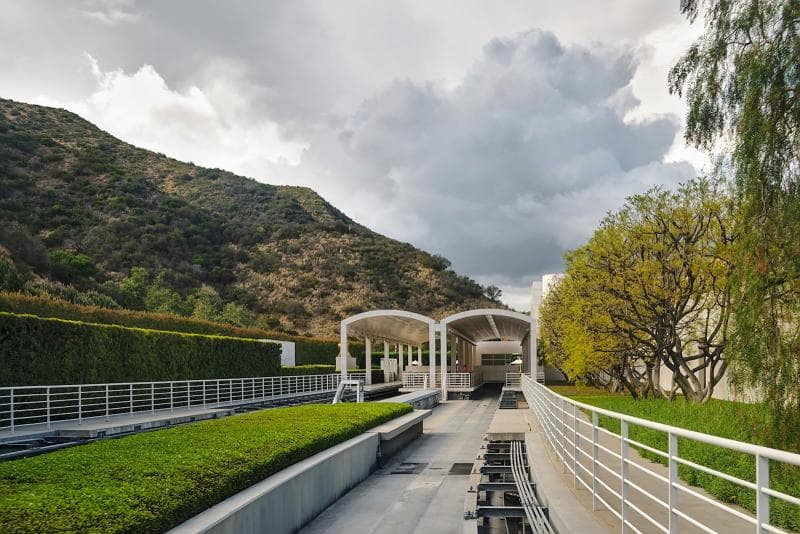
Experience the iconic Getty Center Tram in Los Angeles, United States. Glide up a scenic hillside to the world-renowned museum, enjoying breathtaking views.
Overview
Perched high in the Brentwood hills of Los Angeles, the Getty Center is an architectural masterpiece and a cultural haven. Your visit to this world-renowned institution begins with a truly distinctive experience: the Tram Ride. This sleek, modern tram isn't merely a mode of transport; it's an integral part of the Getty experience, whisking visitors from the parking area at the foot of the hill up to the magnificent campus. The journey offers a breathtaking ascent, revealing panoramic vistas of the sprawling city of Los Angeles, the Santa Monica Mountains, and even the Pacific Ocean in the distance, setting a contemplative mood before you even step foot into the museum's galleries. The ride itself is entirely free for visitors, embodying the vision of J. Paul Getty to make art and culture accessible to all.
History & Cultural Background
The Getty Center, designed by acclaimed architect Richard Meier, opened its doors in December 1997. The choice of a hilltop location provided commanding views but posed a significant logistical challenge for visitor access. Meier's vision integrated the tram as the 'first chapter' in the visitor's journey, a deliberate design element intended to separate guests from the urban environment and prepare them for the artistic wonders awaiting above. The tram line was already planned by 1988, with construction completed by January 1994, remarkably showing no damage after a 6.8 magnitude earthquake just days later, a testament to its robust, seismically designed elevated structure. This people mover system was developed to handle the flow of visitors without impacting the pristine landscape or creating traffic congestion on the steep incline.
What Makes It Special
The Getty Center Tram is a marvel of engineering and design. It operates as a 0.75-mile, cable-driven hovertrain system, consisting of driverless, air-cushioned Otis Hovair vehicles. Instead of traditional wheels, the trams glide silently on a thin film of air, approximately 1/64th of an inch above the guideway, creating a 'lighter than air' sensation. This innovative air suspension technology ensures a smooth, quiet ride and reduces wear on the track. Aesthetically, the tram and its stations echo the architectural language of the main Getty Center complex, introducing visitors to the precise geometry, light, and materials that characterize Meier's design. The elevated track and its carefully calibrated incline are designed to maximize the unfolding scenic views, making the ascent itself a cinematic prelude to the cultural exploration ahead.
Stories, Fun Facts & Local Details
- A Free Journey: True to J. Paul Getty's philosophy, the tram ride is completely free, making the initial approach to the museum accessible to everyone, though parking at the base does incur a fee.
- Swift and Seamless: The trams run efficiently, departing approximately every 5 to 8 minutes, ensuring minimal waiting times. The ride itself is brief, lasting about 3 to 4 minutes.
- Hovercraft Technology: The unique air-cushioned system is similar to hovercraft technology, where air is blown through pads to lift the vehicle slightly, providing a remarkably smooth and silent journey.
- No Walking Allowed: For safety and to preserve the designed 'arrival sequence,' visitors cannot walk up the hill to the Getty Center; the tram is the sole public access point from the parking garage.
- Continuous Operation: The system employs two trains that can operate independently, with a passing loop in the middle, allowing for continuous service.
Visitor Perspective
For many, the Getty Center Tram ride is more than just transportation; it's the start of an adventure. As you step into the climate-controlled tram car, a sense of anticipation builds. The large windows frame an ever-changing tableau as the tram glides upwards, revealing the cityscape below and drawing your eye towards the distinctive travertine buildings of the Getty Center itself. It's a moment of transition, separating you from the hustle and bustle of Los Angeles and gently immersing you in a world dedicated to art, gardens, and contemplation. The journey offers unique photo opportunities of the sweeping vistas, making the ascent a memorable part of the overall Getty Center experience. The system is also fully wheelchair accessible, with ramps and level boarding at both the lower and upper stations, ensuring that all visitors can enjoy this iconic approach.
Coordinates: -118.475, 34.0775
View on Google Maps💬 How Travelers Describe This Place
Based on community votes
Beautiful
958Must See
794Interesting
565Unique
157Photogenic
28
Traveler Stories
Discover memorable experiences shared by travelers who have visited this place.
No traveler stories yet.
Be the first traveler to share what made this place memorable.

Tour
By
Spot
Discover amazing places around the world. Your journey starts here.
Explore
© 2026 TourBySpot. All rights reserved.