Traffic Viewpoints
Ljubljana, Slovenia
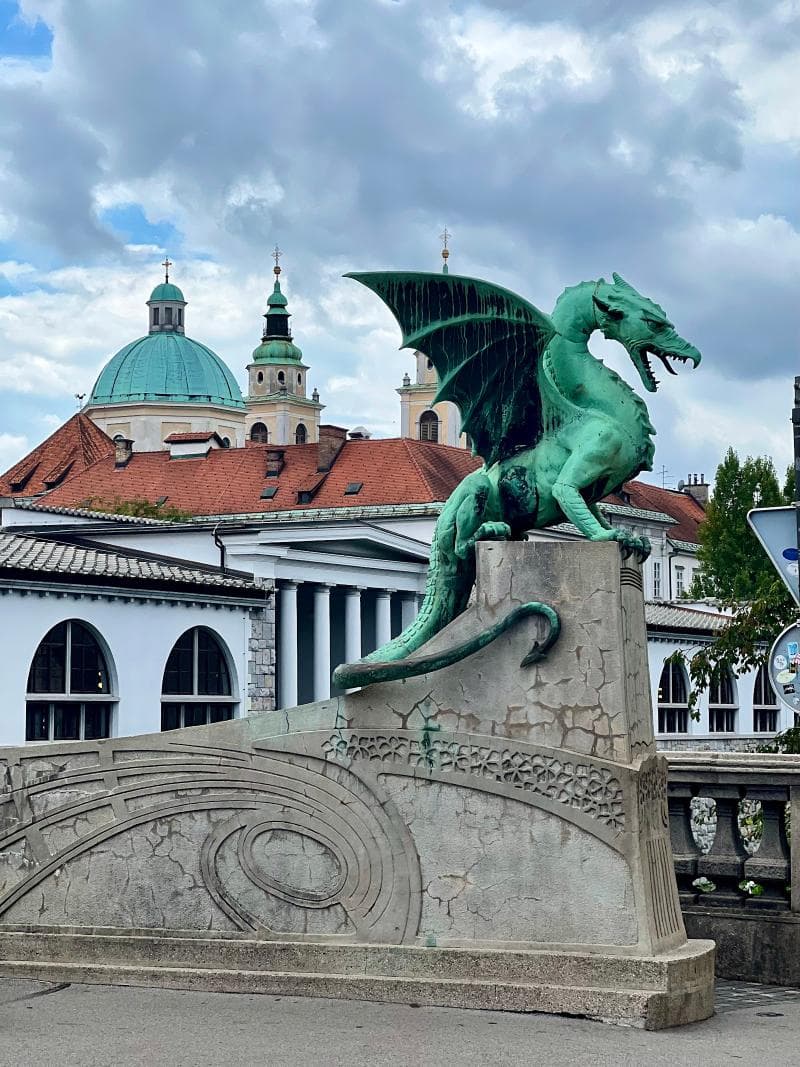
Discover the Dragon Bridge in Ljubljana, Slovenia, and its iconic dragon statues. Explore its history, Art Nouveau architecture, and mythical 'Traffic Viewpoints'.
Overview
Nestled in the heart of Ljubljana, Slovenia, the iconic Dragon Bridge, or Zmajski Most, stands as a vibrant testament to the city's rich history and mythical heritage. While not a 'viewpoint' in the traditional sense of an elevated observation deck, the bridge itself offers unique 'Traffic Viewpoints' — dynamic perspectives on the bustling flow of city life below and around. From its sturdy Art Nouveau structure, visitors can observe the gentle meandering of the Ljubljanica River, the lively pedestrian and vehicular traffic crossing its span, and the picturesque architecture lining the riverbanks. It's a prime location to witness Ljubljana's daily rhythm, a crossroads where ancient legends meet the pulse of a modern European capital.
History & Cultural Background
The Dragon Bridge was inaugurated in 1901, marking a significant milestone in Ljubljana's urban development. Originally named the Emperor Franz Joseph I Jubilee Bridge, it commemorated the 40th anniversary of the Austro-Hungarian Emperor's reign, with the inscription '1848–1888' visible on its structure. Its construction was a pivotal part of the city's ambitious modernization efforts following a devastating earthquake in 1895. Replacing an older wooden bridge, the Dragon Bridge was a marvel of its time, being one of Europe's earliest reinforced concrete bridges and the first in Ljubljana to be paved with asphalt. This innovative use of concrete, designed by Professor Josef Melan, showcased the avant-garde engineering techniques of the early 20th century. The bridge is also celebrated as a magnificent example of the Vienna Secession style, characterized by its elegant lines and decorative elements.
What Makes It Special
What truly sets the Dragon Bridge apart are its four formidable sheet-copper dragon statues, which stand guard at each corner, having oxidized over time to a distinctive green patina. These powerful sculptures, designed by Jurij Zaninović, have become an indelible symbol of Ljubljana, deeply intertwined with the city's identity and even featuring on its coat of arms. Beyond these magnificent guardians, the bridge's Art Nouveau design extends to its decorative balustrades and the original parapet lamps, which were once gas-powered. The bridge's single arch spans an impressive 33.34 meters, a considerable feat for its era. From these 'Traffic Viewpoints' on the bridge, the intricate details of the dragons, the elegant curves of the structure, and the artistic lamps provide a unique foreground to the panoramic city views. The dragons themselves are not merely adornments but active participants in the city's narrative, inviting contemplation on Ljubljana's mythical origins as one observes the contemporary world pass by.
Stories, Fun Facts & Local Details
The dragons of Ljubljana are more than just architectural features; they are central to the city's folklore, rooted in the ancient Greek legend of Jason and the Argonauts. According to the tale, Jason and his crew, while returning from their quest for the Golden Fleece, navigated the Ljubljanica River and encountered a fearsome dragon, which Jason is said to have defeated. This heroic act cemented the dragon as a symbol of strength, courage, and protection for the city. A charming local legend adds to the mystique: it's said that when a virgin crosses the Dragon Bridge, the dragons wag their tails. This playful superstition highlights the bridge's cherished place in local hearts, making it a source of amusement and intrigue for visitors. The presence of dragons, both large and smaller decorative ones (there are sixteen smaller dragons in addition to the four main ones), permeates the bridge's design, making every step an immersion in Ljubljana's mythical past.
Visitor Perspective
For a curious traveler, a visit to the Dragon Bridge offers more than just a crossing; it's an immersive experience. Strategically located near Ljubljana's bustling Central Market, the bridge is easily accessible on foot from the city center, including a short walk from Prešeren Square. As you stroll across, the 'Traffic Viewpoints' become apparent: watch the boats glide along the Ljubljanica River below, observe the diverse mix of locals and tourists, and take in the vibrant atmosphere of the nearby market. It's a fantastic spot for photography, with the formidable dragons serving as magnificent subjects and the city's charming skyline as a backdrop. The bridge functions as a vital artery, connecting different parts of the city and offering continuous insights into Ljubljana's daily life. Standing on the bridge, one can truly feel the blend of history, myth, and modernity that defines this enchanting Slovenian capital.
Coordinates: 14.51047, 46.052319
View on Google Maps💬 How Travelers Describe This Place
Based on community votes
Must See
847Photogenic
712Beautiful
513Unique
482Interesting
62
Traveler Stories
Discover memorable experiences shared by travelers who have visited this place.
No traveler stories yet.
Be the first traveler to share what made this place memorable.

Tour
By
Spot
Discover amazing places around the world. Your journey starts here.
Explore
© 2026 TourBySpot. All rights reserved.