Traditional Wooden Carvings and Gilded Plaques
Hong Kong, China
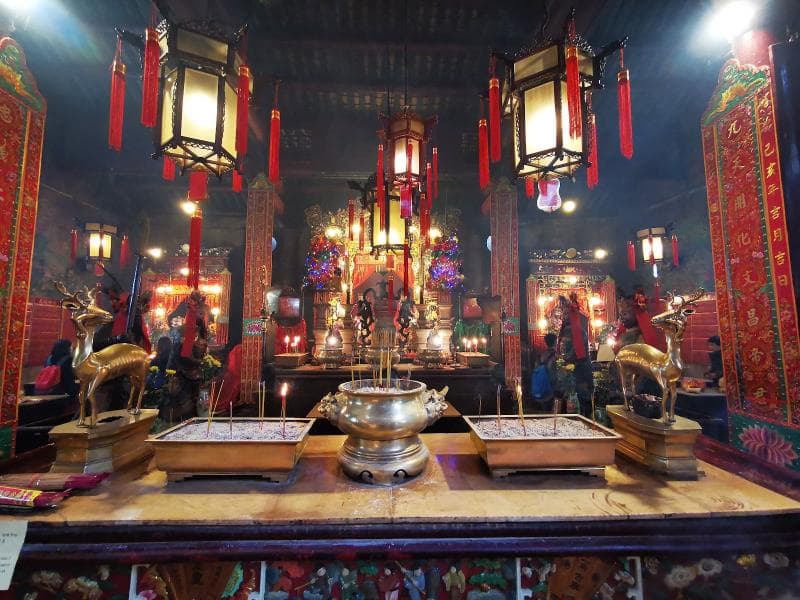

Explore the traditional wooden carvings and gilded plaques at Man Mo Temple in Hong Kong, China, a testament to ancient Chinese craftsmanship.
Overview
Nestled amidst the bustling modern cityscape of Hong Kong's Sheung Wan district, the Man Mo Temple offers a serene glimpse into traditional Chinese culture and artistry. This historic temple, a declared monument, is not only a spiritual sanctuary but also a living museum of exquisite traditional craftsmanship. Among its most captivating features are the intricate traditional wooden carvings and gilded plaques that adorn its structure, telling stories of deities, legends, and devotion. These artistic elements are integral to the temple's spiritual ambiance, providing a visual feast for visitors and a tangible connection to Hong Kong's rich heritage.
The temple complex, constructed between 1847 and 1862 by affluent Chinese merchants, is primarily dedicated to Man Cheong (the God of Literature) and Mo Tai (the God of Martial Arts). Its interiors are a testament to the skilled artisans of the past, with every beam, panel, and altar featuring meticulously detailed decorative work. Visitors stepping inside are immediately enveloped by the scent of incense and the visual grandeur of these artistic embellishments, which collectively create a deeply atmospheric and spiritually uplifting experience.
History & Cultural Background
The Man Mo Temple's history is deeply intertwined with the development of Hong Kong itself. Built during the early colonial period, it served not only as a place of worship but also as a vital community hub where disputes were settled and community affairs discussed. The temple's architectural and decorative elements, including the wooden carvings and gilded plaques, reflect the prevailing artistic styles and religious beliefs of the Qing Dynasty, during which it was constructed.
These decorative features were not merely aesthetic additions; they carried profound cultural and religious significance. Wooden carvings, often depicting mythical creatures, celestial beings, and legendary scenes, served as visual narratives and symbols of protection, prosperity, and moral values. Gilded plaques, with their shimmering surfaces, were typically used to inscribe dedications, honor deities, or commemorate significant events and benefactors. This rich artistic tradition ensured that the temple remained a focal point for the preservation and transmission of Chinese cultural identity in a rapidly changing colonial environment.
What Makes It Special
The traditional wooden carvings and gilded plaques at Man Mo Temple stand out for their exceptional artistry and historical authenticity. Unlike modern reproductions, these pieces embody centuries-old carving techniques passed down through generations of master craftsmen. The wooden beams, columns, and altars are adorned with elaborate carvings that showcase a remarkable level of detail, from the delicate scales of a dragon to the flowing robes of an immortal. Each carving is a miniature sculpture, imbued with meaning and symbolism relevant to Taoist mythology and Chinese folklore.
The gilded plaques, often featuring intricate calligraphy or figures, add a layer of opulence and reverence. The application of gold leaf not only highlights the details but also symbolizes purity, divinity, and respect for the worshipped deities. These elements are not confined to specific areas but are woven throughout the temple's interior and exterior, from the artistic wooden beam carvings that support the roof to the richly decorated altars where offerings are made. Even the sedan chairs, used in past processions to carry divine statues, are examples of this intricate carving tradition, some dating back to the 19th century.
Stories, Fun Facts & Local Details
Walking through the Man Mo Temple, one can almost hear the whispers of history emanating from its ancient carvings and plaques. For instance, the presence of specific mythical creatures carved into the wood often served as guardians, warding off evil spirits and inviting good fortune. Dragons, phoenixes, and other auspicious animals are commonly found, each contributing to the protective aura of the sacred space.
A notable feature is the 1879 lacquered plaque, which is among the significant artifacts found within the temple, underscoring its historical continuity and the community's enduring support. The overall architectural design, featuring a two-hall-three-bay structure with traditional decorations like ceramic figurines, granite, and wood carvings, reflects superb craftsmanship of the old days. These details are not just decoration; they are visual prayers and blessings. The vibrant colors and intricate designs were often chosen for their symbolic meanings, aiming to bring harmony, prosperity, and success to worshippers. It's a living canvas of traditional Chinese vernacular architecture, celebrating the balance of intellect and strength, as represented by the temple's two main deities.
Visitor Perspective
For the curious traveler, encountering the traditional wooden carvings and gilded plaques at Man Mo Temple is an immersive cultural experience. It's an opportunity to slow down and appreciate the meticulous handiwork of bygone eras, contrasting sharply with the modern architecture outside. The dim, incense-filled interior amplifies the mystique, drawing attention to every carved detail and shimmering surface.
Take your time to observe the narratives etched in wood and painted with gold – notice the expressions on the faces of deities, the intricate patterns of mythical beasts, and the dedications on the plaques. These elements collectively transport you to a different time, offering insights into the spiritual beliefs and artistic heritage of Hong Kong. It's a reminder that amidst the city's dynamic evolution, its cultural heart beats strong within cherished sites like the Man Mo Temple, where tradition and artistry continue to inspire reverence and wonder.
Coordinates: 114.1502, 22.284
View on Google Maps💬 How Travelers Describe This Place
Based on community votes
Beautiful
950Must See
858Unique
287Interesting
231Photogenic
86
Traveler Stories
Discover memorable experiences shared by travelers who have visited this place.
No traveler stories yet.
Be the first traveler to share what made this place memorable.

Tour
By
Spot
Discover amazing places around the world. Your journey starts here.
Explore
© 2026 TourBySpot. All rights reserved.