Traditional Architecture Complex
Ulaanbaatar, Mongolia
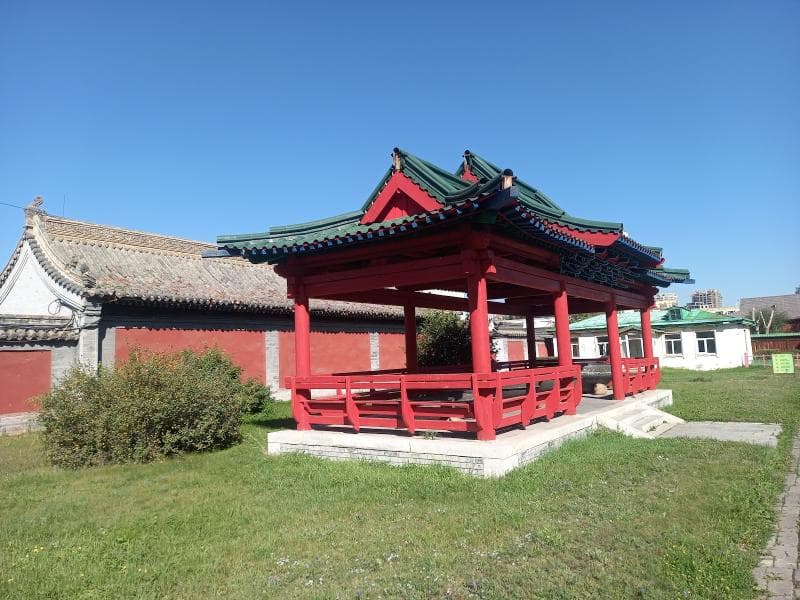
Explore the Traditional Architecture Complex within the Bogd Khan Palace Museum in Ulaanbaatar, Mongolia, showcasing Mongolian history and Buddhist art.
Overview
Nestled in Ulaanbaatar, Mongolia, the Traditional Architecture Complex forms a significant part of the larger Bogd Khan Palace Museum. This esteemed museum was once one of the four principal residences of the 8th Bogd Jebtsundamba Khutughtu, who served as Mongolia's last theocratic ruler. Uniquely, it is the sole remaining palace out of his four residences, preserved through the tides of history.
The complex is distinctly divided into two architectural styles: the Winter Palace, which exhibits a European design, and the Summer Palace, characterized by its traditional Mongolian temple architecture, featuring seven temples and pagodas. Established as a museum in 1924, it stands as Mongolia's oldest museum and houses an impressive collection of over 8,000 exhibits.
History & Cultural Background
The construction of the Bogd Khan Palace Museum complex spanned from 1893 to 1903, with some sections completed in 1905. The Winter Palace, a prominent feature, was notably designed by Tsarist Russian architects, reflecting international influences during its construction. In contrast, the Summer Palace section embodies traditional Mongolian temple designs, showcasing the rich cultural heritage.
For two decades, this palace served as the cherished winter abode for the Bogd Khan and his queen. Its survival during the communist era, which saw the widespread destruction of monasteries, underscores its profound historical and cultural resilience. A particularly significant structure is the ceremonial Gate of Peace, or Andi Men, built between 1912 and 1919. This gate commemorates Mongolia's hard-won independence from the Manchu empire and the coronation of the Bogd Khan, symbolizing a pivotal moment in the nation's history. The entire complex stands as a testament to the intricate interplay between religion and politics during a transformative period in Mongolia.
What Makes It Special
The Traditional Architecture Complex primarily refers to the Summer Palace, with its collection of seven temples and pagodas, each a masterpiece of Mongolian design. These temples are exemplary of traditional Mongolian architecture, which, while influenced by Tibetan Buddhism and Chinese elements, was ingeniously adapted to the local environment and the nomadic lifestyle of the Mongolian people.
A unique aspect of Mongolian temple architecture found here is its evolutionary link to the 'ger' (yurt) – the traditional nomadic dwelling. Early temple designs often incorporated elements such as six and twelve angles and pyramidal roofs, echoing the round shape of the ger. The Gate of Peace is a marvel of craftsmanship, distinguished by its construction using 108 interlocking joints without the use of a single nail, and intricately adorned with Buddhist symbols. The buildings within the complex are celebrated for their vibrant exterior painted finishes, featuring striking combinations of red, green, blue, white, and gold, which captivate the eye and tell stories of devotion. Inside, visitors discover a treasure trove of Buddhist artworks, intricate thangkas, and remarkable sculptures, including revered pieces by the renowned artist Zanabazar.
Stories, Fun Facts & Local Details
Among the fascinating details of the Bogd Khan Palace Museum is the fact that it is the last remaining of the four palaces once owned by the Bogd Khan, offering a rare glimpse into his life. The Gate of Peace not only marks a historical event but stands as a powerful emblem of Mongolian independence. The museum's exhibits are rich with personal effects of the Bogd Khan and his queen, including his royal throne, an ornate bed, and even a lavish ceremonial ger. Perhaps one of the most delightful and unusual items on display is the jeweled regalia made for the Bogd Khan's pet elephant, highlighting the eccentricities and opulence of his court.
Visitors can also appreciate the unique satirical drawings by Marzan Sharav, which humorously depict daily Mongolian life at the turn of the 20th century. The spiritual significance of the Summer Palace is maintained even today, as two major religious ceremonies are conducted there biannually to honor the sky and water spirits. This blend of European design in the Winter Palace and traditional Mongolian-Buddhist architecture in the Summer Palace creates a compelling narrative of cultural convergence.
Visitor Perspective
For any curious traveler, the Bogd Khan Palace Museum offers an exceptionally rich cultural experience, providing deep insights into Mongolia's monarchical history and its profound religious traditions. As you wander through its grounds, you gain a tangible connection to a pivotal era. It is important to note that while exterior photography is generally permitted, taking pictures inside the structures often requires a special permit, which visitors should be aware of to ensure a smooth visit. To fully absorb the atmosphere and explore the exhibits at a leisurely pace, particularly avoiding larger crowds, it's often recommended to arrive early in the morning. A typical visit can comfortably take about 45 minutes to an hour, leaving a lasting impression of Mongolia's vibrant past.
Coordinates: 106.90667, 47.8975
View on Google Maps💬 How Travelers Describe This Place
Based on community votes
Interesting
961Must See
733Photogenic
695Beautiful
404Unique
336
Traveler Stories
Discover memorable experiences shared by travelers who have visited this place.
No traveler stories yet.
Be the first traveler to share what made this place memorable.

Tour
By
Spot
Discover amazing places around the world. Your journey starts here.
Explore
© 2026 TourBySpot. All rights reserved.