Track View
Zagreb, Croatia
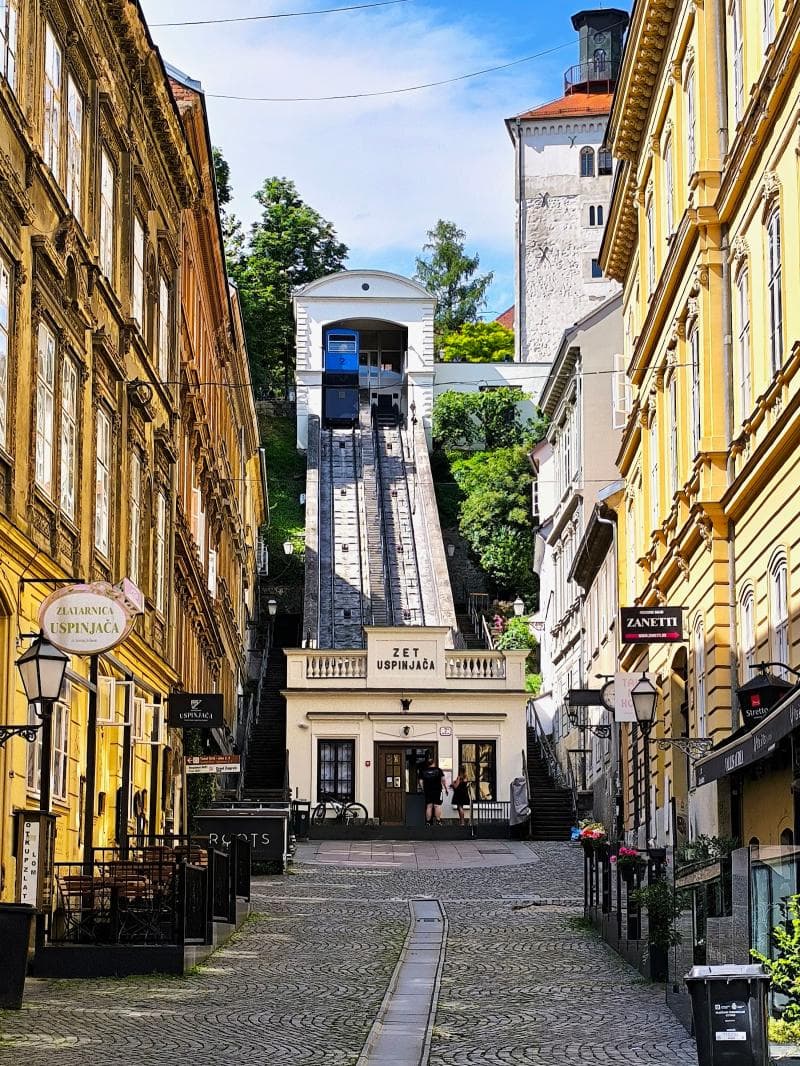
Experience Zagreb's Funicular: the world's shortest public transport, connecting Lower and Upper Town with historic charm and unique track views in Croatia.
Overview
Nestled in the vibrant heart of Zagreb, Croatia, the Zagreb Funicular offers a charming and historic passage between the city's Lower Town (Donji Grad) and the picturesque Upper Town (Gornji Grad). While perhaps not a 'track view' in the traditional sense of a separate lookout point, the entire journey on this beloved funicular provides a unique perspective of Zagreb's urban landscape and historical architecture. This iconic cable car holds the remarkable distinction of being the shortest public transport funicular in the entire world, spanning a mere 66 meters. More than just a functional link, it is a protected cultural monument, retaining much of its original 19th-century charm and technical properties. The swift ride, lasting approximately 64 seconds, transports passengers up a steep 52% incline, connecting Tomićeva Street below with the Strossmayer Promenade above, near the historic Lotrščak Tower. Operating daily from early morning until late evening, with departures every ten minutes, the Zagreb Funicular remains a vital and beloved part of the city's public transport network, managed by the Zagreb Electric Tram (ZET).
History & Cultural Background
The story of the Zagreb Funicular dates back to 1888 when entrepreneur D.W. Klein recognized the need for an easier connection between the bustling Lower Town and the elevated Upper Town. Observing the considerable pedestrian traffic struggling up Bregovita Street (now Tomićeva Street), he proposed a funicular railway, drawing inspiration from similar systems in other European cities. Construction commenced swiftly, and the funicular was officially commissioned on October 8, 1890, beginning regular operation on April 23, 1893. Initially, it was powered by a steam engine, a technology that proved unreliable, leading to frequent breakdowns. These mechanical woes earned it the local nickname 'Zapinjača,' meaning 'The Stutterer,' as passengers sometimes found themselves having to push the stuck wagons.
In 1934, a significant modernization occurred when the problematic steam engine was replaced with a more dependable electric motor, dramatically improving its operation. The funicular came under the ownership of the City of Zagreb in 1929 and has been managed by ZET ever since. Despite its age, a commitment to preserving its heritage meant that when it underwent a major overhaul between 1969 and 1973, its original exterior appearance, structural design, and most technical characteristics were meticulously maintained. This dedication to historical authenticity is why the Zagreb Funicular today enjoys protected cultural monument status, serving not just as a mode of transport but as a living piece of Zagreb's rich past.
What Makes It Special
The Zagreb Funicular's primary claim to fame is its status as the shortest public transport funicular in the world, with a track length of only 66 meters. This unique characteristic, combined with its steep 52% inclination, makes for a memorable and rather swift ascent or descent. It offers a distinctly charming and practical link between two historically and culturally significant parts of Zagreb: the medieval Upper Town, with its cobblestone streets and historic sites, and the more modern, vibrant Lower Town. The funicular's consistent operation for over a century, while largely maintaining its original aesthetic, contributes significantly to its special allure. Its distinct blue cabins have become an easily recognizable symbol of the city. European Best Destinations has even recognized the Zagreb Funicular as one of Europe's most beautiful funiculars, highlighting its blend of historical significance and unique functional role. The brief journey provides delightful 'track views' of the surrounding urban fabric, offering passengers a fleeting yet intimate glimpse of Zagreb's diverse architectural styles and the transitions between its distinct districts.
Stories, Fun Facts & Local Details
One of the most endearing local anecdotes about the Zagreb Funicular is its early nickname, 'Zapinjača,' or 'The Stutterer.' This moniker emerged due to the initial steam engine's unreliability, which often saw the funicular stalling and, on occasion, requiring passengers to physically assist in pushing the wagons. Thankfully, such participatory rides are a thing of the past! The original, outdated steam engine components are now preserved and can be viewed in the Zagreb Technical Museum, a testament to its mechanical evolution. The upper station of the funicular strategically places visitors directly beneath the iconic Lotrščak Tower. This medieval defense tower is famous for its daily tradition of firing the Grič cannon precisely at noon, a historical event that has marked midday in Zagreb since 1877. Many visitors time their funicular ride or their visit to the Upper Town to witness this booming tradition. The funicular itself has an impeccable safety record, having never experienced an accident in its long history, earning it a reputation as one of the safest public transport vehicles in Zagreb. Its creation was a direct response to a real city need, as D.W. Klein's idea was born from observing the sheer number of people climbing the 165 steps that once connected the two parts of the city. This charming piece of engineering truly embodies Zagreb's historical and cultural spirit.
Visitor Perspective
For any traveler exploring Zagreb, a ride on the funicular is less about speed and more about experience. It offers an incredibly convenient and pleasant alternative to climbing the stairs connecting the Lower and Upper Towns, particularly after a long day of sightseeing. The journey, though short, provides lovely vistas, allowing passengers to observe the rooftops of older buildings and gain a unique sense of elevation within the city. Many Zagreb walking tours incorporate the funicular ride as a memorable part of their itinerary, emphasizing its role in connecting historical landmarks. Upon disembarking at the upper station, visitors find themselves immediately immersed in the historical ambiance of Gradec, with easy access to attractions like the Lotrščak Tower, Strossmayer Promenade, and the Stone Gate. The funicular is designed for accessibility, featuring a hydraulic lift platform and access ramps, making it a viable option for visitors with disabilities to comfortably reach the Upper Town. Tickets are affordable, and existing ZET public transport tickets are often valid, making it an easy and enjoyable addition to any Zagreb itinerary. As of May 2026, the funicular has completed significant renovation works, including track replacement and new air-conditioned cabins, ensuring its continued charm and efficiency for future visitors.
Coordinates: 15.9730987, 45.8141559
View on Google Maps💬 How Travelers Describe This Place
Based on community votes
Interesting
692Must See
674Photogenic
491Unique
261Beautiful
49
Traveler Stories
Discover memorable experiences shared by travelers who have visited this place.
No traveler stories yet.
Be the first traveler to share what made this place memorable.

Tour
By
Spot
Discover amazing places around the world. Your journey starts here.
Explore
© 2026 TourBySpot. All rights reserved.