Track Field
Athens, Greece
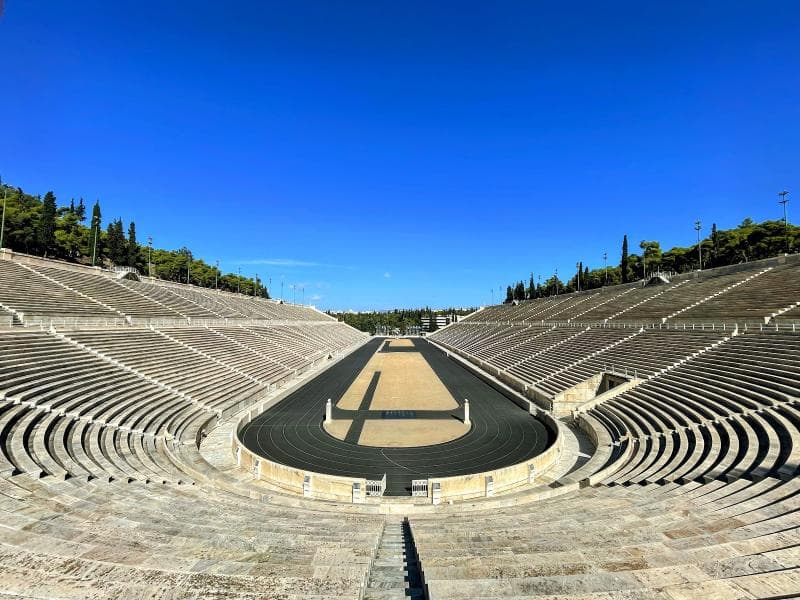
Explore the historic Track Field of Panathenaic Stadium in Athens, Greece. Discover where ancient athletes competed and the first modern Olympics were held, all within the world's only all-marble stadium.
Overview
The Track Field of the Panathenaic Stadium in Athens, Greece, is more than just a running surface; it is a profound journey into the heart of athletic history. Located in the central Athenian district of Pangrati, this iconic site is universally recognized as the venue for the first modern Olympic Games in 1896. What truly sets it apart is its unique construction, being the only stadium in the world built entirely from gleaming white Pentelic marble. Known locally as the 'Kallimarmaro', meaning 'beautifully marbled', the stadium's track embodies centuries of competitive spirit, from ancient athletic festivals to contemporary sporting events, including its role as the finish line for the annual Athens Classic Marathon.
Visitors to this historic arena are invited not only to witness its grandeur but to actively engage with its legacy. Stepping onto the track, one can almost hear the echoes of ancient chariots and cheering crowds, a testament to the enduring human pursuit of excellence. The track field itself, with its distinctive horseshoe shape and the imposing marble seating, provides a tangible link between the athletic past and present, offering a powerful sense of connection to the origins of competitive sports.
History & Cultural Background
The story of the Panathenaic Stadium's track field begins long before its marble splendor. Originally, in the 6th century BC, a simple racecourse occupied this natural hollow, serving as the primary venue for the Panathenaic Games. These religious and athletic festivals, held every four years in honor of the goddess Athena, were a cornerstone of Athenian culture.
Around 330 BC, the Athenian statesman Lykourgos transformed the rudimentary racecourse into a more formal stadium. He constructed a rectangular track, approximately 204 meters (669 feet) long and 34 meters (110 feet) wide, with tiers of stone benches for spectators.
The stadium underwent its most significant transformation between 140 and 144 AD, under the patronage of Herodes Atticus, a wealthy Athenian Roman senator. He rebuilt the entire structure using magnificent Pentelic marble, giving it the distinctive horseshoe shape characteristic of Roman stadiums and expanding its capacity to around 50,000 spectators.
Following the rise of Christianity in the 4th century, the stadium, along with pagan festivals, was largely abandoned and fell into disrepair. It lay dormant for centuries, its marble stripped and repurposed.
The modern era saw its revival. Archaeological excavations in the mid-19th century uncovered its ancient foundations. These led to early attempts to revive the Olympic Games, such as the Zappas Olympics held here in 1870 and 1875.
The stadium's most famous reconstruction occurred in preparation for the first modern Olympic Games in 1896. Funded generously by the Greek benefactor Georgios Averoff, the stadium was meticulously rebuilt to faithfully reproduce the ancient structure, entirely out of white Pentelic marble. It then hosted the opening and closing ceremonies, as well as several athletic events. The stadium again played a significant role in the Athens 2004 Olympic Games, hosting the archery competitions and serving as the emotional finish line for the men's and women's marathon races.
What Makes It Special
The track field of the Panathenaic Stadium holds a unique place in global heritage for several compelling reasons. Foremost among them is its unparalleled status as the only stadium in the world built entirely from marble, specifically the radiant white Pentelic marble from Mount Penteli, also used for the Acropolis.
Its historical continuity is another extraordinary feature. Few places can boast a lineage of athletic competition spanning over two millennia, from the ancient Panathenaic Games to the inaugural modern Olympics and beyond. This track is a direct link to the very origins of organized sports, a tangible connection to the 'gymnikoi agones' (nude games) of antiquity.
The track's distinctive architectural design, a horseshoe shape with a surprisingly steep curve at one end, also makes it special. While modern tracks are standardized, this ancient design offers a fascinating glimpse into early athletic conditions. The slight downhill gradient of the straightaways adds another unique characteristic, impacting competitive performance.
Furthermore, the Panathenaic Stadium's track is deeply entwined with the symbolism of the Olympic Games. It serves as the venue for the official handover ceremony of the Olympic flame to the host city of each upcoming Games, a powerful tradition that begins its journey in ancient Olympia and culminates here before traveling the world. It is also the ceremonial finishing point for the annual Athens Authentic Marathon, retracing the legendary run of the messenger Pheidippides.
Stories, Fun Facts & Local Details
One of the most striking local details is the stadium's popular name, 'Kallimarmaro', meaning 'beautiful marble'. This nickname perfectly encapsulates the dazzling material that defines its structure and gives it a breathtaking aesthetic, especially under the Athenian sun.
Historically, the track wasn't always just for athletic prowess. During Roman times, the stadium was adapted to host more brutal spectacles, including gladiatorial contests and wild animal fights, a stark contrast to its original purpose.
Hidden beneath the stadium, an ancient vaulted passage known as the 'diodos' adds another layer of intrigue. This passage, dating back to antiquity, was once used by athletes entering the arena. Legend suggests it was also known as the 'Hole of Fate' and might have been used by ancient oracles and spiritual leaders for rituals, and later by gladiators. Today, parts of it lead to a small museum showcasing Olympic torches and memorabilia.
A bronze statue of Georgios Averoff stands prominently outside the stadium, a tribute to his immense generosity. His funding in the late 19th century was crucial to the stadium's reconstruction in marble, allowing the first modern Olympics to be held in their historic home.
For the curious traveler, one of the most engaging fun facts is that visitors are often encouraged to run on the historic track themselves. Imagining yourself as an Olympian, even for a short sprint, offers a unique, personal connection to the site's sporting legacy.
Visitor Perspective
Visiting the Track Field of the Panathenaic Stadium offers an immersive experience unlike many other ancient sites. Upon entering, the sheer scale and brilliant white of the marble can be quite breathtaking. Walking through the entrance tunnel and onto the track surface, you immediately feel the weight of history underfoot.
Many visitors choose to walk or even jog a lap of the 400-meter track, following in the footsteps of ancient and modern champions. The staff are accustomed to this, and it provides a memorable, interactive way to connect with the venue. The track itself is a hard-packed surface, distinct from modern synthetic tracks, providing an authentic feel.
An automatic audio guide, available in multiple languages, accompanies your visit, offering detailed historical and cultural context as you explore. This allows for a self-paced discovery of the stadium's many facets.
For those seeking panoramic views, a climb to the upper tiers, particularly section 21, is highly recommended. From here, you can behold an expansive vista that includes not only the entire stadium but also iconic Athenian landmarks such as the Acropolis, the Parthenon, and Lycabettus Hill, beautifully blending history with the city's natural landscape.
The track field and the main gallery areas are accessible for people with physical disabilities, ensuring that this significant site can be experienced by a wide range of visitors. Early morning visits are often recommended, especially during warmer months, to enjoy cooler temperatures and potentially fewer crowds, allowing for a more serene and contemplative experience of this magnificent historical monument.
Coordinates: 23.7411, 37.9683
View on Google Maps💬 How Travelers Describe This Place
Based on community votes
Beautiful
545Must See
343Interesting
211Photogenic
74Unique
20
Traveler Stories
Discover memorable experiences shared by travelers who have visited this place.
No traveler stories yet.
Be the first traveler to share what made this place memorable.

Tour
By
Spot
Discover amazing places around the world. Your journey starts here.
Explore
© 2026 TourBySpot. All rights reserved.