Town Hall Square
Riga, Latvia
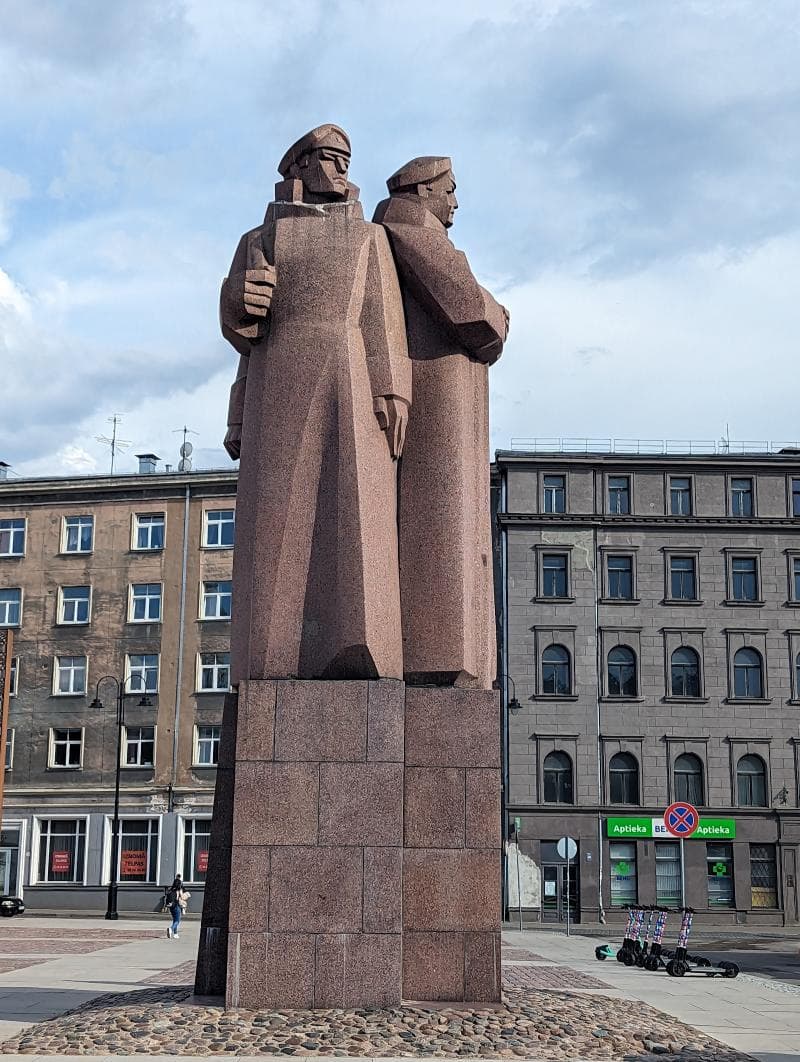
Explore Town Hall Square in Riga's Old Town, Latvia. Discover its rich history, iconic House of the Blackheads, and the first Christmas tree tradition.
Overview
Town Hall Square, known locally as Rātslaukums, lies at the historical heart of Riga's enchanting Old Town, a designated UNESCO World Heritage site. Since the city's founding in the early 13th century, this cobbled square has been a pivotal gathering place, serving as a hub for civic life, commerce, and celebrations. Today, it stands as a testament to Riga's enduring spirit, surrounded by magnificent architecture that echoes centuries of history and culture. Visitors are immediately drawn to iconic structures such as the ornate House of the Blackheads, the stately Riga Town Hall, and the thought-provoking Museum of the Occupation of Latvia. It is a place where every stone seems to whisper tales of Riga's past, making it an essential starting point for any exploration of this Baltic gem.
History & Cultural Background
The origins of Town Hall Square date back to the late 13th century, when it was established as the city's main market square, or 'Marktplatz'. In medieval times, this bustling space was not only the administrative center where the city council convened, but also a vibrant stage for markets, festivals, tournaments, and even occasional public executions. The first Town Hall was erected here in the early 14th century, evolving over the centuries into a grander structure. The famous House of the Blackheads, initially known as the 'New House', joined the square's ensemble in 1334, becoming a distinguished venue for meetings and lavish feasts.
However, the square's rich history is also marked by profound tragedy. During World War II, the entire square and its surrounding historic buildings suffered immense destruction from bombings, particularly in 1941, and subsequent Soviet occupation. What stands before visitors today are meticulous reconstructions, a powerful symbol of Latvia's resilience and its commitment to preserving its cultural heritage. The House of the Blackheads was painstakingly rebuilt and reopened in 1999, followed by the new Town Hall in 2003, after Latvia regained its independence. This remarkable restoration ensures that Town Hall Square continues its centuries-old role as Riga's civic and cultural heart, seamlessly blending its storied past with its modern administrative functions.
What Makes It Special
Town Hall Square's special allure lies in its captivating blend of historical significance and architectural splendor. Dominating the square is the breathtaking House of the Blackheads, a masterpiece of Dutch Renaissance architecture with its richly decorated facade. This building, originally a guildhall for unmarried merchants, is one of Riga's most iconic landmarks and a prime example of the city's Hanseatic heritage.
In the center of the square stands the Statue of St. Roland, a revered figure representing justice in Northern Germany. While the original 1897 statue was lost during the war, a faithful replica now proudly occupies its place, symbolizing Riga's enduring civic values.
Perhaps one of the most charming claims to fame associated with Town Hall Square is its connection to the world's first decorated Christmas tree. According to local lore, members of the Brotherhood of Blackheads adorned a fir tree here in 1510. A small plaque on the square commemorates this unique historical anecdote, and fittingly, a festive tree is still decorated here each winter. This deep historical resonance, combined with the square's status as part of a UNESCO World Heritage site, imbues it with a distinct and captivating character.
Stories, Fun Facts & Local Details
The Brotherhood of Blackheads, who famously inhabited the 'New House' on the square, were a guild of spirited, unmarried merchants, shipowners, and foreigners known for their lavish celebrations and influential role in Riga's social life. They were patrons of St. Mauritius, whose Moor's head emblem became their distinguishing mark.
A fascinating detail about the original Town Hall is its balcony, where a trumpeter would traditionally announce the start of each day and public notices were read to the citizens. Imagine the daily rhythm of medieval Riga, punctuated by these ceremonial announcements. The tenacity of Riga's people is also reflected in the saying once inscribed on the House of the Blackheads: 'Should I ever crumble to dust, rebuild my walls you must'. This prophecy proved true, as the building was meticulously reconstructed after its wartime destruction.
Even the seemingly out-of-place black building housing the Museum of the Occupation of Latvia holds a story; it was built in 1971 to mark Lenin's 100th birthday and originally served as the 'Museum of Red Latvian Riflemen', a stark reminder of a more recent, complex period in Latvian history, and not part of the square's original medieval fabric.
Visitor Perspective
For any curious traveler, Town Hall Square offers a vibrant and immersive experience. It is the natural starting point for exploring the labyrinthine cobblestone streets of Old Riga. Take your time to stroll across the square, absorbing the intricate details of the surrounding architecture, which is especially enchanting when illuminated at night. Many visitors enjoy simply people-watching from one of the cozy cafes that line the square.
Allowing approximately 1.5 to 2 hours for a visit provides ample time to appreciate the square's beauty and historical context. If you plan to delve into the museums or enjoy a meal, allocate more time. The Riga Tourist Information Centre, conveniently located directly on the square, is an excellent resource for maps, tips, and guidance for your onward explorations. Whether you visit during the lively summer months or experience the magical Christmas markets, Town Hall Square promises a memorable journey through Riga's captivating past and present.
Coordinates: 24.10629, 56.94785
View on Google Maps💬 How Travelers Describe This Place
Based on community votes
Photogenic
791Interesting
457Unique
252Must See
147Beautiful
19
Traveler Stories
Discover memorable experiences shared by travelers who have visited this place.
No traveler stories yet.
Be the first traveler to share what made this place memorable.

Tour
By
Spot
Discover amazing places around the world. Your journey starts here.
Explore
© 2026 TourBySpot. All rights reserved.